
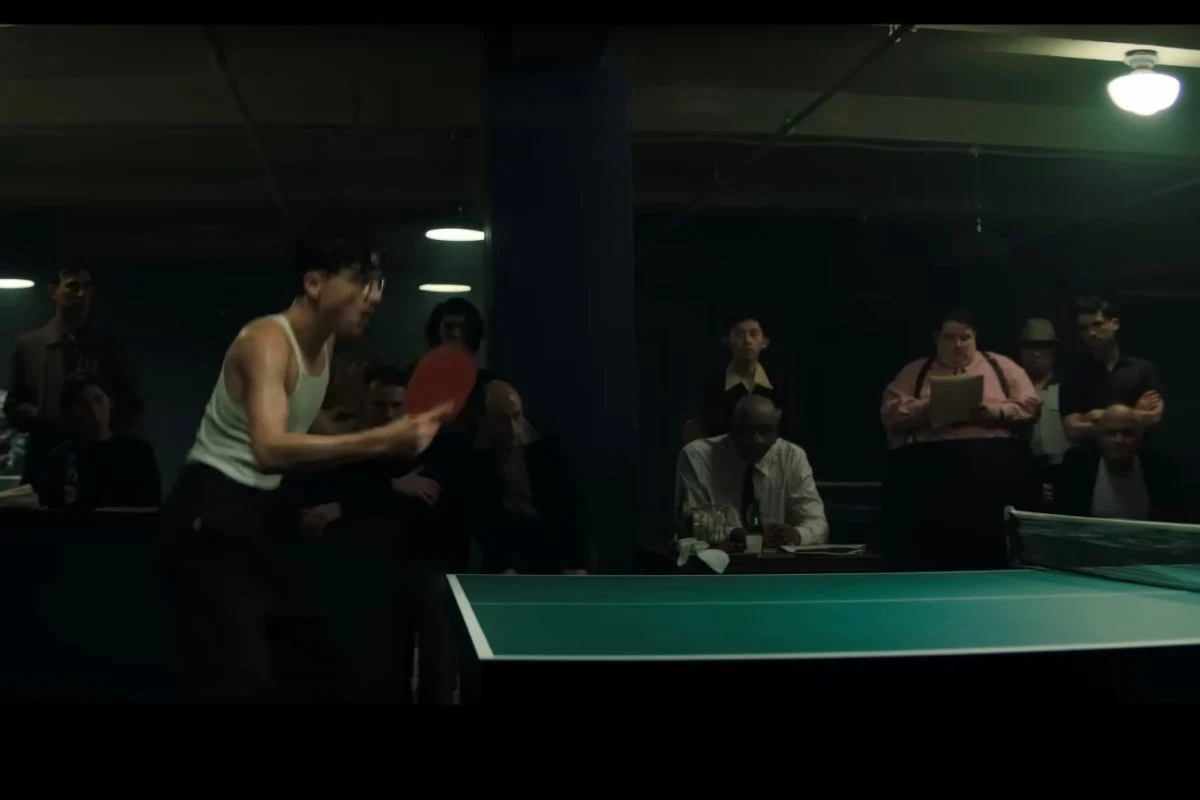
The Return of the Hustler: How Timothée Chalamet and Josh Safdie Reimagined Table Tennis Legend Marty Reisman in ‘Marty Supreme’
The intersection of sports history, mid-century counterculture, and avant-garde Hollywood filmmaking has found its latest flashpoint. On Christmas Day, Thursday, December 25, the highly anticipated feature film Marty Supreme officially debuted in theaters across the United States. Starring Oscar nominee Timothée Chalamet and directed by indie auteur Josh Safdie, the film brings the high-stakes, fast-talking, and fiercely stylish world of mid-20th-century table tennis to the mainstream.
While the film operates under a fictionalized veneer—with Chalamet portraying a protagonist named Marty Mauser—its core inspiration is drawn directly from the life, antics, and legacy of Marty Reisman, one of the most eccentric and formidable figures in the history of American sports.
Main Facts: The Cinematic Genesis of ‘Marty Supreme’
Marty Supreme represents a major milestone for both its star and its director. For Josh Safdie, known for co-directing high-tension thrillers like Uncut Gems (2019) and Good Time (2017) alongside his brother Benny, this film marks a solo directorial venture that retains his signature kinetic energy while venturing into historical, sports-adjacent fiction. Instead of delivering a paint-by-numbers cinematic biography, Safdie utilizes Reisman’s larger-than-life persona and the subterranean world of 1940s and 1950s ping-pong hustling as a springboard for a stylized, fictionalized narrative.
+-------------------------------------------------------------------------+
|                           FILM PROFILE                                  |
+------------------------------------+------------------------------------+
| Title                              | Marty Supreme                      |
| Director                           | Josh Safdie                        |
| Lead Actor                         | Timothée Chalamet (Marty Mauser)   |
| Supporting Cast                    | Gwyneth Paltrow, Tyler, the Creator|
| Primary Inspiration                | Marty Reisman (1930–2012)          |
| US Release Date                    | Thursday, December 25              |
+------------------------------------+------------------------------------+
Chalamet, who also serves as a producer on the project, undertook a massive, months-long promotional blitz leading up to the holiday release. His marketing campaign was as unconventional as the character he plays, featuring:
- The distribution of custom-designed, vintage-style "Marty Supreme" satin jackets to high-profile Hollywood celebrities.
- Striking, high-fashion red carpet appearances that mirrored the sartorial elegance of mid-century Manhattan.
- An unexpected musical collaboration, featuring a promotional remix track with underground rapper EsDeeKid.
Adding to the film’s prestige is the return of Academy Award winner Gwyneth Paltrow, marking her first major big-screen acting role in several years. The ensemble cast, combined with Safdie’s distinct directorial vision, positions Marty Supreme as both a prestige character study and a vibrant homage to an era when table tennis was a high-stakes hustle.
Chronology: The Rise, Reign, and Legacy of Marty Reisman
To understand the DNA of Marty Supreme, one must understand the timeline of the man who inspired it. Marty Reisman was not merely a champion; he was a survivor, a showman, and an international man of mystery who used a celluloid ball to escape the harsh realities of the Great Depression.
Marty Reisman's Life Timeline:
[1930] Born in Manhattan, NY (Feb 1)
  │
[1939] Begins suffering severe panic attacks; discovers ping-pong as therapy
  │
[1949] Wins first World Championship in Stockholm, defeating Viktor Barna
  │
[1950s] Travels globally, combining championship play with underground smuggling
  │
[1997] Wins the US National Hardbat Championship at age 67
  │
[2002] Competes in his final active tournament cycle
  │
[2012] Passes away in New York at age 82 (Dec 7)
The Early Years: Anxiety and the Streets of Manhattan (1930–1940s)
Born in Manhattan, New York, on February 1, 1930, Reisman’s early life was defined by instability. His father was a taxi driver and an inveterate gambler, exposing young Marty to the gritty underbelly of New York’s betting parlors. When his parents divorced when he was ten years old, Reisman’s anxiety skyrocketed.
According to archival reports from National Public Radio (NPR), Reisman suffered from debilitating panic attacks starting at the age of nine. He found his sanctuary in the local recreation centers of Manhattan, where the rhythmic, rapid-fire sound of ping-pong balls offered a form of cognitive therapy. What began as a coping mechanism quickly transformed into an obsession. Reisman vowed to become the greatest table tennis player on earth, practicing for hours on end to perfect his reflexes and psychological warfare at the table.
The Golden Era and Global Conquest (1949–1960s)
Reisman’s ascent to the pinnacle of the sport was meteoric. In 1949, at the age of 19, he traveled to Stockholm, Sweden, for the World Table Tennis Championships. In a stunning upset, he defeated the legendary Hungarian player Viktor Barna, a multi-time world champion who had dominated the sport for nearly two decades. This victory cemented Reisman’s status as an international phenomenon.
Throughout the late 1940s, 1950s, and beyond, Reisman accumulated an astonishing 22 major titles, including five US Men’s Singles Championships. He became a traveling ambassador for the sport, though his travels often blurred the line between athletic exhibition and international espionage.
The Longevity of a Legend (1997–2012)
Unlike athletes whose careers fade by their thirties, Reisman remained a competitive force for over half a century. In 1997, at the age of 67, he won the United States National Hardbat Championship, proving that his classic, strategic style of play could still best opponents decades his junior. He continued to play exhibition matches and competitive tournaments until 2002.
Reisman passed away on December 7, 2012, at the age of 82 due to heart and lung complications. He left behind a rich family legacy, survived by his wife, Yoshiko, his daughter, Debbie Reisman, and several grandchildren—as well as a sporting legacy that remains unmatched in its sheer theatricality.
Supporting Data: The Mechanics of a Table Tennis Maverick
Reisman’s reputation was built on a foundation of mind-boggling physical statistics and a refusal to conform to the evolving technology of his sport.
The 115 MPH Forehand and the "Drop Shot"
In a retrospective profile published by Forbes in September 2005, sports analysts and historians marvelled at Reisman’s physical capabilities. He was widely credited with possessing "the greatest drop shot ever seen on the face of the earth"—a delicate, spin-heavy stroke that would barely clear the net and die instantly on the opponent’s side.
Conversely, his offensive game was devastatingly explosive. Forbes documented that Reisman’s signature forehand drive could propel a lightweight celluloid ball at speeds reaching 115 miles per hour (185 km/h), a velocity that required near-superhuman hand-eye coordination to execute and return.
"The Needle" and the Art of the Trick Shot
Due to his slender, wire-thin frame and lightning-fast whipping motion, Variety noted that Reisman was affectionately nicknamed "The Needle." He utilized his physical dimensions to maximize his showmanship, developing a repertoire of trick shots that drew massive crowds:
- The Cigarette Split: From the opposite side of the table, Reisman could routinely slice a lit cigarette cleanly in half with a single ping-pong serve.
- Alternative Paddles: When challenged, he would discard his standard paddle and defeat high-level players using household items, including leather shoes, frying pans, and metal pots.
- Blindfolded Play: If the betting stakes were high enough, Reisman would play matches blindfolded or while seated in an armchair, relying entirely on auditory cues and spatial memory to defeat his marks.
+-----------------------------------------------------------------------------+
|                      MARTY REISMAN: BY THE NUMBERS                          |
+----------------------------------------+------------------------------------+
| Career Titles                          | 22 Major Championships             |
| Peak Forehand Speed                    | 115 MPH                            |
| Signature Move                         | The Dead-Stop Drop Shot            |
| Primary Nickname                       | "The Needle"                       |
| Era of Dominance                       | Late 1940s to early 2000s          |
+----------------------------------------+------------------------------------+
The Hardbat Purist
One of the most significant chapters of Reisman’s athletic career was his ideological war against the "sponge racket." In 1952, the introduction of thick sponge rubber revolutionized table tennis, allowing players to generate massive amounts of spin at the expense of tactical, high-speed rallies. Reisman bitterly opposed this shift, arguing that sponge technology ruined the artistry, sound, and spectator appeal of the game. He remained a lifelong champion of the "hardbat"—the classic wooden paddle covered in thin, pimpled rubber—and spent his later years organizing tournaments to keep the traditional form of the sport alive.
The Hustle: Gold Bars and Rolexes
Reisman was as much a businessman as he was an athlete, operating on the fringes of the law during his international tours. To fund his travels through war-torn Europe and Asia during the Cold War era, Reisman engaged in high-stakes smuggling. He leveraged his status as an international sports star to bypass customs checkpoints, illicitly transporting gold bullion, luxury Rolex watches, and black-market currencies across closed borders. This thrilling, high-risk lifestyle provides much of the narrative fuel for Josh Safdie’s cinematic adaptation.
Behind the Scenes: Production, Chalamet’s Preparation, and Promotion
The transition of Reisman’s life from historical anecdotes to a major motion picture required a massive physical and creative commitment from the cast and crew.
Months of Table Tennis Boot Camp
To portray a character inspired by "The Needle," Timothée Chalamet could not rely on digital effects or body doubles. According to production insiders, Chalamet underwent months of rigorous, daily table tennis training under the tutelage of professional coaches and modern hardbat champions. The objective was to perfectly replicate Reisman’s unique stance, his signature high-waisted posture, and his lightning-fast 115-mph forehand swing.
The Return of Gwyneth Paltrow
A major casting coup for Marty Supreme was securing Gwyneth Paltrow. Having largely stepped away from Hollywood to focus on her lifestyle brand, Goop, Paltrow was lured back to the set by the strength of Safdie’s screenplay and the opportunity to share the screen with Chalamet. While details of her role have been kept under wraps, her character is described as a pivotal, stabilizing force in the chaotic, high-stakes world inhabited by Chalamet’s Marty Mauser.
A High-Concept Promotional Blitz
The promotional campaign for Marty Supreme reflected the eccentric spirit of its subject matter. Chalamet bypassed traditional junket setups in favor of experiential marketing:
- The Jackets: High-end, custom-made satin bomber jackets emblazoned with "Marty Supreme" were gifted to prominent cultural figures, immediately creating an aura of exclusive, retro cool.
- The Music: The collaboration with rapper EsDeeKid resulted in a high-tempo, electronic-hip-hop remix track that utilized the rhythmic sound of bouncing ping-pong balls as its percussion base.
- The Fashion: Red carpet appearances for the film featured Chalamet dressed in vintage mid-century menswear, including the Borsalino fedoras and high-waisted, wide-leg trousers that were Reisman’s real-life trademarks.
Societal and Cinematic Implications
The release of Marty Supreme carries significant implications for the film industry, sports culture, and the legacy of mid-century Americana.
Reimagining the Sports Biopic
For decades, the sports biopic has adhered to a predictable formula: struggle, training montage, climactic victory, and emotional retirement. Marty Supreme challenges this paradigm. By choosing a niche, historical sport like hardbat table tennis and focusing on the psychological eccentricities and illicit hustles of its protagonist, Josh Safdie has created a new template for the genre. It suggests that the modern audience is less interested in sterile, play-by-play historical accuracy and more captivated by atmospheric, character-driven narratives that capture the "vibe" and countercultural energy of an era.
The Resurgence of Hardbat Culture
Just as The Queen’s Gambit sparked a global chess boom in 2020, Marty Supreme is poised to ignite a cultural renaissance for traditional table tennis. The film’s focus on the tactile, auditory charm of the "hardbat" paddle contrasts sharply with the high-tech, industrialized nature of modern Olympic table tennis. Athletic clubs and recreational bars are already reporting an uptick in interest in vintage-style hardbat tournaments, proving that Reisman’s lifelong crusade to preserve the classic game continues to resonate long after his passing.
A New Chapter for Chalamet and Safdie
For Timothée Chalamet, Marty Supreme solidifies his transition from a youthful romantic lead into a versatile, character-driven leading man capable of carrying highly stylized, physically demanding projects. For Josh Safdie, the film proves that his frantic, adrenaline-fueled directorial style can be seamlessly transposed onto historical period pieces.
By shining a neon-soaked spotlight on the legacy of Marty Reisman, Marty Supreme ensures that the story of Manhattan’s greatest table tennis hustler will continue to captivate, shock, and entertain a brand-new generation of dreamers and players alike.