
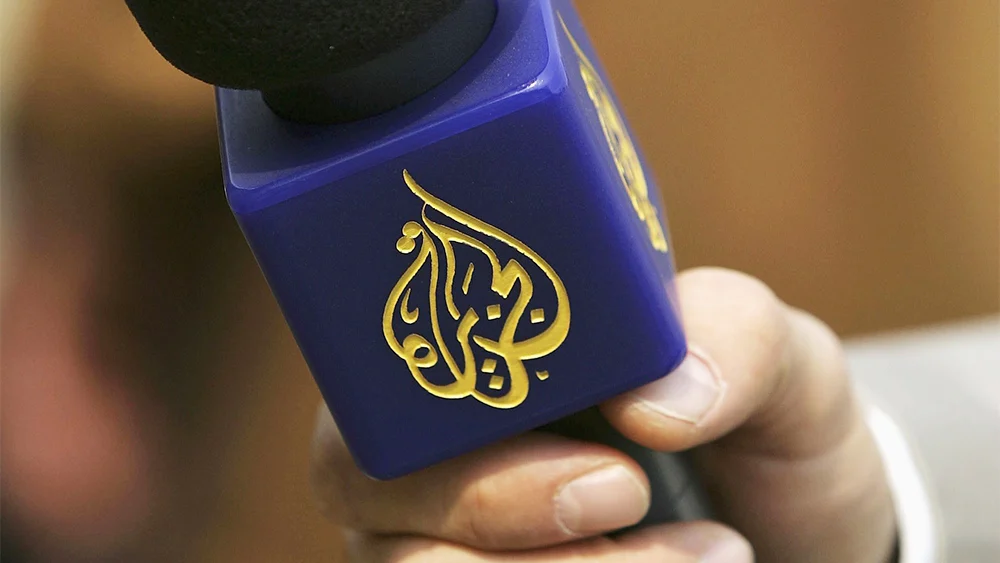
Escalating Tensions: Al Jazeera Launches International Legal Offensive Against Egyptian Authorities
Introduction: A Media Network at the Crossroads of Geopolitics
In an unprecedented escalation of the ongoing friction between Middle Eastern media entities and the Cairo administration, the Qatar-based Al Jazeera Media Network has formally initiated international legal proceedings against Egyptian authorities. The network, which has long been a lightning rod for controversy in the region, announced on Thursday that it has retained the services of the London-based legal firm Carter-Ruck. This move signals a shift from diplomatic lobbying to formal litigation in international courts and before the United Nations, marking a significant intensification in the battle for press freedom and narrative control within Egypt.
The conflict, which has been simmering since the ousting of former President Mohammed Morsi in July, has seen Al Jazeera’s journalists, equipment, and broadcast signals become primary targets in what the network characterizes as a systematic campaign of suppression. As the legal battle unfolds, the case brings to the forefront critical questions regarding the role of international law in protecting journalists operating in volatile political climates.
Chronology: The Deterioration of Press Freedoms in Cairo
The current legal stand-off is the culmination of months of deteriorating relations between the network and the Egyptian state. To understand the gravity of the situation, one must look at the timeline of events that preceded the decision to take legal action.
The July Watershed
The catalyst for the current crisis was the military-led removal of President Mohammed Morsi on July 3, 2013. Following the transition of power, Al Jazeera’s editorial stance—which was perceived by the new interim government and a large segment of the Egyptian public as being heavily sympathetic to the Muslim Brotherhood—placed its Cairo-based staff in the crosshairs.
The Wave of Resignations
In a surprising internal development in mid-July, more than twenty of Al Jazeera’s Cairo-based staff members resigned in a single week. The resignations, which included prominent anchors and producers, were a public protest against what the staffers described as the network’s "biased coverage." Anchor Karem Mahmoud famously cited a lack of professional neutrality, alleging that the network was acting as a mouthpiece for the deposed Islamist administration rather than an objective news organization.
The Crackdown on Infrastructure
Following the internal upheaval, the external pressure from the state intensified. Throughout August and September, the network reported a series of physical and digital obstructions. These included:
- The Raid of Offices: Several of Al Jazeera’s satellite offices in Cairo were raided by security forces, leading to the confiscation of equipment and the detention of staff.
- Signal Interference: The network repeatedly reported the jamming of its satellite signals, particularly during its coverage of the violent dispersals of pro-Morsi sit-ins in Rabaa al-Adawiya and Nahda squares.
- Arbitrary Detention: The network asserts that a "large number" of its journalists have been arrested, often without formal charges, or held under what the network characterizes as "politically motivated" allegations.
Supporting Data and The Legal Strategy
Al Jazeera’s decision to hire Carter-Ruck, a firm renowned for its expertise in international media law and human rights, suggests a sophisticated approach to global litigation. By moving the dispute out of the Egyptian court system—which the network deems compromised—and into the international arena, Al Jazeera is attempting to leverage global legal frameworks.
The Basis of the Legal Argument
The network’s legal team is focusing heavily on international protections for the press. Central to their argument is UN Security Council Resolution 1738, which condemns attacks on journalists in conflict situations and reaffirms that media professionals are to be considered civilians entitled to protection.
A spokesperson for the network stated: "The right of journalists to report freely in situations of this kind is protected by international law and is reaffirmed by UN Security Council Resolution 1738. Al Jazeera cannot permit this situation to continue." The legal strategy is not merely to seek redress for past wrongs but to establish a mechanism that ensures the safety of their staff moving forward.
The Scope of "Harassment"
The network has documented a spectrum of harassment, ranging from physical assault during street reporting to the bureaucratic strangulation of its operations. The Cairo administration has, in turn, labeled Al Jazeera’s Arabic channel, Al Jazeera Mubasher Misr, as a purveyor of "false information" and a threat to national security, accusing it of inciting violence and destabilizing the country during a delicate political transition.
Official Responses and the "State-Controlled" Narrative
The conflict is as much about narrative control as it is about legal standing. The Egyptian authorities maintain that their actions are a necessary response to an organization that has abandoned the ethics of journalism in favor of partisan activism.
The Egyptian Perspective
Government officials in Cairo have consistently argued that Al Jazeera is an arm of Qatari foreign policy. Because the Qatari ruling family is known to be a staunch ally of the deposed Morsi, the Egyptian authorities contend that the network’s coverage is not independent reporting, but rather a coordinated effort to undermine the current military-backed government. Local Egyptian media, often aligned with the state, frequently run segments criticizing Al Jazeera for "fabricating" scenes of violence and attempting to paint the military’s intervention as a "coup" rather than a "popular revolution."
The Network’s Rebuttal
Al Jazeera rejects these claims, asserting that the Egyptian state is attempting to silence any dissenting voices to ensure that "only the voices of its state-controlled media" are heard. The network maintains that its role is to provide a platform for all sectors of Egyptian society, including those currently suppressed by the authorities. They argue that the state’s crackdown on media is a direct violation of democratic principles and an attempt to manufacture a singular, pro-government consensus.
Implications: The Future of Middle Eastern Media
The implications of this legal battle extend far beyond the borders of Egypt. The resolution of this case will set a precedent for how international media organizations operate in the Middle East, particularly during times of political upheaval.
A Test for International Law
If Al Jazeera succeeds in garnering support from the United Nations or international courts, it could lead to increased scrutiny of how nations handle the press during domestic crises. However, many legal experts remain skeptical. Enforcement of international law in domestic media disputes is notoriously difficult, as sovereign states are often reluctant to cede control over internal security matters to international bodies.
The Polarization of Journalism
The internal resignations at Al Jazeera highlight a growing issue within the industry: the polarization of newsrooms. When news organizations are perceived as extensions of state agendas—whether they are or not—it undermines the credibility of the profession as a whole. The "biased coverage" allegations leveled against Al Jazeera are echoed in the criticism directed at other regional networks, suggesting a broader crisis of trust in Middle Eastern media.
Regional Geopolitical Tensions
This legal action also reflects the deepening rift between Qatar and other regional powers. The support of the Qatari royal family for the Muslim Brotherhood has placed them at odds with the Egyptian government, as well as with other Gulf nations like Saudi Arabia and the UAE. By taking this to an international court, Al Jazeera is effectively pulling its benefactor, Qatar, deeper into the geopolitical fray, raising the stakes of the conflict from a local media dispute to a major diplomatic flashpoint.
Conclusion: The Path Forward
As the legal proceedings before the UN and other international bodies gain momentum, the international community will be watching closely. The core of this case—the protection of journalists’ rights to operate without fear of harassment, detention, or technical suppression—is a fundamental pillar of democratic governance.
However, the case also underscores the messy reality of 21st-century journalism, where the line between news reporting and political advocacy is increasingly blurred. For Al Jazeera, the goal is clear: to ensure that its staff can return to the streets of Cairo without fear of the state. For the Egyptian authorities, the goal remains the preservation of national stability, even if that necessitates the restriction of media outlets they perceive as hostile.
Whether this litigation results in a landmark victory for press freedom or ends in a diplomatic stalemate, the battle between Al Jazeera and the Egyptian state serves as a stark reminder of the power—and the danger—of the media in the age of the Arab Spring. The outcome will undoubtedly shape the landscape of regional journalism for years to come, setting the terms for how governments and media organizations negotiate the limits of truth, influence, and authority.