The AI Frontier: Inside Jon Erwin’s “Young Washington” and the Future of Hollywood Production
In the evolving landscape of 21st-century filmmaking, few names have become as synonymous with the controversial intersection of faith-based storytelling and cutting-edge technology as Jon Erwin. Known for his work on hits like I Can Only Imagine and I Still Believe, the director recently found himself at the center of a burgeoning digital firestorm. His latest historical epic, Young Washington, has become a lightning rod for the industry’s deepest anxieties regarding the role of generative artificial intelligence in the creative process.
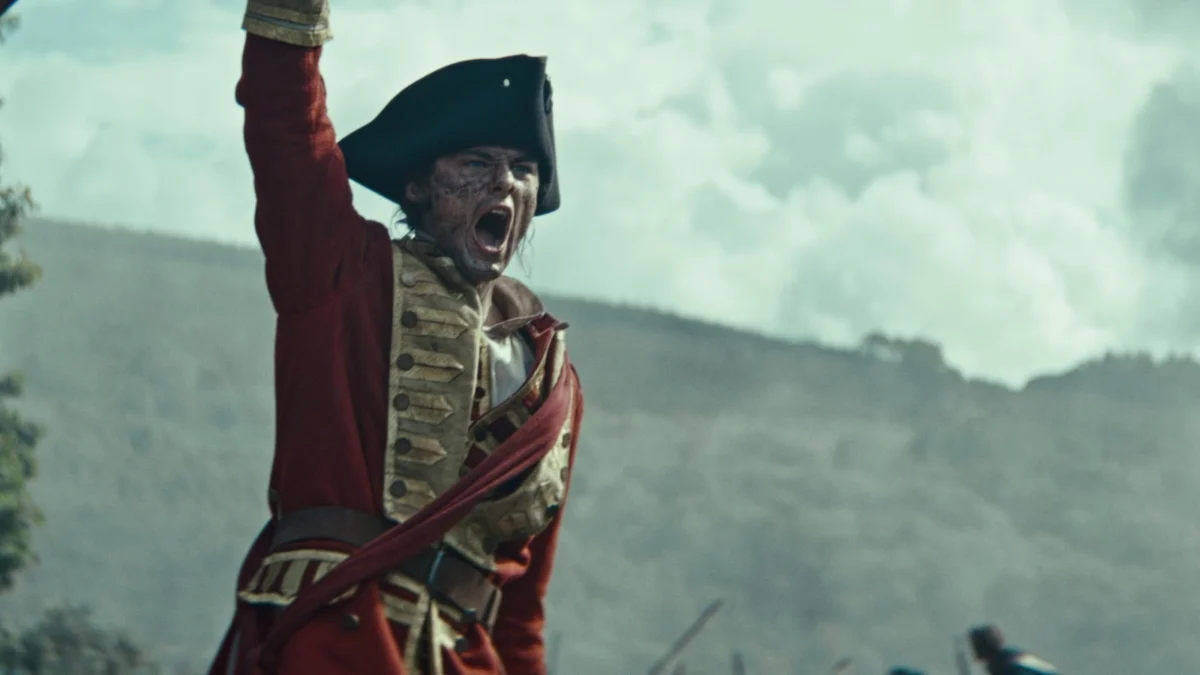
As audiences and eagle-eyed Twitter users began dissecting the film’s credits and freeze-framing individual shots, a digital debate ignited. The discovery that nearly 100 shots in Young Washington were augmented by generative AI—ranging from period-accurate costume textures to the pyrotechnics of cannon fire—transformed the film from a standard historical drama into a primary case study for the future of cinema.
The Genesis of the Controversy
The controversy began with a whisper on social media. Discerning viewers, sensitive to the "uncanny valley" effects often associated with early AI integration, began sharing screenshots of what they perceived to be artificially generated artifacts. These claims were soon substantiated by an exclusive report in Variety, confirming that the production had indeed utilized generative tools for approximately 100 shots.
For many in the industry, the use of AI is a red line; for Erwin, it is a toolset, no different than the transition from film stock to digital cameras. Rather than retreating from the accusations, Erwin has leaned into them, viewing his recent slate of projects—including House of David and the ambitious The Old Stories: Moses—as vital testing grounds for a new, "non-linear" model of filmmaking.
A New Workflow: Synthesizing vs. Generating
To understand Erwin’s philosophy, one must distinguish his methodology from the common "text-to-video" AI prompts that worry many creative professionals. Through his new studio, Innovative Dreams—a cornerstone of the Wonder Project—Erwin advocates for "synthesizing" rather than "generating."
"We aren’t creating things from thin air," Erwin explained in an interview with IndieWire. "We are taking real assets—wardrobe we own, locations we’ve scouted, and the actors themselves—and using AI to augment them. When you use real things and you use these tools to synthesize those real things, you get to far superior results."

This approach was pivotal for the production of Young Washington. During a sequence involving a frigid river crossing in the Ohio Territory, the production faced a logistical impossibility: filming actors in genuinely dangerous, icy waters. By filming the real river and separately capturing the actors in a controlled, safe environment, the team used AI to synthesize the two elements in real-time. This allowed for a level of photorealism that traditional post-production methods would have taken months to achieve.
Chronology of Innovation
Erwin’s journey into AI integration did not happen overnight. It is the result of years of experimentation with volume stages and real-time VFX.
- Pre-2024: Erwin develops a background in 3-D animation, eventually moving away from it due to the clunky, labor-intensive nature of traditional keyframe tools.
- Early 2024: Production on The Old Stories: Moses utilizes extensive volumetric scanning—a technique known as "gaussian splatting"—to project real-world locations onto LED volume stages in real-time.
- Mid-2024: Young Washington enters production, utilizing portable, wheel-mounted computing rigs that bring generative AI capabilities directly to the set.
- Late 2024: Following the release of Young Washington, the film nets $20.8 million in its opening weekend, signaling that, despite the online discourse, audiences are not shying away from the technology.
This success has not only validated Erwin’s methods but has also spurred the announcement of a Young Washington sequel, proving that technological transparency does not necessarily equate to commercial failure.
The Economic Implications: Saving Jobs Through Efficiency
One of the most persistent arguments against AI in Hollywood is the fear of job displacement. Erwin counters this by positioning AI as a means to reverse the "brain drain" and outsourcing of production. He argues that the primary threat to industry jobs is not technology, but the unsustainable, ballooning costs of traditional production that force studios to seek cheaper locations overseas.
"The reason why I really think these tools are going to last is because it creates a moment where creativity can happen as it should be," Erwin said. "Any mindset of how many people can we replace is immoral. What we should think is, could we use these tools to combat the primary reason jobs have been lost, which is the escalating cost of production?"
Erwin’s vision involves training veteran film professionals—those who have spent years in the trenches of production—on how to use AI tools, rather than replacing them with solo "prompters" who lack experience on a set. By keeping the AI artists on set and integrated into the workflow, he ensures that the technology serves the vision of the director rather than overriding it.

The "Spielberg" Mentality: A Call for Industry Standards
Erwin draws a direct parallel between the current AI transition and the introduction of computer-generated imagery in the 1990s. He recalls how Steven Spielberg, when presented with the choice between stop-motion and digital dinosaurs, chose to embrace the technology to push the medium forward.
However, Erwin is not a blind techno-optimist. He is a vocal advocate for regulation and ethical guidelines. He draws a firm line at synthetic performers, arguing that human actors are the soul of the work. For him, AI should handle the "heavy lifting"—the environmental textures, the background battle sequences, and the complex lighting setups—that allow the actor’s performance to take center stage without the distractions of an expensive, slow post-production cycle.
"There are other people in this space that are almost celebrating how much they can replace," Erwin noted. "Why would you create a race to the bottom to create inferior work? That makes no sense to me."
The Path Forward: Transparency and Training
As the industry stands at a crossroads, Erwin believes the current moment is akin to George Lucas’s 2002 summit, where the industry grappled with the shift to digital capture. He is calling for a unified, collaborative effort between studios and unions to establish a standardized "digital pipeline."
He envisions a future where "non-linear filmmaking" becomes the standard. By breaking down the silos between prep, photography, and editorial, directors can see the final, or near-final, image on set. This allows for immediate creative iteration, ensuring that the vision on the monitor matches the reality on the ground.
Conclusion: An Invitation to Curiosity
The reception of Young Washington serves as a barometer for the industry’s changing tides. While the initial backlash was significant, the film’s financial performance suggests that the audience is far more concerned with the quality of the storytelling than the tools used to capture it.

Erwin’s message to his peers is one of pragmatic curiosity. He views the fear surrounding AI as a natural reaction to rapid change, but he urges his colleagues to "roll up their sleeves" and engage with the tech before it is defined by the tech companies alone.
"We’re the people that have dedicated our lives to this craft," Erwin concluded. "We should not sit on the sidelines. I think the best path to that is transparency and to create a conversation about it."
As Young Washington continues its theatrical run, the industry will be watching closely. Whether this represents a "race to the bottom" or the birth of a new, efficient era of American filmmaking remains to be seen. But one thing is clear: Jon Erwin has set the terms of the debate, and the conversation about AI in Hollywood will never be the same.