The Grit of Independence: How Nathan Grubbs’ ‘Cowboy’ Defied the Odds to Reach the Screen
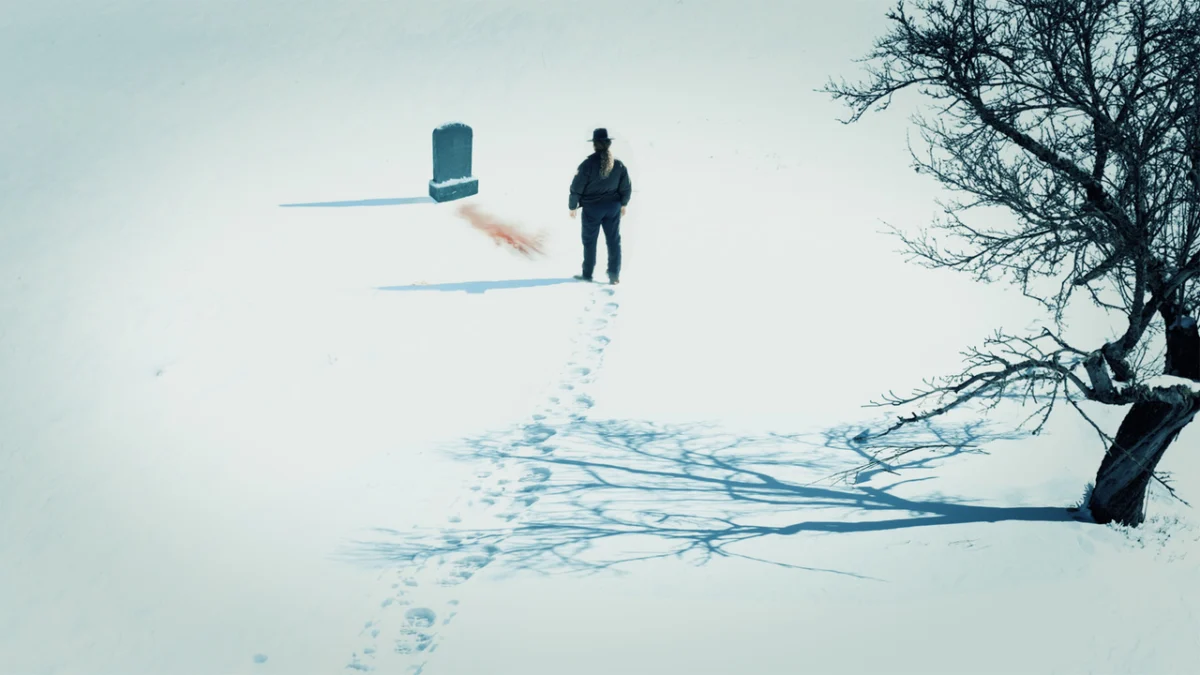
Independently financed American genre films are rarely born without scars. They are typically the product of sheer force of will, often surviving on little more than caffeine, credit cards, and the stubborn refusal to quit. In the case of Cowboy, the directorial debut of Nathan Grubbs which recently bowed at London’s prestigious Raindance Film Festival, the struggle to get the film made became inextricably linked to the narrative itself. It is a contemporary Southern noir Western that serves as a testament to the resilience of the independent spirit in an industry increasingly dominated by risk-averse studio machinery.
The Genesis of a Modern Western
Produced through Rubicon Entertainment, Cowboy was not a project that benefited from a traditional financing package or a greenlit budget ready for a three-month shoot. Instead, the film was constructed incrementally, piece by agonizing piece. Grubbs, who pulled triple duty as director, lead actor, and creative engine, worked alongside screenwriters Joshua Ryan Dietz, Jeff Hoffman, and Chris Sivertson to craft a script that could be adapted to the realities of a piecemeal production schedule.
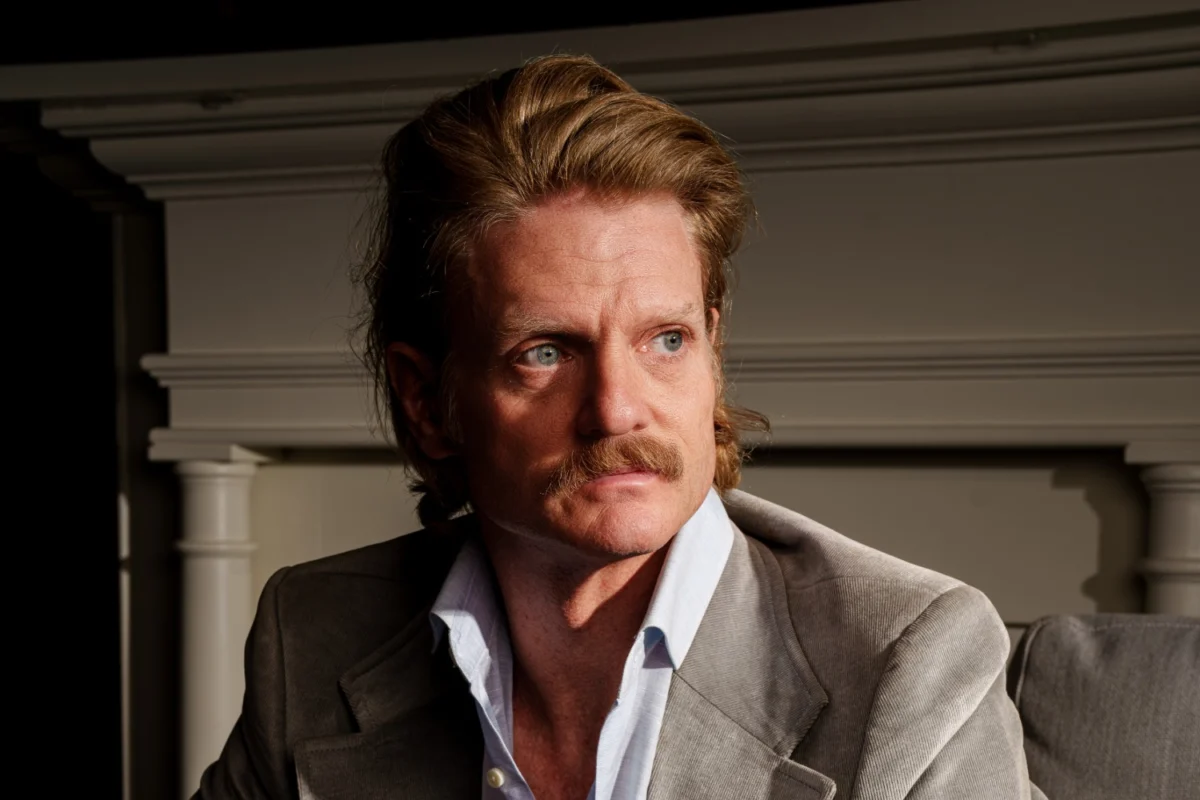
The story follows Juno, a veteran who turns to robbery in New Orleans. A botched heist results in a prison sentence, and upon his release, he attempts to shed his past by working under a pseudonym at the very horse ranch he once targeted. The stakes are raised when he forms a complex, fragile bond with Eve (played by Alexandra Essoe), the woman who was blinded during the crime that sent him to jail.
"The biggest challenge in assembling the financing was honestly myself," Grubbs admitted in an interview with Variety. "I had to become this character, put on the cowboy boots, and bet on myself—in many ways, bet the farm."
A Chronology of Perseverance
The production cycle of Cowboy stretched across more than a year—a lifetime in the world of independent film. The process required a level of logistical coordination that would have intimidated a seasoned studio production manager. Actors had to return for multiple, sporadic shoots while the production team worked tirelessly to protect continuity, source replacement locations, and navigate a fragmented schedule that was constantly threatened by external variables, including the COVID-19 pandemic.
The filmmakers made the bold decision to shoot the film chapter by chapter. By doing so, they essentially built momentum as they went, using the footage they had already captured to prove the film’s potential to collaborators and stakeholders. "A few friends and I took a tremendous risk, shooting the film chapter by chapter," Grubbs explained. "When people saw what we were accomplishing with very little money, the excitement grew."
This stop-and-start methodology, while taxing, mirrored the film’s central themes of survival and redemption. It allowed the project to evolve organically, shifting its geography and visual language to better serve the story as it unfolded.
From Los Angeles to the Louisiana Bayou
The film’s evolution was heavily influenced by its shifting setting. Initially, the screenplay was conceived for the sprawling urban landscape of California. Early drafts placed the city sequences in downtown Los Angeles, with a climactic chase envisioned through the concrete basin of the iconic L.A. River.

"I liked the metaphor of someone at their lowest point, literally at the bottom of the river, and then within a short distance, reaching mountains, countryside, horses, and open space," Grubbs noted.
However, once the production shifted to Louisiana, the film found a more authentic and personal rhythm. Railroad tracks replaced the river, and the vast open space of California gave way to the dense, haunting atmosphere of Louisiana’s live oaks and Spanish moss. For Grubbs, who hails from the region, the move was transformative. "Louisiana changed the visual language, but in a beautiful way," he said. "It gave the film a unique identity, and because I’m from Louisiana, it became deeply personal."
Community and Collaboration: The "Village" Effort
The limited resources of the production were offset by a surprising surge of local support. Without the deep pockets of a major studio, Grubbs relied on the ingenuity of his crew and the goodwill of the community. Louisiana residents, seeing a filmmaker trying to capture the soul of their home, frequently offered locations at reduced rates or for free.
The physical world of the film was built by hand. In one instance, Grubbs constructed a horse corral alongside a friend. In another, professional rodeo cowboys were brought in to assemble the rodeo sequence, providing a level of authenticity and speed that a standard production crew might have struggled to achieve.
"People there really do bend over backwards to help a local filmmaker achieve something meaningful," Grubbs said. "That kind of support kept motivating us to keep going."
The Evolution of an Actor-Director
Grubbs’ transition to the director’s chair was born of necessity rather than a long-held ambition. He had originally intended only to play the role of Juno. However, as the pandemic shuttered industries and financial timelines shifted, the film found itself at a crossroads. Grubbs realized that if the project were to reach completion, he would have to become its primary steward.
"Over time, I became the person most responsible for protecting the film’s vision and carrying it all the way through," he explained. "If there were pickup shots or unfinished pieces, I knew I would keep showing up. That responsibility ultimately led me to direct as well."
During the process, Grubbs found inspiration in the careers of legendary actor-directors who had navigated similar challenges. He revisited classics like Citizen Kane, Dances With Wolves, Easy Rider, and Unforgiven. He emphasized that he was not seeking to mimic these films, but rather to understand the burden of total creative responsibility. "Making Cowboy gave me a deeper respect for how difficult that is, and how rewarding it can be when the film truly comes from a personal place."

Artistic Influences and Moral Ambiguity
While Cowboy is a product of its own unique circumstances, it is clearly rooted in the traditions of the crime and Western genres. Grubbs points to the works of Sam Peckinpah, the Coen brothers, and Jacques Audiard as major influences, particularly in their nuanced approach to moral ambiguity and atmospheric tension.
Yet, Cowboy avoids the trap of becoming a mere "pastiche." It is not an exercise in genre quotation, but rather a translation of those traditions into a specifically Southern landscape. "The goal was never imitation," Grubbs said. "It was to honor the films that shaped me while still making something personal and rooted in my own experience."
The Implications for Independent Cinema
The premiere of Cowboy at the Raindance Film Festival serves as more than just a debut; it is a validation of the "chapter-by-chapter" production model. By proving that a compelling, high-quality narrative can be forged through resilience and community support, Grubbs has laid a potential blueprint for other independent filmmakers facing the daunting task of financing in a volatile market.
For Grubbs, the festival was the ideal venue to launch his debut. Raindance’s long-standing commitment to championing independent voices provided the perfect backdrop for a film that was, in every sense, an independent effort.
"The most important thing is that the film is finished and can now be seen," Grubbs said.
Looking toward the future, the experience has solidified his path forward. He currently has three features in development, including a science-fiction psychological thriller. Whether he remains behind the camera or returns to his roots as an actor, he intends to maintain the same focus on emotional, cinematic storytelling. "Making Cowboy reinforced my desire to tell stories that are emotional, cinematic, and personal," he concluded. "If I’m able to make these next three films, that would be a dream come true."
As the industry continues to fluctuate, stories like Cowboy remind us that the heart of cinema does not always reside in boardrooms or multi-million dollar budgets. Sometimes, it resides in the grit of an actor wearing boots on a set he built himself, in the middle of a Louisiana field, refusing to let his vision fade into the background.