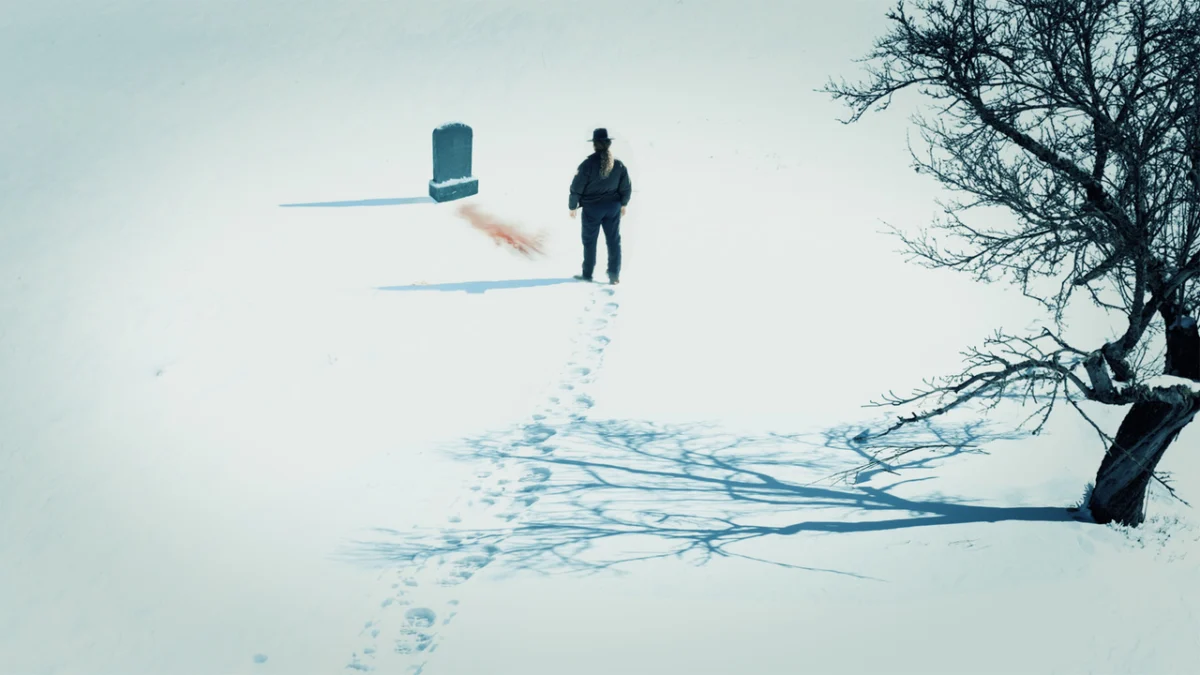

The Digital Frontier: Raindance Film Festival Unveils "Lost Canon," a New Era of AI-Native Cinema
The landscape of independent filmmaking underwent a seismic shift at this year’s Raindance Film Festival in London, as the industry bore witness to the premiere of "Lost Canon." This experimental showcase featured ten AI-native short films, each constructed from the ground up using CapCut Video Studio. The project, a collaborative venture between the AI-powered creative platform CapCut, next-generation storytelling studio Moonmax, and the Raindance Film Festival, signals a departure from traditional production methods, pushing the boundaries of what is possible when human imagination is augmented by generative artificial intelligence.
The Genesis of "Lost Canon": Bridging Fiction and Reality
The "Lost Canon" initiative was born from a singular, provocative creative prompt: to imagine stories, artifacts, places, events, and cultural phenomena that have never existed in the historical record. By tasking ten visionary filmmakers with the creation of an "alternative history," the project aimed to test the capabilities of CapCut Video Studio, a canvas-based production environment that integrates the entire filmmaking pipeline—from initial ideation and storyboarding to AI-driven scene generation, editing, and final export—within a single, unified interface.
For the creators, the challenge was not merely technical but philosophical. They were asked to act as archeologists of the impossible, excavating narratives that were previously locked away by the constraints of budget, accessibility, and physical production logistics. The result was a collection of films that blurred the lines between the digital and the tangible, questioning the very nature of authorship in an age where algorithms can conjure visual reality from text prompts.
A New Cinematic Language: The Ten Films
The diversity of the "Lost Canon" collection highlights the versatility of AI as a creative medium. The ten filmmakers and their respective projects are as follows:
- "Black-Op77" by Frankie Caradonna
- "Delete Forever" by Phill Turner
- "Soft Play" by Ikenna Mokwe
- "Cinema West!" by Jagger Waters
- "What Chivalry Is This" by Toby Hyder
- "Theodore and Wilson" by Ben Abergel
- "All My Kitties" by Katharina Gellein Viken
- "Mothmen" by Jan-Willem Blom
- "Mayoiga" by Paige Piskin
- "E14" by Tamas Olajos
Each film serves as a case study in how AI-native workflows allow for rapid iteration. Where traditional filmmaking might require weeks of location scouting, set design, and complex post-production, these creators moved through the "Lost Canon" process in a fraction of the time, utilizing the CapCut Video Studio to maintain a consistent aesthetic vision without the need for a massive crew or extensive physical infrastructure.
Chronology of Development: From Prompt to Premiere
The development of "Lost Canon" was a public-facing endeavor, reflecting the transparent nature of modern digital creation. Leading up to the London premiere, the participating artists engaged in a sustained social media campaign. This wasn’t merely promotional; it served as a digital log of the evolution of AI-assisted art.
Phase 1: Conceptualization and Prototyping
The initial phase involved the filmmakers feeding complex prompts into the generative AI engine. By testing different stylistic parameters within the CapCut ecosystem, the artists refined the visual language of their respective "impossible" worlds. This phase emphasized the iterative nature of AI; unlike a static script, the story evolved alongside the visuals.
Phase 2: Building the "Lost" Worlds
Throughout the production phase, creators shared behind-the-scenes content, including early concept art, wireframes, and "glitch" tests. This transparency allowed the audience to see the underlying mechanics of the AI. By sharing teasers and posters, the filmmakers built a "fictional history" for their projects, creating a meta-narrative where the audience began to believe these "lost" events might have actually occurred.
Phase 3: The Raindance Premiere
The culmination was the festival screening in London. The premiere provided a professional stage for these experiments, validating them not as mere technical demos, but as legitimate pieces of cinematic art. The festival, historically a champion of disruptive and independent storytelling, proved to be the ideal venue for debuting a project that challenges the traditional gatekeeping of the film industry.
The Visionaries Speak: Insights from Moonmax and CapCut
The collaboration between Moonmax and CapCut is rooted in a shared belief that the tools of production are becoming democratized. Daniel Gordon, head of AI at Raindance and CEO of Moonmax, views the project through the lens of human empowerment.
"The concept of ‘Lost Canon’ has a double meaning for us," Gordon explained during the festival. "These tools give creators the ability to bring ideas into existence that might otherwise never have existed at all. AI allows filmmakers to realize stories that would previously have been impossible, inaccessible, or prohibitively expensive."
For Gordon, the "Lost Canon" is not just about the technology—it is about the removal of friction. By lowering the barrier to entry, the project enables a new cohort of storytellers to translate their internal visions into high-fidelity external reality.
Lewis Graham, partnerships and community lead at CapCut, echoed this sentiment, framing the Video Studio as the ultimate canvas for the modern creator. "It’s exactly the kind of AI-native filmmaking we built Video Studio for: giving creators the tools to build entirely new worlds and blur the boundaries between fiction and history," Graham noted. The focus, according to CapCut, is on "creative fluency"—ensuring that the technology remains a tool for the artist, rather than a replacement for their vision.
Supporting Data and Technical Implications
The shift toward AI-native filmmaking, as demonstrated by "Lost Canon," carries significant implications for the broader industry:
- Workflow Consolidation: By hosting ideation, generation, and editing within a single application, CapCut is effectively compressing the traditional post-production timeline. This "all-in-one" approach reduces the reliance on fragmented software suites, potentially saving thousands of hours in rendering and file-transfer time.
- Cost Democratization: The high cost of specialized visual effects (VFX) has long served as a barrier to entry for independent filmmakers. "Lost Canon" suggests that generative AI can provide comparable visual complexity at a fraction of the cost, potentially disrupting the market for boutique VFX houses.
- The Rise of "Prompt Engineering" as Creative Direction: The role of the director is shifting. In the "Lost Canon" workflow, the director acts less as a traditional project manager and more as a curator and prompt architect. The success of the film depends on the creator’s ability to guide the AI’s output through precise, iterative instructions.
Implications for the Future of Cinema
The "Lost Canon" project is not without its critics, as the broader discourse around AI in the arts continues to grapple with questions of copyright, labor, and the potential devaluation of human craftsmanship. However, proponents argue that "Lost Canon" is not an attempt to replace human filmmakers, but rather an exploration of a new aesthetic frontier.
Redefining Authenticity
If an AI can generate a "lost" historical artifact with perfect visual fidelity, does the audience care that it was never real? The "Lost Canon" project suggests that the emotional resonance of a story—the "human" element—remains the primary driver of audience engagement, regardless of whether the tools used to create the visuals were human-operated cameras or algorithmic generators.
The Evolution of Film Festivals
Raindance’s decision to host "Lost Canon" indicates that major film festivals are ready to embrace AI as a permanent fixture. As these tools become more prevalent, we can expect to see more dedicated categories or festival tracks for AI-native works, forcing a re-evaluation of what constitutes a "film" in the 21st century.
The Democratization of Epic Storytelling
Perhaps the most profound implication is the potential for "epic" scale storytelling to become accessible to individual creators. If a solo filmmaker can generate an entire world—with its own unique history, architecture, and atmosphere—within a single software environment, the traditional hierarchy of the film industry may face a significant challenge. The era of the "one-person studio" is rapidly approaching, and "Lost Canon" provides a glimpse into a future where the only limit to a film’s scope is the ambition of the creator’s vision.
Conclusion: A New Chapter in Storytelling
As the curtains closed on the "Lost Canon" premiere at Raindance, the message was clear: the technology for AI-native cinema has arrived, and it is ready to be wielded by the next generation of storytellers. While the debates surrounding AI’s role in creative fields will surely continue, the project serves as a compelling proof-of-concept for a new era of artistic expression. By turning the "impossible" into the "canonical," the ten filmmakers involved have not only pushed the limits of CapCut Video Studio but have also challenged us all to reconsider the infinite possibilities of human-AI collaboration. The canon of cinema is no longer fixed; it is being written in real-time, one prompt at a time.