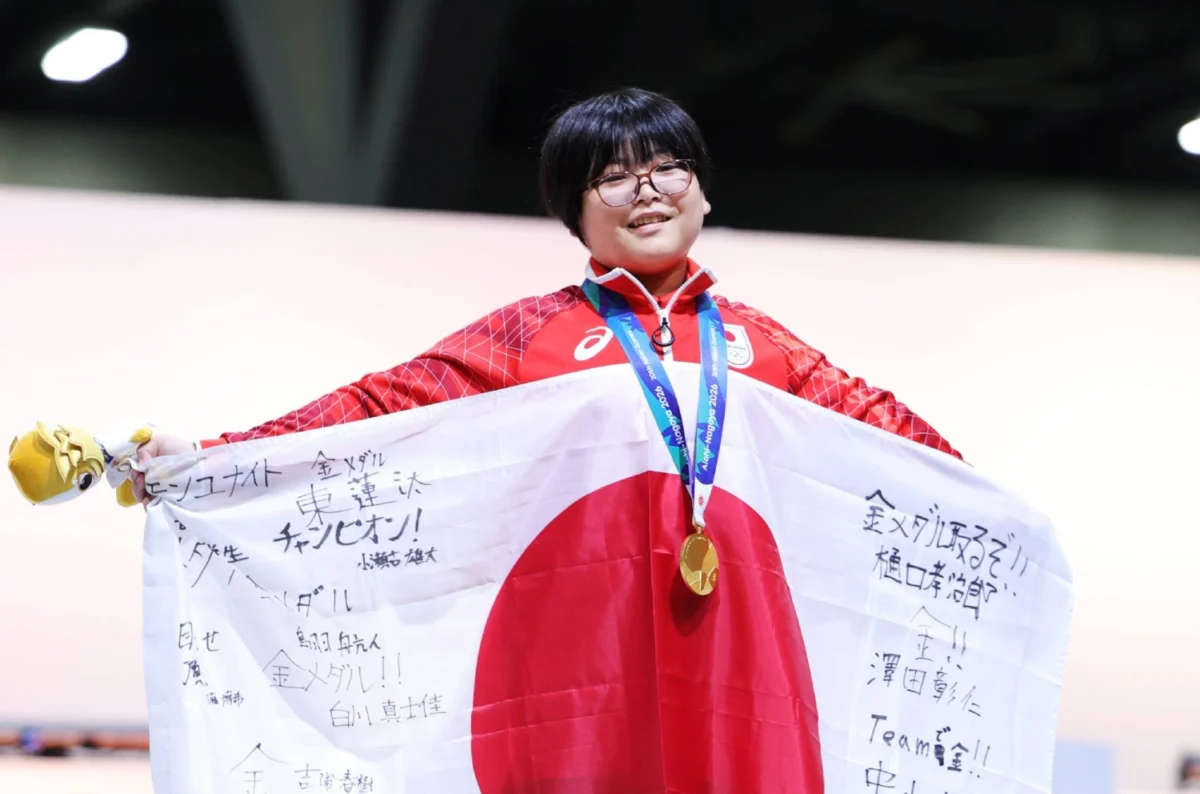
The Prodigy of Puyo Puyo: 11-Year-Old Yuki Kurihara Makes History at Aichi-Nagoya Asian Games
NAGOYA, Japan — In the high-stakes, neon-lit arena of the Aichi-Nagoya Asian Games, where seasoned athletes test their physical limits and tactical nerves, a soft-spoken, bespectacled elementary school student has redefined the boundaries of competitive sports. Yuki Kurihara, an 11-year-old esports sensation, captured the gold medal in Puyo Puyo Champions this past Saturday, systematically dismantling opponents more than twice his age and etching his name into the annals of international sporting history.
Kurihara is now officially the youngest athlete to ever represent Japan at the Asian Games, a feat that has sent shockwaves through the competitive gaming community and sparked a global conversation about the evolution of youth athleticism in the digital age.
The Main Facts: A Masterclass in Strategy
The Puyo Puyo tournament, a high-speed puzzle game requiring rapid pattern recognition and precise dexterity, demands a level of mental processing that most adults struggle to master. Yet, Kurihara approached the competition with the calm of a veteran.
In a display of dominance that left the audience and his opponents stunned, the 11-year-old navigated the bracket with surgical efficiency. His final victory—a 10-2 blowout against South Korea’s 24-year-old Kang Dongshin—was not merely a win; it was an emphatic statement. After trailing 1-0 in the opening moments of the final, Kurihara pivoted his strategy, executing a series of complex chain reactions that overwhelmed his older, more experienced counterpart.
Despite the monumental nature of his achievement, Kurihara remained remarkably grounded. When asked about his stoic demeanor during the match, he admitted to feeling "embarrassed" by the disparity in age and experience between him and his competitors. "To be completely honest, I felt a bit embarrassed, so I couldn’t really show my expressions or change my face much," he explained.
A Chronology of a Meteoric Rise
To understand Kurihara’s success, one must look at his rapid ascent within the competitive gaming circuit.
- Early Beginnings: Kurihara first picked up Puyo Puyo in his first year of elementary school. What began as a childhood pastime quickly evolved into an obsession, with the young prodigy demonstrating an innate ability to visualize complex geometric sequences under pressure.
- The Professional Threshold: By April of this year, his talent was undeniable. He secured a professional esports license, a milestone that signaled his transition from a gifted hobbyist to a formidable force on the pro circuit.
- The Road to Aichi-Nagoya: In the months leading up to the Games, Kurihara balanced a grueling schedule that would challenge any adult. He navigated the complexities of primary school, the rigorous demands of juku (cram school), and hours of high-level practice. "It’s hard having to balance it with school and cram school, but it’s really fun," he noted in a pre-tournament interview.
- The Semifinal Stunner: Before the gold medal match, Kurihara faced 28-year-old Thai competitor Tanarak Wongkitkun. The semifinal match was expected to be a test of endurance, but Kurihara dismantled the veteran 10-1, securing his place in the final and guaranteeing at least a silver medal for the host nation.
- The Coronation: On Saturday, the final match concluded with Kurihara standing on the podium, bowing with a maturity that belied his age. As the gold medal was placed around his neck, the 11-year-old was seen smiling, noting, "The gold medal is really beautiful, shiny and heavy. Also, the plush toy is super cute, and it’s cool that it is gold-colored too."
Supporting Data: The Context of Youth in Sport
The significance of Kurihara’s victory is amplified when placed within the historical context of the Asian Games. While exact records for the youngest medalists since the Games’ inception in 1951 are not fully digitized, Kurihara’s age places him in a tier occupied by only the rarest of prodigies.
In recent years, the trend of younger athletes dominating at the continental level has become more pronounced, particularly in sports like skateboarding and esports. In 2018, Indonesia’s Bunga Nyimas made headlines by securing a bronze medal in women’s skateboarding at age 12. Three years ago, at the Hangzhou Asian Games, 13-year-old Cui Chenxi captured gold in the women’s street skateboarding event.
Kurihara, at 11, has effectively lowered that ceiling. His performance data—measured by the speed of his chain reactions and the low frequency of "mis-drops"—suggests that his cognitive processing speed is currently unrivaled in the Puyo Puyo scene, regardless of the competitor’s age.
Official Responses and Public Reaction
The reaction from the Japanese delegation and the wider esports community has been one of both pride and caution. While officials are thrilled to have captured gold on home soil, there is an underlying emphasis on ensuring that Kurihara’s development as a person remains the priority.
"Yuki is an extraordinary talent, but he is still a child," said one official from the Japanese esports team. "Our goal is to support his passion for gaming while ensuring he maintains his academic progress and his childhood."
The online community, meanwhile, has reacted with a mix of awe and lighthearted humor. Fans on social media platforms have lauded the "bespectacled schoolboy" for his humility, noting that his ability to beat players twice his age without showing arrogance is a testament to his character. The image of the 11-year-old, still in school, holding his gold medal and talking about the "cute" mascot plush toy, has become an iconic moment for the Aichi-Nagoya Games.
Implications for the Future of Esports
Kurihara’s victory is more than a single medal; it is a catalyst for the broader acceptance of esports as a legitimate, highly demanding athletic endeavor.
1. The Professionalization of Youth Gaming
The success of young players like Kurihara suggests that the barrier to entry in professional gaming is shifting. As digital natives continue to integrate complex software interfaces with traditional strategic thinking, the age of "peak performance" in esports may continue to drop. This poses questions for tournament organizers regarding age caps, player welfare, and the integration of professional competition with educational requirements.
2. Cognitive Development and Competitive Gaming
Neurologists and sports psychologists have long studied the relationship between gaming and cognitive function. Kurihara’s ability to remain "unruffled" during high-stakes matches—even while playing against much older opponents—suggests a level of emotional regulation that is often sought after in traditional sports psychology. His story is likely to trigger further research into how early exposure to high-pressure competitive gaming impacts a child’s problem-solving skills and emotional resilience.
3. The Asian Games as an Esports Hub
The inclusion of titles like Puyo Puyo Champions in the Asian Games demonstrates the commitment of the Olympic Council of Asia to evolve with the times. The success of the esports program in Aichi-Nagoya—and the massive viewership attracted by a young star like Kurihara—guarantees that digital sports will remain a cornerstone of the Games for decades to come.
4. Balancing Ambition and Childhood
Perhaps the most critical implication of Kurihara’s win is the debate over the "cram school vs. gold medal" lifestyle. The pressure placed on young, high-achieving Japanese students is intense. Kurihara’s ability to balance the two worlds serves as a case study for future generations of young athletes who seek to excel in both the academic and professional arenas.
Conclusion: A New Chapter
As the lights dim in the Nagoya arena, Yuki Kurihara returns to a life that is, for now, a blend of elementary school homework and international fame. He remains an anomaly—a student who spent his weekend winning a continental gold medal before potentially heading back to a math quiz on Monday morning.
His journey is far from over. As he continues to hone his craft, the world will be watching to see how he manages the weight of expectation that now accompanies his talent. For now, however, the young prodigy from Japan has secured his place in history, proving that in the world of esports, age is but a number, and brilliance knows no boundaries.