
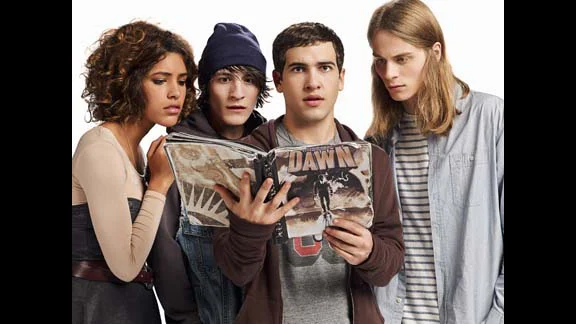
Unpaid Labor Under Scrutiny: The Legal Battle Over Nickelodeon’s ‘Alien Dawn’ Internships
In a legal landscape increasingly hostile to the traditional unpaid internship model, the television and film industry faces another high-profile reckoning. Kevin Hicks, a former intern for the Nickelodeon series Alien Dawn, has filed a class-action lawsuit against the show’s production companies, alleging that he was subjected to exploitative labor practices. The suit, filed in the U.S. District Court for the Southern District of New York, highlights a growing trend of former interns seeking restitution for work that they argue should have been compensated under federal and state labor laws.
The litigation serves as a direct challenge to the often-blurred lines between educational opportunity and cheap labor. As the entertainment industry continues to rely on a revolving door of entry-level talent, this case—and others like it—threatens to dismantle the long-standing status quo of the "unpaid production assistant."
The Core Allegations: Beyond the Educational Framework
According to the complaint, Kevin Hicks served as an intern for Alien Dawn between February 7, 2012, and February 20, 2013. During this year-long tenure, Hicks alleges that his duties bore little resemblance to a pedagogical experience. Instead, he claims he was tasked with menial, labor-intensive responsibilities that served the commercial interests of the production companies—Crook Bros. Prods. and Larry Schwarz Media Group—rather than his own professional development.
Hicks’ claims detail a grueling schedule, with his workday frequently spanning 10 to 12 hours, occasionally reaching 16 hours. His responsibilities, as outlined in the suit, included moving heavy props and equipment, managing costumes, disposing of garbage, and appearing as an extra on camera.
The crux of the legal argument rests on the claim that Hicks performed the exact duties of a paid employee, effectively displacing workers who would have otherwise been entitled to wages. Perhaps most damaging to the defense is the revelation that Hicks was briefly compensated for his work as a wardrobe assistant—receiving $319 reported on a W-2 form. The lawsuit asserts that the tasks he performed while being paid were indistinguishable from those he performed as an "unpaid" intern, creating a clear legal vulnerability for the producers.
A Timeline of the Dispute
The timeline of Hicks’ employment provides a clear window into the lifecycle of his tenure and the subsequent legal escalation:
- February 7, 2012: Hicks begins his internship with the production companies behind Alien Dawn.
- February 2012 – February 2013: Over the course of twelve months, Hicks alleges he works extensive hours, frequently performing tasks that mirror those of salaried production staff.
- The Payment Gap: During his tenure, Hicks receives a single payment of $319 for wardrobe assistance, yet remains unpaid for the vast majority of his labor.
- February 20, 2013: Hicks concludes his internship.
- June 2013: Following a wave of industry-wide scrutiny regarding unpaid labor, Hicks initiates his lawsuit in the U.S. District Court in New York.
- Present Day: The case remains in the discovery and pre-trial phase, drawing significant attention from labor rights attorneys and industry watchdogs.
The Precedent: The Shadow of ‘Black Swan’
The timing of the Hicks v. Crook Bros. Prods. et al. case is far from coincidental. It arrived on the heels of a landmark ruling involving Fox Searchlight and the production of the Academy Award-winning film Black Swan. In that case, U.S. District Judge William H. Pauley ruled that the studio had violated minimum wage laws by failing to pay two interns who performed tasks that offered no meaningful educational benefit.
Judge Pauley’s ruling in the Black Swan case effectively narrowed the legal window for what constitutes an "educational" internship. He famously argued that the benefits often cited by employers—such as networking opportunities or a vague "understanding of the industry"—are merely the natural result of being present in a workplace, not the result of a structured, educational curriculum.
"The benefits they may have received—such as knowledge of how a production or accounting office functions or references for future jobs—are the results of simply having worked as any other employee works, not of internships designed to be uniquely educational to the interns and of little utility to the employer," Pauley wrote. This legal standard has become the bedrock upon which plaintiffs like Hicks are building their cases.
Supporting Data and the "Primary Beneficiary" Test
Under the Fair Labor Standards Act (FLSA), the Department of Labor utilizes a "primary beneficiary test" to determine whether an intern is actually an employee. This test looks at several factors, including whether the internship provides training similar to that which would be given in an educational environment, whether the intern is displaced from regular employees, and whether the employer derives an immediate advantage from the intern’s activities.
In the case of Alien Dawn, the evidence suggests that the production companies derived significant immediate value from Hicks’ labor. By having him move equipment, handle costumes, and perform custodial duties, the production saved on the overhead costs of hiring additional crew members. When an intern is performing the tasks of a paid worker, the "educational" argument becomes increasingly difficult to sustain in a court of law.
Official Responses and Defendant Profiles
The lawsuit names several high-level figures and entities, including:
- Crook Bros. Prods.
- Larry Schwarz Media Group
- Laurence Schwarz, Jeff Crook, and Josh Crook
As of the filing of the suit, none of the named parties have provided a formal comment to the media. The silence from the defendants is characteristic of high-stakes labor litigation, where legal teams advise clients against making public statements that could be used against them during the discovery phase.
It is important to note that while the show Alien Dawn aired on Nickelodeon, the network itself was not named in the suit. This is a common legal strategy in entertainment law, as production companies are often separate, independent entities that hold the liability for employment practices, shielding the distribution networks from direct litigation.
The legal team representing Hicks includes Maurice Pianko of InternJustice.com and Jesse Strauss of StraussLaw. Pianko has become a prominent voice in the movement to reform internship practices, positioning himself as a specialist in representing young professionals who have been disenfranchised by the "intern economy."
Broader Implications for the Media Industry
The ramifications of this case extend far beyond Alien Dawn. For decades, the media and entertainment industry has relied on the "prestige" of working on set as a currency to attract unpaid labor. The prevailing logic was that the experience was "worth more than money." However, the courts are signaling that "prestige" is not a legal substitute for the minimum wage.
1. The Death of the Menial Internship
Production companies are now being forced to re-evaluate their internship programs. Many studios are either shuttering their programs entirely to avoid legal liability or are restructuring them to be strictly educational, often requiring university credit and limiting the tasks interns can perform.
2. Rising Operational Costs
If production companies are forced to treat all interns as employees, the cost of producing content will inevitably rise. Smaller, independent production houses may struggle to absorb these costs, potentially leading to a consolidation of the industry where only the largest studios can afford to maintain robust, paid internship pipelines.
3. A Shift in Industry Culture
The "hazing" culture—where entry-level workers are expected to pay their dues through grueling, unpaid, and menial labor—is under direct threat. As the legal risks increase, the industry is seeing a shift toward more formal, mentorship-based programs that prioritize the intern’s learning over the production’s immediate output.
Conclusion: A New Era of Accountability
The lawsuit filed by Kevin Hicks is emblematic of a generational shift. The "internship-as-hazing" model, which has been a staple of the entertainment industry for half a century, is colliding with a modern legal framework that prioritizes worker protections over corporate convenience.
As the case proceeds, it will serve as a bellwether for how the courts interpret the boundaries of the FLSA in the digital and creative age. Whether the producers of Alien Dawn settle out of court or take the case to trial, the message to the industry is clear: the era of the free worker is rapidly drawing to a close. For future interns, the hope is that this litigation will usher in an era where labor is respected, compensated, and recognized for its true economic value.