
The Sonic Alchemy of Kpop Demon Hunters: How Sound Design Mirrors the Rhythm of Pop
In the high-stakes world of modern animation, where visual splendor often commands the spotlight, the sonic architecture of a film can either elevate a masterpiece or collapse under the weight of its own ambition. As supervising sound editor and re-recording mixer Michael Babcock notes, the risk of "flying too close to the sun" is ever-present; add too many layers, and a film’s most poignant moments can dissolve into an incoherent, auditory sludge.
For the team behind Netflix’s Kpop Demon Hunters, the goal was to avoid this atmospheric disintegration by anchoring the film’s soundscape in the precise, infectious, and hyper-polished DNA of K-pop itself. By integrating the sonic language of global pop stardom with the high-octane requirements of a supernatural action film, Babcock and directors Chris Appelhans and Maggie Kang have created a hybrid auditory experience that feels as much like a concert tour as it does a fantasy epic.
The Genesis: A Pre-Animation Approach
The most striking element of the production of Kpop Demon Hunters was its commitment to early integration. Rather than waiting for the animation to be finalized—a standard practice in the industry—Babcock and his team began the sound design process before a single frame of character animation had been rendered.
This early start was essential for a project defined by its musicality. The directors needed to establish the "voice" of the film’s central conflict: the dissonance between the charismatic, potentially demonic boy band, the Saja Boys, and the internal, stressed-out world of the lead singer Rumi (voiced by Arden Cho). By building the soundscape in tandem with the storyboard and animatics, the team ensured that the music and sound effects weren’t just layered on top of one another; they were woven into the same tapestry.

Babcock, who brings a professional musician’s background to his editorial work, spent months deconstructing the production techniques of modern K-pop. He sought to emulate the "fantastic and transporting" quality of the genre, ensuring that even the most supernatural sounds adhered to the film’s established musical logic.
Chronology of the Soundscape
The development of the film’s audio followed a rigorous, iterative process:
- Phase I: Linguistic Research (Pre-Production): Babcock immersed himself in the K-pop industry, analyzing the intricate vocal layering, specific reverb choices, and harmonic structures that define the genre’s "polished" sound.
- Phase II: The Demonology of Sound: The team developed specific "treatments" for the Saja Boys. Rather than relying on generic monster sound effects, Babcock utilized vocal processing techniques—ranging from computer-modulated tones to the ethereal, intimate layering styles associated with artists like Billie Eilish and Imogen Heap.
- Phase III: Synchronicity: As the animation began to take shape, the team focused on aligning sound effects with the rhythm of the musical numbers. Every sword clash, footstep, and supernatural impact was tuned to the beat of the soundtrack.
- Phase IV: Organic Texturing: To keep the film from feeling overly "digital," Babcock sought organic origins for synthetic sounds. This involved techniques like using modified tuning forks to create the unique resonance of the characters’ weapons.
- Phase V: The Final Mix: The climactic finale, featuring the Saja Boys’ anthem "My Idol," served as the ultimate test of the film’s sound design—a delicate balance of intense, high-energy mixing that maintains emotional clarity amidst the chaos.
Supporting Data: The Science of "The Pop Aesthetic"
K-pop is famously characterized by its "polished" production, and translating that into a film requires a deep understanding of audio engineering. Babcock’s strategy for the demonic voices was a direct application of pop production tricks.
"I took a lot of treatments, the jumping-off points they use—everything from reverbs to how they layer voices, how they all do the harmony," Babcock explained. "The demon voices have a very specific treatment on them, a combination of reverb, delays, and coursing-type things, which are all production tricks actually used in K-pop."

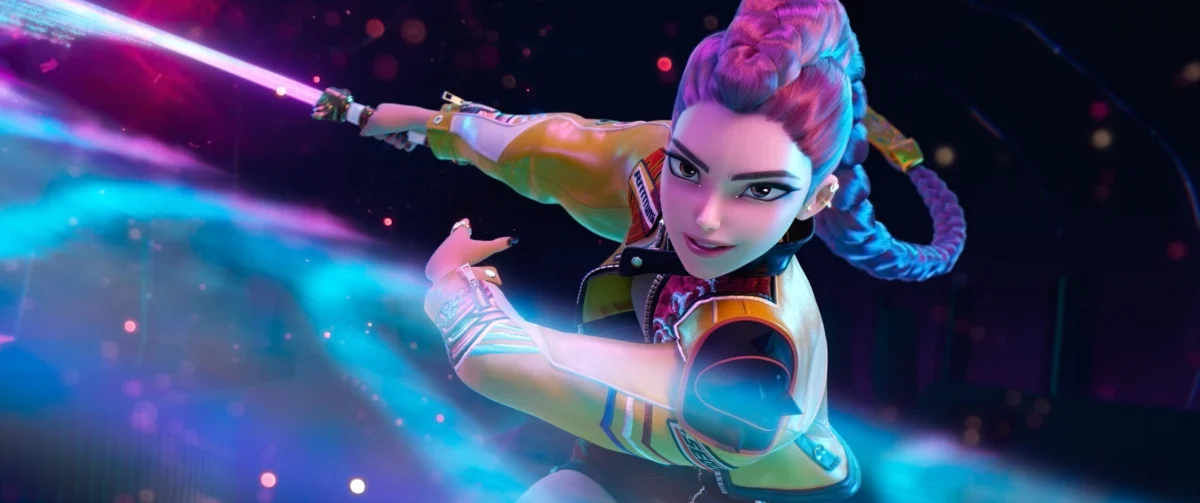
The most creative, and perhaps unexpected, success of this methodology was the creation of the sounds for the protagonists’ weapons. "I didn’t want them to sound too processed," Babcock said. "I went on Amazon and bought a bunch of tuning forks, and we manipulated those. They kind of sound like swords when they resonate." By grounding the fantasy elements in real-world vibrations, the film maintains a visceral weight that keeps the audience tethered to the action.
Official Perspectives: The Challenge of "Cuteness"
Perhaps the most difficult hurdle in the sound design process was not the terrifying demons, but the "cute" spirit animal messengers: a tiger and a magpie, affectionately known by the crew as "Derpy and Sussie."
"You can’t make that creature too scary," Babcock noted. "There’s a cuteness to how it was animated. So it’s actually harder on the sound design side to make something cute than it is [to make it] scary."
To achieve this, Babcock utilized a layering technique, combining real animal vocalizations with his own manipulated voice. This allowed the creatures to express complex, emotive reactions that felt consistent with the film’s tone without descending into the uncanny valley. This attention to detail highlights the film’s philosophy: that emotion is the throughline for every sequence, no matter how brief or "minor" the character.

Implications for Future Animated Musicals
The success of Kpop Demon Hunters in its sound design carries significant implications for the future of animated musicals and action films. By proving that sound effects can be musical instruments in their own right, the production has set a new bar for how we perceive "rhythm" in action cinema.
Babcock’s realization—that he could "get away with" more sound design than initially anticipated without overwhelming the music—speaks to the precision of the mix. "It’s a combination of being exactly precise and, frankly, tasteful, between the music and anything else going on," he said.
This "tasteful" integration is what prevents the film from feeling like a music video interrupted by a movie. Instead, the film feels like a cohesive, singular entity. The audience hears the beat, feels the impact, and understands the emotion, all while the musicality of the film remains uncompromised.
The Final Mix: A Career-Defining Moment
For Michael Babcock, the experience of working on Kpop Demon Hunters has been the pinnacle of his career to date. The final act of the film, which blends the high-stakes battle of the demon hunters with the climactic stage performance of the Saja Boys, represents a triumph of narrative sound design.

"Being able to be rhythmic with certain things and be very strategic with sounds—the whole end of the movie… that’s one of the most fun, intensely wonderful, emotional things I’ve ever mixed in my career," Babcock reflected.
In the end, Kpop Demon Hunters succeeds because it respects its audience’s ears. It treats the viewer not just as a spectator of a visual spectacle, but as a listener of a carefully constructed, rhythmic experience. It is a testament to the idea that in the world of animation, the most powerful special effect is often the one you can’t see, but the one you feel deep in your bones. By leaning into the polished, harmonic, and rhythmic nature of the music that inspired it, the film has carved out a unique space in the genre, proving that when sound design flies with, rather than against, the music, it can soar higher than ever imagined.