
The Great Cinematic Revival: Hollywood’s 2026 Mid-Year Box Office Report
The global box office finally feels like its old self again. After years of post-pandemic uncertainty, where the very sanctity of the theatrical experience was questioned, 2026 has emerged as a watershed year for the industry. Driven by a volatile mix of massive, nostalgia-fueled sequels and surprising, grassroots indie phenomena, the film business is experiencing a renaissance that few analysts predicted as recently as last year.
According to data provided by Rentrak, domestic ticket sales are currently trending 10% higher than in 2025. Hollywood is basking in its hottest summer since the COVID-19 pandemic, with revenue for the four-month season projected to clear the $4 billion barrier—a milestone not reached since the cultural phenomenon of “Barbenheimer” in 2023. While the industry still faces hurdles, the narrative has shifted from one of existential dread to one of calculated, high-stakes competition.

The State of the Industry: A Mid-Year Overview
The landscape of 2026 is defined by a paradoxical success: while the traditional blockbuster remains a pillar of studio strategy, the "sleeper hit" has returned with a vengeance. Audiences, tired of formulaic offerings, have flocked to high-concept, low-budget horror films like Curry Barker’s Obsession and Kane Parsons’ Backrooms. Simultaneously, the appetite for massive intellectual property (IP) has remained insatiable, provided the execution hits the right emotional notes.
However, it has not been a year of unmitigated success. The "costly misfire" remains a persistent threat, as evidenced by the high-profile struggles of films like Moana and Masters of the Universe. These failures serve as a sobering reminder that the audience’s patience for recycled content is not infinite. As we look toward the horizon—brimming with high-anticipation releases like The Odyssey, the climax of the Dune trilogy, and Marvel’s Avengers: Doomsday—it is vital to analyze the first six months of the year to understand what resonated and what fell flat.

The Winners: Sizzling Successes
The Super Mario Galaxy Movie
- Global box office: $1 billion
- Budget: $110 million
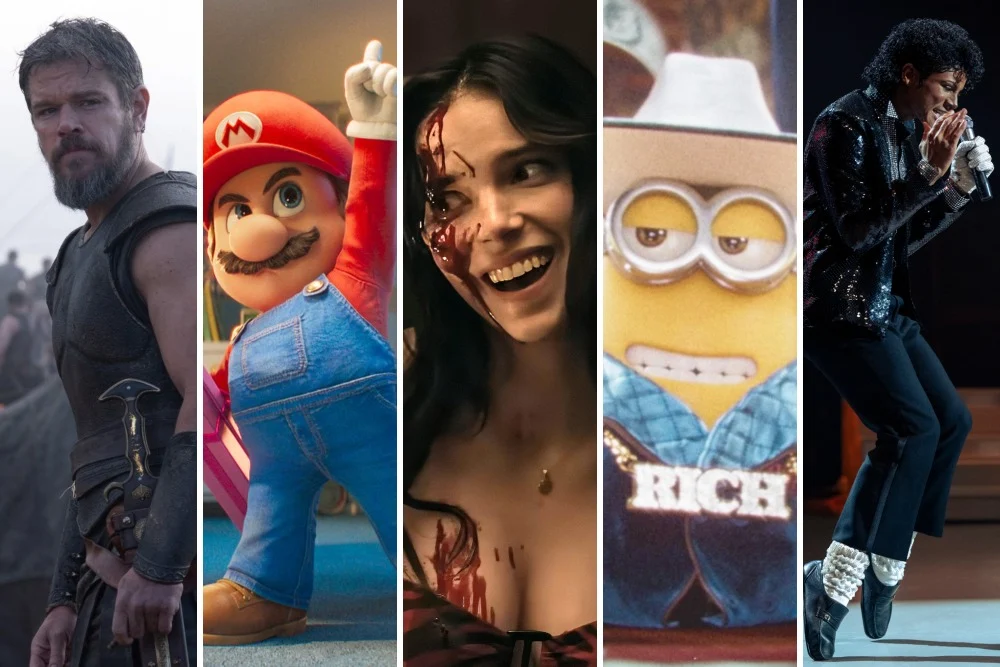
Mario, Luigi, Princess Peach, and Yoshi have once again powered up the industry. While The Super Mario Galaxy Movie faced a slightly more skeptical critical reception than its predecessor, its financial dominance is undeniable. By keeping the budget at a lean $110 million—a figure that looks increasingly savvy in an era of $300 million ballooning costs—Illumination and Nintendo have solidified their foothold as the kings of animation. With over 200 titles in the Nintendo library, the franchise is arguably the most valuable asset in modern cinema.
Project Hail Mary
- Global box office: $683.3 million
- Budget: $200 million
Amazon MGM Studios’ gamble on Andy Weir’s space-faring bestseller has paid off, validating the company’s pivot toward aggressive theatrical distribution. Released in the "quiet" month of March, the film captured the public imagination through word-of-mouth and a career-best performance from Ryan Gosling. Its success proves that mid-budget sci-fi, when executed with heart, remains a viable blockbuster category.

Michael
- Global box office: $1 billion
- Budget: $155 million
Lionsgate’s Michael is perhaps the most fascinating case study of the year. Despite intense behind-the-scenes drama, costly reshoots, and a critical narrative focusing on the film’s sanitized depiction of the King of Pop, the audience spoke with their wallets. By prioritizing the music and the spectacle, the film became the highest-grossing musical biopic in history, eclipsing Bohemian Rhapsody and Oppenheimer. The studio is already eyeing a sequel, though the challenge of navigating the darker aspects of Jackson’s life will require a more delicate narrative approach.
Obsession
- Global box office: $426 million
- Budget: $750,000
The indie miracle of the year, Obsession, is a testament to the power of the internet generation. Directed by 26-year-old YouTube creator Curry Barker, the film defied the traditional box office decay curve, seeing its revenue increase for four consecutive weeks post-debut. Its success alongside Backrooms suggests a seismic shift in youth engagement; Gen Z is not just a streaming generation—they are a theater-going force when the content feels authentic to their culture.

The Losers: Notable Misfires
Supergirl
- Global box office: $115 million
- Budget: $170 million
The failure of Supergirl serves as a warning for the superhero genre. While some discourse has blamed the poor performance on online trolling, the reality is more grounded: audiences are becoming discerning. Without the cultural weight of a Batman or a Spider-Man, secondary characters from the DC Universe are increasingly difficult to sell as massive tentpole events.
Melania
- Global box office: $16.7 million
- Budget: $40 million
Amazon MGM’s attempt to capture a niche political demographic with Melania backfired. While the film managed to reach its core base, it failed to break into the mainstream. With an additional $35 million in marketing spend, the film represents a rare, expensive strategic blunder for a studio usually known for high-tier hits.

Star Wars: The Mandalorian and Grogu
- Global box office: $340 million
- Budget: $165 million
The Force, it seems, has lost some of its pull among younger demographics. Despite the immense popularity of the Disney+ series, the leap to the big screen proved too large. As the franchise struggles to compete with more agile competitors, The Mandalorian and Grogu is on track to become the lowest-grossing Star Wars film in history, forcing Disney to rethink how it translates television success into cinema.
The Bride!
- Global box office: $23.9 million
- Budget: $90 million
Maggie Gyllenhaal’s ambitious, punk-rock reimagining of the Frankenstein myth was a critical and commercial casualty. Burdened by a high budget and unfavorable release timing—competing against Guillermo del Toro’s own Frankenstein project—the film was effectively DOA. It serves as a reminder that even high-concept "auteur" films require a clearer path to profitability in the current climate.

The "Meh": Middling Performances
Hoppers
- Global box office: $372 million
- Budget: $150 million
Hoppers represents the "Pixar Problem." While it outperformed many of the studio’s recent original entries, its lack of longevity at the box office compared to Elemental shows that family audiences are still heavily reliant on sequels like Inside Out 2. The pressure on animation houses to create new, original hits that stick is reaching a boiling point.
The Breadwinner
- Global box office: $20 million
- Budget: $25 million
Despite Nate Bargatze’s massive stadium-tour appeal, the transition to film proved difficult. The Breadwinner failed to convert comedy fans into theater-goers, further highlighting the precarious nature of the modern comedy film.

28 Years Later: Bone Temple
- Global box office: $58.5 million
- Budget: $63 million
The speed of this sequel’s release likely contributed to its lackluster performance. When the market is saturated with similar post-apocalyptic content, even a well-reviewed entry can suffer from audience fatigue and a bloated production budget.
Disclosure Day
- Global box office: $228 million
- Budget: $110 million
The most sobering result of the year belongs to Steven Spielberg. While Disclosure Day was a well-crafted thriller, it struggled to attract the younger demographic that has moved toward YouTube-adjacent creators. It is a sign of the times: even the greatest directors must now contend with a shifting definition of "event cinema."

Implications for the Future
As the year progresses, the industry remains in a state of flux. The success of Obsession and Michael suggests that audiences are increasingly polarized: they either want massive, star-driven spectacles or deeply personal, viral-ready indie experiences. The "middle-of-the-road" blockbuster is dying.
Furthermore, the reliance on legacy franchises is being tested. As seen with The Mandalorian and Supergirl, audiences are no longer buying tickets simply because a movie is attached to a famous brand. Quality, tone, and cultural relevance are the new currencies. Hollywood’s ability to adapt to these changing demands—by balancing the spectacle of Dune with the raw innovation of creators like Curry Barker—will dictate whether this mid-year surge becomes a sustained industry recovery or merely a brief, nostalgic spark. The message is clear: the theater is not dead, but the audience has evolved. It is now up to the studios to keep pace.