A Tapestry of Dreams and Trauma: Unpacking Kamila Andini’s "Before, Now & Then (Nana)"
Main Facts
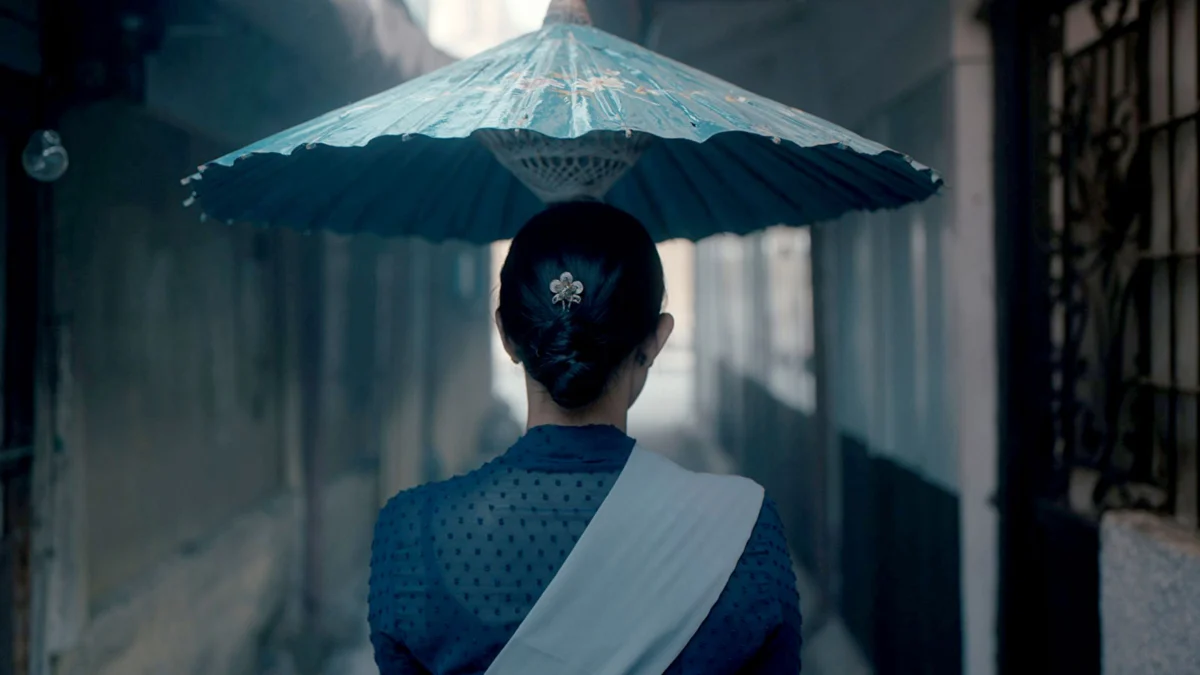
"Before, Now & Then," originally titled Nana, is a critically acclaimed Indonesian drama film directed by Kamila Andini. Released in 2022, the film quickly garnered international attention for its evocative storytelling, stunning cinematography, and profound exploration of a woman’s internal world against the backdrop of a tumultuous historical period. Starring Happy Salma in the titular role of Nana and featuring an award-winning performance by Laura Basuki as Ino, the film offers a unique blend of historical drama and surreal psychological introspection.
The narrative centers on Raden Nana Sunani, a woman navigating the complexities of post-independence Indonesia in the 1960s. Having endured immense personal loss during a period of intense political upheaval—losing her father, a child, and her first husband, Icang, to the shadowy "gerombolan" (militia)—Nana finds herself in a seemingly stable but emotionally suffocating second marriage to Darga, a wealthy local headman. Her life becomes a delicate balance of outward composure and deeply buried trauma, with her inner turmoil often manifesting through vivid, surreal dreams.
"Before, Now & Then" premiered in the main competition at the 72nd Berlin International Film Festival, where Laura Basuki was awarded the prestigious Silver Bear for Best Supporting Performance, solidifying the film’s international recognition. It stands as a powerful testament to female resilience, the lingering shadows of historical trauma, and the unspoken narratives of women caught in the currents of societal change. The film is an adaptation of a chapter from the novel Jais Darga Namaku by Ahda Imran, which tells the story from the perspective of Nana’s child, offering a multi-generational lens on memory and experience.
Chronology
The narrative of "Before, Now & Then" unfolds with a deliberate, dreamlike pacing, allowing the audience to gradually immerse themselves in Nana’s subjective experience rather than a linear recounting of historical events.
Setting the Stage: Post-Independence Turmoil and Personal Catastrophe
The film opens in the immediate aftermath of Indonesia’s struggle for independence, a period fraught with instability and violence. The early 1960s were characterized by political unrest, regional conflicts, and the emergence of various armed groups, often referred to vaguely as "gerombolan." It is during this chaotic time that Nana experiences a series of devastating losses. Fleeing her village, she loses her father, a child, and her beloved first husband, Icang, to these unnamed, menacing forces. The film chooses to tell us about these events through dialogue and Nana’s fragmented memories rather than explicitly showing the brutal acts, emphasizing the lasting psychological impact over the historical detail itself. This narrative choice immediately establishes the film’s focus on internal reality.
A New Chapter: The Illusion of Stability
Years later, Nana enters a second marriage with Darga, a respected and affluent lurah (village head). This union offers her a veneer of stability and social standing, a stark contrast to the insecurity of her past. She lives in a grand house, surrounded by servants and the trappings of wealth. However, this new life is far from a sanctuary. Beneath the surface of domestic tranquility, Nana is burdened by the weight of her past trauma and the unspoken expectations of her role as a wife in a patriarchal society. She is expected to maintain a perfect facade, suppressing her true emotions and concealing her inner world, a struggle often symbolized by her meticulously arranged "sanggul" (hair bun).
The Unveiling of Secrets: Darga’s Affair and Ino’s Arrival
Nana’s carefully constructed world begins to unravel with the subtle emergence of Darga’s infidelity. The film masterfully conveys this through fragmented clues: a forgotten scarf, a child’s innocent remark, a letter delivered to the house. There are no explicit depictions of Darga’s affair with Ino; instead, the audience experiences it through Nana’s dawning realization and her subsequent internal turmoil. This indirect exposure mirrors Nana’s own suppressed emotions, as she is forced to confront a painful reality that she cannot openly acknowledge. Her dreams, once haunted by Icang, begin to incorporate the shadowy figure of Ino, signaling the growing intrusion of this new reality into her subconscious.
A Budding Connection: Nana and Ino
A pivotal development in the film is the evolving relationship between Nana and Ino. What initially appears to be a conventional rivalry between a wife and her husband’s mistress transcends societal expectations. Through a series of unexpected encounters—at home, by the river, during shared moments of vulnerability—Nana and Ino begin to connect as women. They share unspoken understandings, offering each other a rare glimpse into their respective "backstages," away from the "front stage" performances society demands. Ino, far from being a villain, becomes a source of unexpected solidarity and a catalyst for Nana’s introspection, challenging her to reconsider her own choices and agency. This bond empowers Nana, providing her with a new perspective on her constrained existence.
The Weight of the Past and Future: Icang and the Children
As Nana’s emotional landscape shifts, her dreams of Icang, her first love, become more frequent and vivid. These dreams are not merely nostalgic; they represent her suppressed desires for genuine connection and a life unburdened by trauma. However, this rekindled longing is complicated by the constant, heartbreaking theme of separation from her children. Throughout her life, Nana has been repeatedly separated from her offspring—the baby she lost during her escape, others she was forced to give away to ensure their survival. The prospect of leaving Darga for a new life, perhaps with Icang, presents a profound dilemma: it would mean yet another separation, a price she is deeply hesitant to pay. This internal conflict between personal fulfillment and maternal sacrifice forms the emotional core of her struggle.
The Journey Towards Self-Discovery and Agency
In the latter part of the film, Nana’s journey culminates in a profound shift towards self-discovery and agency. Encouraged by Ino’s quiet wisdom ("What Nana does is no different from what Mas Lurah does") and Darga’s surprising, almost resigned, permission ("If there is another man, feel free to marry again"), Nana begins to reclaim her sense of self. The romantic entanglement with Icang (or the idea of him) is briefly explored but ultimately recedes, emphasizing that Nana’s true liberation lies not in a new relationship, but in her own personal awakening. Her transformation is subtle but powerful, moving from a woman perpetually haunted by loss and constrained by duty to one who begins to assert her own desires and redefine her place in the world. The film concludes with the lingering questions of her adult daughter, Dais, who seeks to understand her mother’s past, hinting at the intergenerational impact of Nana’s choices and the enduring power of her resilience.
Supporting Data
Kamila Andini’s Cinematic Signature: Surrealism and Emotional Depth
Kamila Andini is renowned for her distinctive cinematic language, which seamlessly blends social realism with elements of the surreal. In "Before, Now & Then," this signature style is paramount. Andini doesn’t just depict Nana’s life; she immerses the audience in Nana’s subjective experience of it. The film’s dream sequences are not mere narrative devices to trick the audience; they are presented as authentic extensions of Nana’s mental state, offering profound insights into her subconscious desires, fears, and unresolved traumas.
This approach echoes her previous works. In Sekala Niskala (The Seen and Unseen), grief materializes into ethereal dances that interact with space, while in The Mirror Never Lies, the pang of loss manifests as a mirror-laden tree, akin to a poignant art installation. In Nana, the surreal finds its natural home in the realm of dreams, making the protagonist’s emotional landscape tangible. This "showing" over "telling" philosophy, where profound emotions are visualized rather than merely stated, is central to Andini’s artistry. It allows the film to explore complex psychological states and the impact of history on the individual psyche with remarkable nuance and sensitivity.
Performance Analysis: Happy Salma and Laura Basuki
The strength of "Before, Now & Then" rests heavily on its lead performances. Happy Salma, as Nana, delivers a masterclass in understated acting. Her portrayal conveys the quiet resilience and deep inner turmoil of a woman who has endured unimaginable loss and societal pressure. Salma embodies Nana’s suppressed emotions, communicating volumes through subtle gestures, fleeting expressions, and the profound sadness in her eyes. Her performance anchors the film, making Nana’s internal struggles resonate deeply with the audience.

Laura Basuki’s award-winning turn as Ino is equally compelling. Basuki imbues Ino with a nuanced complexity that transcends the conventional "mistress" trope. She portrays Ino not as a disruptive force, but as a woman of her own agency and vulnerability, who eventually forms an unexpected and profound bond with Nana. Her performance challenges societal judgments and highlights the shared humanity and solidarity that can emerge between women, even in the most unconventional circumstances. The chemistry between Salma and Basuki is palpable and essential, forging a powerful, empathetic connection that becomes a central theme of the film.
Historical Context and its Artistic Interpretation
While set in the politically charged 1960s Indonesia, "Before, Now & Then" consciously eschews explicit historical dramatization. The film deliberately keeps the "gerombolan" as an abstract, menacing force, never fully revealing their identity or motives. This choice ensures that the historical backdrop serves primarily as a catalyst for Nana’s personal tragedies, rather than becoming the main subject. The film focuses on the impact of these tumultuous events on individual lives, particularly the lives of women, whose experiences are often marginalized in grand historical narratives. By centering on Nana’s subjective reality, Andini critiques the erasure of personal suffering amidst national struggles, giving voice to the untold stories of those who simply endured.
Symbolism and Motifs
The film is rich with symbolism, enhancing its emotional and thematic depth:
- The Sanggul (Hair Bun): This traditional Indonesian hairstyle becomes a potent symbol of societal expectations and the suppression of female identity. Nana’s meticulous sanggul represents her outward composure and her efforts to contain her secrets and emotions, as "a woman must be good at keeping secrets."
- Front Stage and Back Stage (Goffman’s Theory): The film cleverly utilizes Erving Goffman’s dramaturgical concept. Nana’s "front stage" involves her public persona as the perfect wife and mother, meticulously prepared. Her "back stage" reveals her private struggles, her moments of vulnerability (like smoking alone), and her deep emotional processing. Ino’s arrival in Nana’s "back stage" signifies the breaking down of these societal barriers.
- Children and Separation: The recurring motif of Nana’s separation from her children underscores her deep-seated trauma and the sacrifices she has made. It highlights the profound emotional cost of survival and the enduring pain of maternal loss.
- Whispers Between Women: Throughout the film, there are moments of intimate, unspoken communication between women. These whispers symbolize a shared understanding, a solidarity that transcends words, and the collective burden of experience that women carry. They hint at a silent network of support and empathy.
Cinematography and Sound
The visual aesthetic of "Before, Now & Then" has been widely praised, often drawing comparisons to the works of Wong Kar-wai, particularly In the Mood for Love. The film employs exquisite cinematography with a muted color palette, careful framing, and slow, deliberate camera movements that evoke a sense of longing and melancholic beauty. The recurring musical score, often a subtle, almost haunting melody, complements the visuals, creating an atmosphere of deep introspection and emotional tension. These elements work in concert to immerse the audience in Nana’s dreamlike reality, making her internal landscape as palpable as the external world.
Official Responses
Critical Reception
"Before, Now & Then" was met with widespread critical acclaim both in Indonesia and internationally. Its premiere at the 72nd Berlin International Film Festival was a significant moment, marking its entry into the global cinematic conversation. Critics lauded Kamila Andini for her masterful direction, praising her ability to craft a deeply personal and visually stunning narrative that transcends cultural boundaries. The film was celebrated for its poetic quality, its nuanced exploration of trauma, female resilience, and the complexities of identity. Reviewers often highlighted the film’s distinctive aesthetic, its slow-burn narrative, and its profound emotional resonance. Many critics recognized it as a significant contribution to contemporary Asian cinema, further solidifying Indonesia’s presence on the international film stage.
Awards and Nominations
The film’s most notable accolade came at the Berlinale 2022, where Laura Basuki was honored with the Silver Bear for Best Supporting Performance. This prestigious award brought significant international recognition to both Basuki and the film itself, underscoring the power of the performances within Andini’s artistic vision. Beyond Berlin, "Before, Now & Then" was selected for numerous other international film festivals, including the Toronto International Film Festival, and garnered various nominations and awards at other regional and national ceremonies, further attesting to its artistic merit and universal appeal. Its success has been instrumental in raising the profile of Indonesian filmmakers and actors on a global scale.
Director’s Intent
Kamila Andini has frequently articulated her vision for telling stories from marginalized perspectives, particularly those of women within Indonesian history. She views Nana as an opportunity to give voice to the untold narratives of women who navigated immense personal and societal challenges in a period often dominated by male-centric historical accounts. Andini expressed her desire to explore how historical events imprint themselves on the individual psyche, and how memory, dreams, and personal resilience shape one’s identity. She aimed to create a film that is not just a historical drama, but a deep psychological portrait, emphasizing the internal struggles and quiet strengths of her protagonist. Her adaptation of Ahda Imran’s novel allowed her to delve into these themes with a layered approach, acknowledging the impact of a mother’s past on her children and future generations.
Audience Reception
The film resonated deeply with audiences, both domestically and internationally, sparking discussions around its powerful themes. Viewers were particularly moved by Nana’s journey of self-discovery and resilience, finding universal echoes in her struggles with trauma, societal expectations, and the search for personal agency. The unconventional yet empathetic relationship between Nana and Ino also generated considerable discussion, challenging traditional perceptions of female relationships and highlighting the importance of solidarity. The film’s unique narrative structure, which privileges subjective experience and visual metaphor over explicit plot, invited audiences to engage with the story on an emotional and interpretive level, making for a profound and memorable cinematic experience.
Implications
Impact on Indonesian Cinema
"Before, Now & Then" represents a significant milestone for Indonesian cinema. Its international acclaim, particularly the Silver Bear win at the Berlinale, elevates the country’s film industry on the global stage. The film serves as a powerful example of sophisticated, art-house filmmaking from Indonesia, demonstrating the capacity for nuanced, character-driven narratives that can captivate diverse audiences. Its success encourages other Indonesian filmmakers to explore unconventional storytelling techniques and to delve into complex social and historical themes from fresh perspectives. It reinforces the idea that Indonesian cinema is a vibrant and evolving force, capable of producing works of profound artistic and cultural significance.
Relevance of Themes
The themes explored in "Before, Now & Then" possess a timeless and universal resonance. Nana’s journey through trauma, her navigation of societal pressures, and her quest for identity speak to the human condition across cultures and generations. The film’s portrayal of the lingering effects of historical upheaval on individual lives remains profoundly relevant, particularly in societies grappling with the legacies of conflict and political instability. Moreover, the film’s exploration of female resilience, the complexities of marriage, and the unspoken bonds between women offers powerful insights into contemporary discussions about gender roles, empowerment, and the enduring strength of the human spirit. Despite its specific historical setting, the film’s emotional core remains deeply relatable.
Kamila Andini’s Legacy
"Before, Now & Then" further solidifies Kamila Andini’s position as one of the most distinctive and important voices in contemporary Asian cinema. Her unique artistic vision, characterized by her ability to translate complex internal states into powerful, dreamlike visuals, sets her apart. With each successive film, Andini continues to push the boundaries of cinematic storytelling, offering fresh perspectives on human experience, particularly from the vantage point of women. Her work not only enriches the landscape of Indonesian cinema but also contributes significantly to the global discourse on filmmaking as an art form capable of profound emotional and intellectual depth. She is a director who consistently challenges audiences to look beyond the surface and engage with the deeper currents of human emotion and memory.
Feminist Reading
The film carries a subtle yet profound feminist message. It critiques the patriarchal expectations placed upon women, who are often forced to suppress their desires and emotions for the sake of societal harmony or family honor. Nana’s journey is one of gradual emancipation, not through grand rebellious acts, but through quiet introspection and the unexpected solidarity found in another woman. The bond between Nana and Ino, moving beyond conventional rivalry, becomes a powerful symbol of female solidarity and mutual empowerment. The film suggests that true agency for women often comes from within, by reclaiming one’s inner world and challenging internalized norms. It champions the strength found in vulnerability and the transformative power of women supporting each other.
The Power of Subjective Storytelling
"Before, Now & Then" stands as a testament to the power of subjective storytelling. By deliberately focusing on Nana’s internal world, her dreams, and her fragmented memories, the film demonstrates that profound historical truths can be illuminated more effectively through individual experience than through conventional historical exposition. The film’s lasting impression on viewers lies in its ability to evoke empathy and provoke reflection on the unspoken narratives of countless women who have navigated similar challenges throughout history. It is a cinematic triumph that encourages audiences to consider the enduring questions of resilience, sacrifice, and the quiet yet immense strength required to survive and find one’s voice amidst the tumultuous currents of life.