End of an Era: Doraemon Departs Indonesian Terrestrial Television After Nearly Four Decades, Transitioning to Streaming Platforms
For nearly forty years, Sunday mornings in Indonesian households shared a comforting, near-universal ritual. Families gathered in living rooms, breakfasts in hand, to watch a blue robotic cat from the 22nd century pull fantastical gadgets from a four-dimensional pocket. Doraemon, the beloved anime adaptation of Fujiko F. Fujio’s legendary manga, has been a cornerstone of Indonesian pop culture and a generational touchstone since the late 1980s.
However, this long-standing broadcasting tradition came to an abrupt halt at the turn of the year. Between late December 2025 and early January 2026, Doraemon quietly vanished from the official broadcast schedule of RCTI, Indonesia’s oldest private television station, and was notably absent from its digital streaming counterpart, RCTI+. This quiet removal has triggered a wave of nostalgia and concern across social media, signaling a major shift in how classic children’s programming is distributed in the modern Indonesian media landscape.
1. Main Facts: The Disappearance of a Cultural Icon
The disappearance of Doraemon from RCTI’s weekly schedule marks the end of one of the longest continuous television broadcasts in Indonesian history. For decades, RCTI served as the exclusive free-to-air (FTA) home for the series, maintaining its Sunday morning time slot through multiple economic crises, political transitions, and major changes in national broadcasting regulations.
The key facts surrounding this broadcast disruption include:
- The Disruption: Beginning in the final week of December 2025 and continuing into January 2026, Doraemon was excluded from RCTI’s official programming schedule and the live-streaming/video-on-demand (VOD) catalog of RCTI+.
- The Public Reaction: The sudden absence of the show sparked widespread discussion on social media platforms like X (formerly Twitter), TikTok, and Instagram, where multi-generational fans expressed sadness over the end of their childhood Sunday routine.
- The Digital Shift: While free-to-air terrestrial broadcasts have ceased, the franchise has not vanished entirely. Instead, it has migrated to global subscription video-on-demand (SVOD) platforms, most notably Netflix, which currently hosts several high-profile Doraemon theatrical releases.
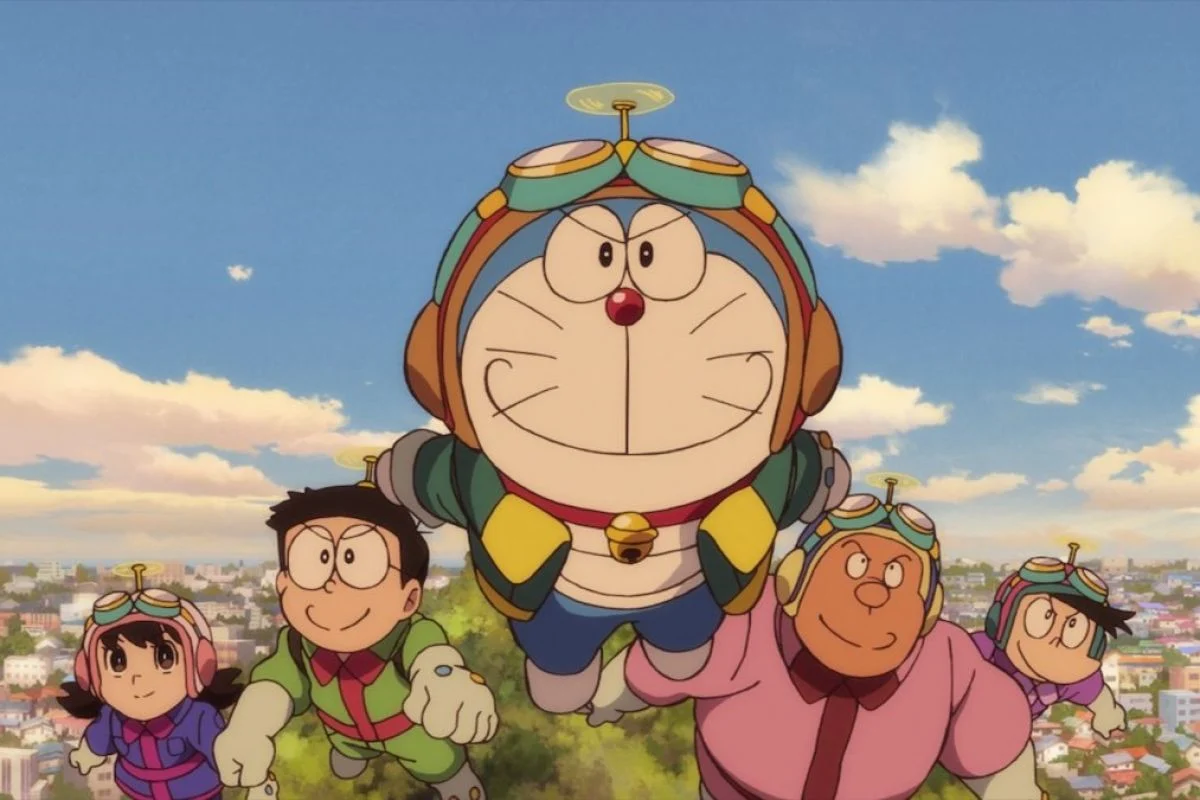
- The Cinema Legacy: The theatrical arm of the franchise remains active in Indonesia. The latest film, Doraemon The Movie: Nobita’s Art World Tales, enjoyed a successful theatrical release in Indonesian cinemas in July 2025, showing that local audiences still love the characters even as viewing habits change.
2. Chronology: From Terrestrial Domination to Streaming Migration
The relationship between Indonesian viewers and Doraemon spans almost four decades. Understanding the timeline of its broadcast history, theatrical releases, and eventual transition to digital streaming shows how much the country’s entertainment landscape has changed.
[Late 1988/1989] -----------------> [2014 - 2015] --------------> [2020 - 2021] --------------> [July 2025] -----------> [Dec 2025 - Jan 2026]
Doraemon premieres on RCTI;         "Stand By Me Doraemon"        "Stand By Me Doraemon 2"      "Nobita's Art World      Doraemon is quietly removed
becomes a Sunday morning staple.    released; airs on RCTI 2015.  released in ID cinemas.       Tales" hits cinemas.     from RCTI and RCTI+ schedules.
The Terrestrial Era (1988–2014)
- Late 1988/1989: RCTI introduces Doraemon to Indonesian audiences. The series quickly becomes the flagship program of its Sunday morning children’s block, establishing a dominant ratings hold that would last for decades.
- 1990s–2000s: The show becomes a cultural phenomenon. Its Indonesian dubbing team, featuring iconic voice actors like the late Nurhasanah Lyra (the long-time voice of Doraemon), makes the characters household names across the archipelago.
The Cinematic Evolution and Digital Transition (2014–2024)
- December 18, 2014: STAND BY ME Doraemon, the franchise’s first major 3D computer-animated film, debuts in Indonesian cinemas. It becomes a massive box-office hit, appealing to adults who grew up with the series.
- 2015: RCTI broadcasts the terrestrial television premiere of STAND BY ME Doraemon, pulling in massive ratings and briefly revitalizing interest in the Sunday morning anime block.
- February 19, 2021: The sequel, STAND BY ME Doraemon 2, is released in Indonesian theaters after pandemic-related delays, drawing nostalgic audiences back to theaters.
- July 17, 2024: Doraemon: Nobita’s Earth Symphony, the 43rd anime film in the franchise, premieres in Indonesian cinemas, introducing a new generation of viewers to the theatrical scale of the series.
The Modern Era and Broadcast Exit (2025–2026)
- July 16, 2025: Doraemon The Movie: Nobita’s Art World Tales premieres in Indonesian theaters, proving the franchise’s ongoing theatrical viability.
- Late December 2025: Viewers notice that Doraemon is missing from RCTI’s holiday programming lineup.
- January 2026: The absence is confirmed as the weekly Sunday morning slot is permanently replaced, ending a broadcasting legacy of nearly 40 years.
3. Supporting Data: The Digital Catalog on Netflix
While terrestrial TV viewers adjust to Sunday mornings without Doraemon, streaming platforms have become the new home for the franchise. Netflix currently offers a curated selection of films that allow fans to revisit these characters on demand.
Stand By Me Doraemon (2014)
- Runtime: 95 minutes
- Director: Takashi Yamazaki and Ryūichi Yagi
- Voice Cast: Wasabi Mizuta (Doraemon), Megumi Ohara (Nobita), Yumi Kakazu (Shizuka), Subaru Kimura (Gian), Tomokazu Seki (Suneo), Satoshi Tsumabuki (Adult Nobita).
- Synopsis: This landmark 3D CGI film combines several classic manga chapters into a single emotional story. It focuses on Doraemon’s mission to help Nobita secure a better future and marry Shizuka, culminating in a bittersweet farewell when his programming forces him to return to the 22nd century.
Stand By Me Doraemon 2 (2020)
- Runtime: 96 minutes
- Director: Takashi Yamazaki and Ryūichi Yagi
- Voice Cast: Wasabi Mizuta, Megumi Ohara, Yumi Kakazu, Subaru Kimura, Tomokazu Seki, Nobuko Miyamoto (Nobita’s Grandmother), Satoshi Tsumabuki.
- Synopsis: Building directly on the first film, this sequel follows Nobita as he travels back in time to visit his beloved grandmother. She wishes to see his future bride, prompting Nobita and Doraemon to travel to the future, only to find that the adult Nobita has developed cold feet on his wedding day to Shizuka.
Doraemon: Nobita’s Earth Symphony (2024)
- Runtime: 115 minutes
- Director: Kazuaki Imai
- Voice Cast: Wasabi Mizuta, Megumi Ohara, Yumi Kakazu, Subaru Kimura, Tomokazu Seki, Riana Hirano, Cocoro Kikuchi, Kyoko Yoshine, Koji Kikkawa.
- Synopsis: In this musically themed adventure, Doraemon and his friends meet Mikka, a girl from a planet where music is the primary energy source. Together, they use special instruments to save Earth and Mikka’s home planet from a mysterious entity that wants to erase music from the universe.
The Latest Release: Doraemon The Movie: Nobita’s Art World Tales (2025)
- Indonesian Release Date: July 16, 2025
- Current Status: Exclusively theatrical (not yet available on Netflix).
- Synopsis: Using a special gadget, Nobita and his friends enter a mysterious painting and discover the Kingdom of Artoria, a medieval European-style world. They embark on a quest to find a legendary gemstone called "Artoria Blue" while defending the kingdom from an ancient threat that could destroy the world inside the painting.
4. Official Responses and Public Reaction
The quiet removal of Doraemon has left fans looking for answers, as neither the network nor the franchise’s distributors have made an official statement.
Media Network and Corporate Silence
As of January 2026, RCTI and its parent conglomerate, MNC Media, have not released a formal statement explaining why Doraemon was pulled from the air. Media industry analysts suggest several likely factors:
- Licensing Agreement Expirations: The long-standing licensing agreement between MNC Media and Shin-Ei Animation (along with Fujiko Pro and ADK Emotions) may have expired without being renewed.
- Rising Licensing Costs: The costs of maintaining exclusive broadcast rights for a premier Japanese anime franchise may have become too high relative to declining traditional TV ad revenues.
- Strategic Shift to VOD: MNC Media may be shifting its focus toward local dramas and reality television for its terrestrial channels, while directing younger audiences to its digital streaming platforms.
Public Reaction: Nostalgia and the "Loss of Sunday Mornings"
The reaction from Indonesian viewers has been deeply nostalgic. For many, the cancellation represents more than just a missing cartoon; it feels like the end of a cultural era.
On social media platforms, discussions have centered on several key themes:
- The Loss of Childhood Routines: Many adults, now parents themselves, expressed sadness that they can no longer share their Sunday morning cartoon tradition with their own children.
- The Decline of Free Children’s Programming: Fans pointed out that the loss of Doraemon is part of a larger trend, as other classic anime series like Crayon Shin-chan, Chibi Maruko-chan, and Dragon Ball have also slowly disappeared from Indonesian free-to-air television over the years.
- Tributes to Voice Actors: Social media users have shared clips of the classic Indonesian dub, paying tribute to the local voice actors who brought the characters to life for generations of Indonesian families.
5. Implications: The Changing Landscape of Indonesian Television
The departure of Doraemon from terrestrial television points to broader changes in the Indonesian media and broadcasting industries.
| Feature | Traditional Terrestrial TV (RCTI Era) | Modern Digital Streaming (Netflix Era) |
|---|---|---|
| Accessibility | Free-to-air via antenna; accessible to all socioeconomic classes. | Requires paid subscription and stable, high-speed internet. |
| Viewing Model | Appointment viewing (Sundays at 08:00 AM WIB). | On-demand streaming; viewers watch anytime, anywhere. |
| Target Audience | Broad family viewing; multi-generational. | Individualized viewing profiles; targeted algorithmic recommendations. |
| Content Variety | Single weekly episodes with commercial interruptions. | Full feature-length films and complete series seasons available for binge-watching. |
1. The Decline of Appointment Viewing for Kids
For decades, Sunday morning was prime time for children’s television in Indonesia. Today, children’s entertainment has largely shifted online. With platforms like YouTube Kids, Netflix, Disney+ Hotstar, and local services like Vidio offering on-demand viewing, the idea of waiting a week for a specific episode of a show has become outdated for younger viewers.
2. The Digital Divide in Children’s Entertainment
While streaming services offer convenience and ad-free viewing, they also create a digital divide. Free-to-air television remains a crucial source of entertainment for lower-income households and rural areas with limited internet access. Moving iconic children’s shows behind paywalls means many children across Indonesia may lose access to these cultural touchstones entirely.
3. Tightening Broadcast Regulations
Indonesia’s broadcasting regulator, the Indonesian Broadcasting Commission (KPI), has tightened its guidelines for children’s programming on free-to-air TV over the years. The strict rules regarding violence, fantasy elements, and commercial advertising during children’s blocks have made importing and airing foreign anime increasingly difficult and expensive for commercial television networks.
4. A New Era for Anime in Indonesia
The transition of Doraemon from terrestrial TV to streaming services reflects the broader evolution of anime distribution in Southeast Asia. Once treated as cheap morning entertainment for children, anime is now recognized as high-value content for streaming platforms. While this shift means the classic Sunday morning broadcast era is drawing to a close, it also ensures that Doraemon’s legacy will live on in the digital age, ready to be discovered by new generations of viewers at the click of a button.