The Demonic Evolution: Inside the Creative Pipeline of ‘Hazbin Hotel’
For any visionary creator, the journey from a nascent concept to a fully realized production is fraught with technical and creative friction. Bridging the gap between the internal theater of one’s mind and the realities of an animation pipeline is a formidable task, even for the most seasoned veterans. For Vivienne Medrano, the architect behind the viral phenomenon Hazbin Hotel, this challenge has been uniquely amplified by the show’s meteoric ascent from a grassroots YouTube project to a multi-season powerhouse on Prime Video.
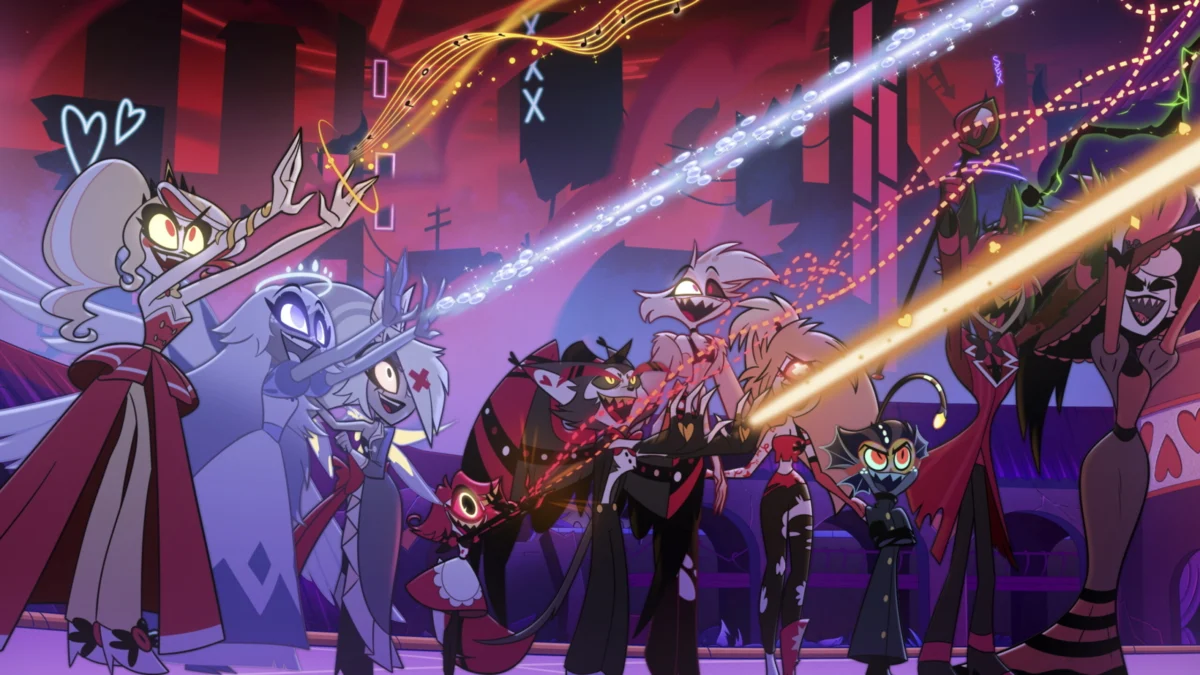
Hazbin Hotel—a profane, profoundly moving, and musical animated saga centered on Lucifer’s daughter, Charlie Morningstar, and her mission to rehabilitate souls within a hotel while navigating the celestial and infernal politics of the afterlife—has redefined what independent animation can achieve. With two seasons behind it and two more confirmed by Amazon, the series has moved beyond its humble beginnings to become a titan of the adult animation landscape.
The Architecture of an Infernal Empire: From YouTube to Prime
The history of Hazbin Hotel is a testament to the power of the creator-led digital movement. Medrano’s initial pilot, independently produced and disseminated via YouTube, functioned as a lightning rod for an underserved demographic of animation fans. It was a stylistic manifesto that combined high-concept storytelling with a distinct, kinetic visual flair.
However, scaling that vision for a major streaming platform required a paradigm shift. The production pipeline, a collaborative effort between Medrano’s Spindlehorse Toons, Bento Box Entertainment, and the film-and-television powerhouse A24, had to reconcile the raw, idiosyncratic spirit of the original pilot with the rigors of a professional, long-form series. This partnership has served as the backbone for both Hazbin Hotel and its sister series, Helluva Boss, creating a cohesive, shared fictional universe that maintains its indie soul despite the corporate infrastructure supporting it.

For the production team, the learning curve has been steep. "It’s a very complicated show, and the studio that took it on had never really done a show like ours before," Medrano noted in an interview with IndieWire. "There’s been a lot of learning, a lot of growth. Because obviously, the scope of the show just keeps growing." She points specifically to the contributions of the board artists—the unsung heroes of the production—who have navigated the show’s increasingly complex visual demands.
Chronology of a Creative Leap
The trajectory of Hazbin Hotel is marked by a clear evolution in quality and narrative confidence. Season 1 was a triumph of proof-of-concept—a high-stakes experiment that demanded the team prove the show’s viability as a sustained narrative.
"I will forever be obscenely proud of Season 1. We pulled off something really hard," Medrano remarked. However, the transition into Season 2 marked a shift in both technical resources and creative freedom. With the security of a four-season order, the team was granted the "leeway" to expand the show’s runtime and refine its pacing. Season 2 allowed for a more focused, character-driven narrative, bolstered by a creative team that had finally hit its stride. For Medrano, Season 2 has become the new benchmark for the series: it is the realization of the look and feel she had envisioned from the very beginning.
The Symbiosis of Voice and Visuals
A critical component of the Hazbin Hotel creative process is the feedback loop between the writing room, the animation desk, and the recording booth. Unlike traditional productions where a character’s voice is merely a delivery mechanism for a script, Medrano views the casting process as an essential component of character design.

"The voice just does so much to bring a character to life," Medrano explained. A primary example of this is the portrayal of Lucifer Morningstar by Jeremy Jordan. Originally conceptualized as a "goofy dad" and a Greatest Showman-esque showman, the character was intended to be "very silly" and "very clean."
However, the introduction of Jordan transformed the character into something more complex—vulgar, deeply depressed, and undeniably human. "He just came in, and when he is in that booth, he is that character," Medrano said. "Now we know how he performs Lucifer, I’m able to write him much more naturally." This collaborative chemistry has allowed the writing to lean into the specific eccentricities of the cast, creating a series where the characters feel like living, breathing entities rather than static sketches.
The "Demonic Blender": Defining the Tonality
The stylistic identity of Hazbin Hotel is an amalgamation of influences—a "demonic blender" of Nickelodeon, Disney, and Warner Brothers sensibilities mixed with the grit of adult animation. The result is a tonal tightrope walk: a show that can feature a heart-wrenching musical ballad about redemption in one scene and gleefully depraved violence in the next.
Medrano is acutely aware of the limitations and strengths of this aesthetic. While there is a temptation to push the darkness further, she is cognizant of the "inherently lighter look" of her animation style. "Other shows like Invincible or even Rick and Morty have a style that serves that disturbance a lot more than mine," she admitted.

Instead of forcing the visuals to match a darker tone, the team embraces the juxtaposition. They lean into the cartoony nature of the art to make the darker moments feel more jarring and impactful. It is a philosophy of "taking the story seriously without taking oneself seriously." This internal duality is, perhaps, the secret sauce of the series—the acknowledgment that they are telling an epic story, but they are doing it with "edgy Tumblr OCs" that Medrano created in her youth.
The Musical Engine
Music is not merely an accompaniment in Hazbin Hotel; it is a narrative driver. The process of integrating songs has shifted as the series has matured. In the early stages, the team often searched for opportunities to force a musical number into a scene. As the show has progressed, they have begun to reach "vision songs"—tracks that Medrano has had in her mind since the inception of the project.
The writing team now balances "want" songs and "need" songs. The "wants"—creative prompts like "Niffty needs a song"—often lead to the most inventive moments. By giving Kimiko Glenn’s character, Niffty, a song that hijacks the plot to praise the hotel’s destruction, the writers created one of the season’s most memorable sequences. "That was our prompt, right? Then the songwriters absolutely killed it," Medrano said.
Implications for the Future of Adult Animation
The success of Hazbin Hotel signals a broader shift in the animation industry. It proves that audience loyalty is not driven by top-down marketing or corporate mandates, but by a genuine, sustained connection between a creator’s vision and the community.

By maintaining a clear, uncompromising aesthetic and a deep, character-focused writing style, the series has carved out a unique space in a crowded market. The upcoming seasons promise to delve deeper into the lore of Heaven and Hell, pushing the boundaries of the established world while maintaining the core emotional resonance that has kept "Huskerdust" shippers and casual viewers alike glued to their screens.
As the production team looks toward the horizon, the focus remains on growth—not just in terms of scope and budget, but in the maturation of the characters. With the cliffhanger of the Season 2 finale, "Curtain Call," hanging over the audience, the stakes have never been higher. Yet, for all the talk of "serious" arcs and "complex" world-building, the heartbeat of Hazbin Hotel remains the same: a profound belief in the power of a good story, told with style, heart, and just the right amount of chaos.
Hazbin Hotel Season 2 is currently streaming on Prime Video, with production for the remaining seasons already underway.