Raccoon City Reimagined: Zach Cregger to Helman High-Octane ‘Resident Evil’ Reboot
The landscape of cinematic horror is shifting. Following the tectonic success of Barbarian and the mounting anticipation surrounding his upcoming feature Weapons, visionary filmmaker Zach Cregger has officially set his sights on one of the most storied intellectual properties in gaming history: Resident Evil.
In a surprising announcement from TriStar Pictures, Constantin Film, and Davis Films, it has been confirmed that Cregger will be helming a bold, visceral reinvention of the franchise. Moving away from the long-running Milla Jovovich-led action series and the previous attempts to capture the franchise’s gothic roots, this new iteration promises a grounded, terrifying, and character-driven descent into the survival-horror genre.
Main Facts: A New Chapter for the Umbrella Corporation
The upcoming film, titled simply Resident Evil, is scheduled to hit theaters nationwide on September 18, 2026. The production brings together a powerhouse creative team, with Cregger directing from a screenplay he co-wrote alongside Shay Hatten, a name synonymous with high-octane pacing (known for his work on the John Wick franchise and Army of the Dead).
The plot centers on Bryan, played by Austin Abrams (Euphoria, Dash & Lily), a medical courier whose mundane existence is shattered during a singular, catastrophic night. Stripped of the traditional "super-soldier" tropes often associated with the franchise, the narrative frames Bryan as an everyman—an unwitting witness to an outbreak that spirals into absolute chaos.
The supporting cast is equally formidable, featuring Zach Cherry (Severance), Kali Reis (True Detective: Night Country), and the inimitable Paul Walter Hauser (Black Bird, Richard Jewell). This ensemble suggests a film that prioritizes character chemistry and mounting dread over the over-stylized spectacle of previous entries.
Chronology: From Cult Gaming Icon to Modern Horror
The history of Resident Evil in cinema is complex, spanning nearly a quarter of a century. To understand the gravity of Cregger’s involvement, one must look at the timeline of the property:
- 1996: Capcom releases the original Resident Evil video game, effectively inventing the "survival horror" genre.
- 2002: Paul W.S. Anderson releases the first Resident Evil film, diverging significantly from the game’s tone to focus on a high-concept action-horror hybrid.
- 2002–2016: The Jovovich-led franchise spans six films, becoming the highest-grossing film series based on a video game at the time, though often criticized by fans for its loose connection to the source material.
- 2021: Resident Evil: Welcome to Raccoon City attempts a more faithful adaptation, focusing on the events of the first two games, but receives mixed critical reception.
- 2024: Following the viral success of Barbarian, Hollywood studios began courting Zach Cregger for major IP refreshes.
- 2026: The official launch of the Cregger-Hatten reboot, representing the third attempt by major studios to find a definitive cinematic voice for the franchise.
Supporting Data: Why Cregger?
The decision to hire Zach Cregger is not merely a studio trend-chase; it is a calculated risk based on his unique ability to manipulate audience expectations.
In Barbarian, Cregger demonstrated a masterful grasp of the "pivot"—the ability to shift a story’s tone from claustrophobic tension to visceral, gore-drenched horror without losing the audience. Data from film industry analysts suggests that audiences are increasingly fatigued by "big-budget CGI-fests" and are gravitating toward mid-budget, high-tension horror films that rely on practical effects and claustrophobic staging.
Furthermore, the collaboration with Shay Hatten provides a necessary bridge. While Cregger excels at the slow-burn psychological setup, Hatten provides the kinetic, rhythmic pacing required for a film that features "non-stop" action. This blend is likely intended to satisfy both the hardcore gaming audience—who crave the frantic, resource-management-based terror of the games—and general audiences looking for a high-intensity thriller.
Official Responses and Creative Vision
In a brief statement accompanying the trailer release, the studio noted that the film is intended to be a "visceral, grounded experience."
"We didn’t want to make a movie about a military squad clearing rooms," said a representative from Constantin Film. "We wanted to explore what happens when an average person, someone like Bryan, is dropped into a situation where the world as they know it ends in an hour. Zach Cregger’s vision for this is one of the most intense, claustrophobic, and genuinely frightening scripts we’ve read in a decade."
Zach Cregger himself has been relatively quiet regarding the specific plot beats, maintaining the shroud of secrecy that helped propel Barbarian to its box-office success. However, in recent interviews regarding his general creative philosophy, he has emphasized the importance of "subjective experience."
"I’m not interested in the lore-dumping that kills horror," Cregger noted. "I’m interested in the smell of the room, the sound of the locks, and the feeling of being trapped. If you don’t care about the person holding the flashlight, the monster doesn’t matter."
Implications: The Future of Video Game Adaptations
The Resident Evil reboot arrives at a pivotal moment for video game adaptations. Following the success of The Last of Us on HBO and The Super Mario Bros. Movie, the "curse" of the video game adaptation seems to be lifting.
1. The Shift to "Prestige Horror"
By hiring an auteur like Cregger, the production signals that Resident Evil is being repositioned as "prestige horror" rather than a disposable popcorn flick. This move mirrors the shift seen in other IPs, where studios are prioritizing director-driven visions over brand-recognition alone.
2. The Return to Practicality
Early reports from the production set suggest a heavy reliance on practical prosthetics and on-location shooting. By moving away from the heavy digital environments that defined the 2000s-era adaptations, Cregger aims to give the "zombie" (or, in this case, the infected) threats a tangible, tactile presence. This is expected to resonate with a modern audience that has become highly sensitive to "CGI-bloat."
3. Franchise Longevity
Should the September 2026 release perform well, it is widely expected that this will serve as a "soft reboot" for a new, interconnected cinematic universe. However, the film is designed to stand alone. According to insiders, the narrative is tightly focused on one night, one location, and one desperate courier. It is a "closed-loop" story, a hallmark of Cregger’s previous work, which allows the film to succeed on its own merits without requiring the audience to have played three decades of video games.
Conclusion: A Night of Reckoning
As the release date of September 18, 2026, approaches, the film industry will be watching closely. The pairing of Cregger’s signature, nerve-shredding directorial style with the visceral, high-stakes world of Resident Evil offers the potential for a definitive adaptation.
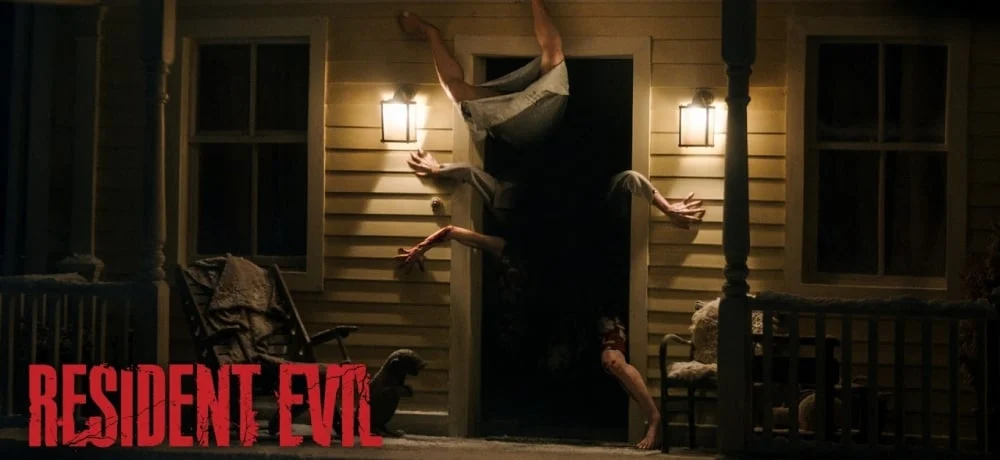
The trailer, which has already garnered millions of views in its first 24 hours, showcases a dark, rain-slicked urban landscape that feels more like a descent into hell than a traditional action set-piece. If Resident Evil can capture even half the tension of the source material while maintaining the surprising, unpredictable nature of Cregger’s previous films, it may very well define the next generation of horror cinema.
For fans who have waited years for a version of the franchise that truly honors the heart-pounding panic of the original games, the wait is almost over. The medical courier is on his way, and he is bringing the nightmare with him.