Just as certain surreal events can only transpire within the fleeting architecture of a dream—such as inexplicably arriving on the final day of a major exam without having attended a single class, or desperately evading a horde of the undead—other creative feats are strictly native to the medium of animation. Netflix’s new animated feature, In Your Dreams, directed by Erik Benson and Alex Woo, revels delightfully in both realms, merging the boundless possibilities of the subconscious with the limitless technical horizons of digital artistry.
Main Facts: A Journey into the Architecture of the Unconscious
At its core, In Your Dreams is a high-concept comedy-adventure that follows two estranged siblings, 12-year-old Stevie (voiced by Jolie Hoang-Rappaport) and 8-year-old Elliot (voiced by Elias Janssen). When the pair stumble upon an enigmatic, mystical book detailing the legendary Sandman—the elusive master of dreams, voiced with theatrical flair by Omid Djalili—they realize they hold the key to world-changing powers. More importantly, they believe these powers can mend the fracturing marriage of their parents, played by Simu Liu and Cristin Milioti.
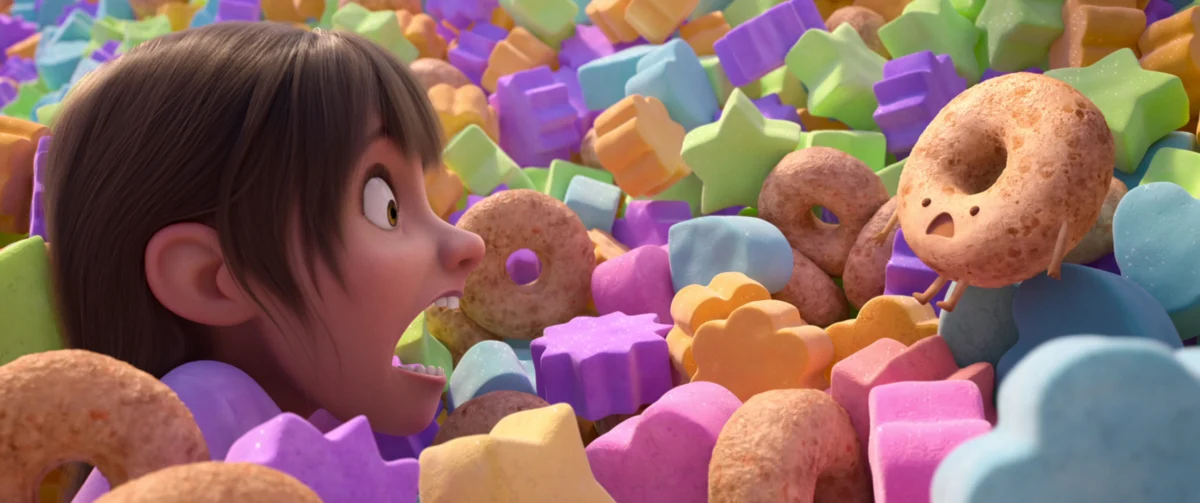
What begins as an innocent bedtime curiosity quickly escalates into a nightly mission of paramount importance. To achieve their ultimate goal of forging the "perfect family," Stevie and Elliot must plunge deep into the absurd, unpredictable landscapes of their own subconscious minds. Along the way, they must contend with a snarky stuffed giraffe, zombie breakfast foods, and the formidable Queen of Nightmares.
The film, which is currently streaming on Netflix, stands out not only for its heartwarming family narrative but also for its meticulous visual craftsmanship, serving as a love letter to the foundational adventure and fantasy films of the 1980s and 90s.
Chronology: From Concept to Screen and the Evolution of a Dreamscape
The making of In Your Dreams followed a rigorous, iterative animation pipeline that allowed directors Erik Benson and Alex Woo to continuously push the envelope of visual storytelling.
Development and Influences
Director Alex Woo’s vision for the film was deeply rooted in his formative years. Growing up split between Hong Kong and the West, Woo was heavily influenced by both classic Hollywood adventure cinema and rich traditions of Asian animation.
The Spielbergian Foundation: Woo openly identifies as a "Spielberg kid," a badge of honor reflected in the movie’s DNA. Notably, the younger sibling, Elliot, is explicitly named after the protagonist of E.T. the Extra-Terrestrial. The film also draws inspiration from the sense of wonder and perilous childhood camaraderie found in Hook, The Goonies, and Jim Henson’s Labyrinth.
The Miyazaki Connection: Having spent half his childhood in Hong Kong, Woo was immersed in anime and the works of Hayao Miyazaki. The adorable, furry denizens of Stevie’s dream "Breakfast Town" bear a distinct resemblance to the susuwatari (soot sprites) from My Neighbor Totoro, before shifting into higher-stakes, Goonies-esque perils as the dream turns sour.
Production Iterations and Late Additions
Because animation allows for pixel-level precision and frame-by-frame manipulation that live-action filmmaking cannot replicate, the production team was able to experiment with tone and structure late into the process.
According to Woo, some of the film’s most crucial pillars—such as Stevie’s witty, fourth-wall-breaking voiceover guide that sets the tone in the opening dream sequence—were late additions. This clever narrative framing device instantly signals to the audience that In Your Dreams is far more than a standard, straightforward animated family movie, introducing layers of meta-commentary and emotional complexity right from the outset.
Supporting Data: Visual Grammar and Technical Execution
The world-building of In Your Dreams relies heavily on establishing clear rules for how the subconscious operates, transforming abstract psychological concepts into tangible cinematic language.
The Physics of Falling Asleep
The transition from wakefulness to slumber is treated with immense artistic reverence. While Elliot easily slips into dreamland via the siren song of a turtle-shaped white noise machine, Stevie’s journey requires conscious effort.
The animation team captured this transition with a warm, glowing aesthetic, utilizing a physics-defying floating camera that circles Stevie as she drifts upward. The camera then passes out of the "real world" and plunges down into the surreal dreamscape. According to Woo, these transitional shots are among his favorites in the entire film because they establish the foundational "grammar" of the movie’s universe.
Genre-Bending Visual Tropes
True to its nature as a cinematic remix, In Your Dreams incorporates explicit nods to various animation and film styles:
The Spielbergian Zolly: A signature zoom-dollied shot that induces instant psychological disorientation.
Anime Transformations: Characters occasionally undergo power-up sequences worthy of Dragon Ball Z, alongside frantic, magical transformations reminiscent of Sailor Moon.
The Nightmare Dial: The team actively tested the boundaries of fear in children’s media. By experimenting with early iterations that pushed the intensity of the nightmares, the creators sought to find the precise sweet spot between thrilling dread and psychological trauma.
Official Responses: Director Alex Woo on Art, Remixes, and Fear
In an interview with IndieWire, co-director Alex Woo opened up about the philosophy behind the film’s eclectic aesthetic and the challenges of balancing accessibility with genuine thrills for younger audiences.
"Every film has its own grammar and language, and you have to set up certain rules and pay them off," Woo explained, discussing the mechanics of the dream world. "The rules of how dreams work and how you go in and out dreams, all that stuff needs to be established because you can’t take it for granted. [The transitions] were some of my favorite shots in the whole movie. They’re just purely cinematic."
On the topic of artistic influence and pastiche, Woo embraced the idea that modern creativity is inherently collaborative and referential:
"Art’s all remix, right? I thought a movie about the dream world was the perfect venue to pull all of these references and movies that I loved and put them in there because you can do so many types of worlds in a dream movie. You have so much latitude, aesthetically and creatively. So it was kind of the perfect movie for me to create a sort of love letter to all these films that I grew up with."
Addressing the delicate task of crafting nightmares that feel genuinely high-stakes without crossing the line into distress, Woo noted:
"I didn’t want to soft pedal anything because, when I was a kid, I really liked kind of being scared at the movies. There’s something thrilling about it, but of course, there’s a line beyond which it becomes traumatizing. But you just don’t know where that line is until you test it out. We had early iterations of the film where we really pushed the intensity of the nightmares because I wanted to see how far we could go with it."
Highlighting the unique power of animation to pivot tone on a dime, Woo reflected on the addition of Stevie’s opening voiceover:
"We all had that sit-up moment when [the voiceover] comes in and you do that freeze frame. You talk to the audience. Suddenly, people are like, ‘Oh, this is not just a straightforward animated movie.’ There’s layers to this."
Implications: What In Your Dreams Means for Modern Family Animation
The release and reception of In Your Dreams on Netflix highlight several broader trends in the contemporary animation landscape:
The Rise of High-Concept Hybrid Aesthetics: By seamlessly blending western digital animation techniques with anime-inspired transformation tropes and live-action cinematic grammar (like the zolly shot), the film demonstrates how modern studios can cater to multi-generational audiences who appreciate visual literacy.
Nostalgia as a Creative Tool: Rather than relying purely on pre-existing intellectual property (IP), filmmakers like Woo are utilizing nostalgic storytelling structures—channeling Spielberg and Miyazaki—to craft entirely original stories that resonate with parents who grew up in the 80s and 90s while captivating their children.
The Precision of Late-Stage Iteration: The film underscores the distinct advantage of animation as a medium where narrative framing devices, such as fourth-wall-breaking voiceovers, can be introduced late in production to elevate a standard adventure into a more layered, self-aware piece of art.
In Your Dreams is currently available for streaming on Netflix, offering viewers a visually dazzling, psychologically rich expedition into the power of the human imagination.