
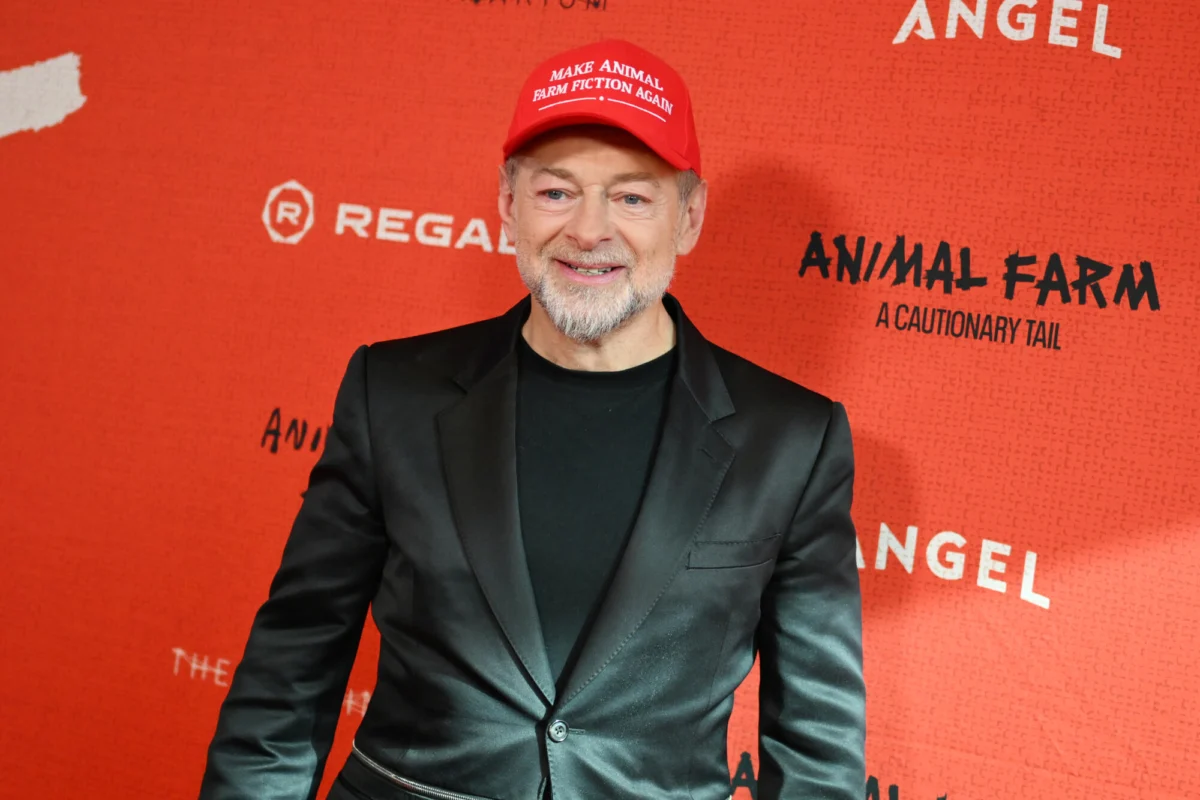
From Motion Capture to Animated Allegory: Inside Andy Serkis’ Radical Reimagining of ‘Animal Farm’
George Orwell’s Animal Farm has long served as the definitive literary blueprint for understanding how revolutionary fervor can curdle into the bitter bile of authoritarianism. For decades, the novella has been interpreted as a scathing, pointed satire of the Soviet Union’s 20th-century trajectory. However, director Andy Serkis—a filmmaker whose career has been defined by his pioneering work in motion capture and character performance—has chosen to view the material through a vastly different, more expansive lens. His new film, released via Angel Studios, transforms the bleak, iron-fisted fable into a cinematic experiment that embraces elements once thought incompatible with Orwell’s dark vision: rap songs, irreverent humor, and a resolute commitment to shielding the audience from the most harrowing aspects of the source material.
The Evolution of an Allegory: From Photorealism to Animation
The road to the screen for Serkis’ Animal Farm was as complex as the politics it depicts. The project, which was initially conceived as a motion-capture endeavor, ultimately underwent a dramatic metamorphosis, pivoting into the realm of traditional animation. This was not a move born of convenience, but one of necessity. As Serkis explained in discussions regarding the film’s development, the story required a departure from the "shackles of photorealism" to achieve the specific emotional tone he sought to capture.
Serkis, a veteran of digital performance—having provided the foundational movements and expressions for iconic characters like Gollum in The Lord of the Rings, Caesar in the Planet of the Apes trilogy, and King Kong—initially gravitated toward a grittier, hyper-realistic aesthetic. "The very early designs for the animal characters were much more unforgiving and brutal," Serkis admitted. "When animals looked like they were starving, you could see their rib cages; the pigs were a lot more gluttonous and just looked meaner. There is a version of that film that could exist, but we wanted to reach out to a younger audience."

By choosing animation over motion-capture realism, Serkis effectively created a "safety margin" for viewers. The result is a film that maintains the core narrative arc of the original—Farmer Jones (played by Serkis) being ousted, and the subsequent rise of the pig Napoleon (voiced by Seth Rogen) as he systematically dismantles the radical equality preached by his rival, Snowball (voiced by Laverne Cox)—but wraps it in a visual language that is more fable-like than documentary-horror.
Chronology of Production: A Director’s Deep Dive
The transition from a motion-capture project to an animated feature required Serkis to fundamentally recalibrate his directing process. While he had previously helmed projects with heavy VFX requirements, such as Mowgli: Legend of the Jungle and Venom: The Last Dance, the worldbuilding required for Animal Farm demanded a more granular level of control.
The Phases of Construction
- Development and Design: In the early stages, the production focused on the "unforgiving" aesthetic mentioned by Serkis. As the team pivoted, they brought on board production designer Amos Sussigan of Anaventure. The team spent months building the physical reality of the farm—meticulously crafting everything from the specific geometry of the barn to the texture of every blade of grass.
- The Scratch Track Phase: Unlike live-action, where the scene is captured in the moment, the animated production relied heavily on a "scratch track." This involves recording the actors early in the process to guide the animation, allowing the performers to iterate on their delivery without the logistical constraints of camera setups, lighting, or lens changes.
- The Iterative Animation Process: Because animation involves so many hands and specialized skills, the development of a single scene can span years. Serkis noted that he had to learn to hold the film in his mind in various stages of completion, moving away from the "shoot and cut" mentality of live-action filmmaking.
- Final Polish: The final phase involved integrating the voice performances with the refined, character-driven animation, ensuring that the emotional resonance of the performances remained intact despite the technical barriers between the actor and the final image.
Supporting Data: The Mechanics of Performance
Serkis’ philosophy for Animal Farm centers on the "close-up." Even within an animated environment, he urged his team to focus on the subtleties of the characters’ faces. He was acutely aware of the risk of "overperforming"—a common pitfall in animation where characters’ movements become exaggerated to the point of absurdity.

"I wanted the audience to reach out to the characters and to really feel—when the camera’s pushing in on a character’s face—what they’re going through," Serkis said. He applied the techniques he perfected during his motion-capture career, where human actors translate their naturalistic choices onto non-human forms. By guiding his animators to think like actors, Serkis managed to bridge the gap between digital artifice and genuine human emotion.
The cast, including Rogen and Cox, were given an unusual amount of freedom. Because they were not constrained by a physical set, they were able to experiment with their lines, testing various tones and inflections until they found the precise balance of malice, innocence, or desperation required by the scene. For the actors, the lack of traditional on-set downtime allowed for a more creative, fluid working environment.
Official Responses and Creative Philosophy
The reception to Serkis’ stylistic choices has been as varied as the film itself. Some critics argue that by softening the edges of Orwell’s nightmare, the film loses the sharp, biting edge that makes the original text so timeless. Others, however, praise the film as a bold, necessary experiment in translating literature for a new generation.

Serkis remains steadfast in his belief that the film is a "cautionary tale that has a whole heap of innocence around it." He views the film’s lighter moments—the rap songs and the humor—not as a degradation of the source material, but as a mechanism for engagement. By making the farm a place that feels, at least initially, like a home worth fighting for, the eventual betrayal of those ideals by Napoleon carries a more profound weight for a younger audience.
Furthermore, the integration of technology like Unreal Engine, which Serkis has utilized in his game-directing work, played a subtle but vital role in the workflow. It allowed the production team to visualize complex shots in real-time, effectively blurring the lines between traditional animation and the digital prowess that Serkis has championed for years.
Implications: A New Era for Animated Satire
The release of Animal Farm marks a significant milestone in the evolution of animated political narratives. By successfully navigating the budgetary and logistical hurdles of an animated production, Serkis has demonstrated that complex, high-concept political allegories can find a home in the medium of animation without sacrificing character depth.

The "killing of darlings" during the animatic stage—a process where scenes are cut or fundamentally altered to save costs or time—is an inherent part of the medium, yet Serkis views these constraints as an opportunity for refinement. The implication for future filmmakers is clear: animation is no longer just a genre for children, nor is it merely a tool for fantasy. It is a potent, albeit arduous, vessel for social commentary.
As Animal Farm enters the cultural conversation, it invites a debate about the nature of adaptation. Should a classic work be preserved in its original, brutal form, or should it be adapted to serve the sensibilities of the contemporary viewer? Serkis has chosen the latter, betting that the message of Orwell’s work—the fragility of power and the corruption of idealism—will reach more people if the medium is accessible and emotionally engaging. Whether his gamble pays off in the long term remains to be seen, but the film stands as a testament to his career-long mission: to find the humanity hidden within the creature.
In the end, Animal Farm is a film about the cost of progress. It is a work of immense ambition, bridging the gap between the rigid, historical critique of the past and the fluid, digital potential of the future. As audiences continue to process this latest interpretation, they are forced to confront the same question that has haunted the animals of the farm for nearly a century: when the revolution is complete, who will be left to hold the power, and what will they be willing to sacrifice to keep it?