Suburban Prehistory: Inside the High-Stakes Production of The End of Oak Street
For over three decades, the dinosaur subgenre has existed in the long, formidable shadow of Steven Spielberg’s Jurassic Park. While the franchise spawned numerous sequels and imitators, the cultural consensus has remained largely stagnant: if it doesn’t involve a Hammond-branded island or prehistoric cloning technology, it rarely lands with the audience.
Director David Robert Mitchell, best known for his atmospheric exercises in dread like It Follows and the cult-classic mystery Under the Silver Lake, is attempting to shatter this industry dogma. With his upcoming feature, The End of Oak Street, Mitchell is moving from the psychological horror of the mundane to the visceral terror of the prehistoric, backed by the heavyweight production muscle of J.J. Abrams.
The Core Concept: When Suburbia Meets the Cretaceous
The premise of The End of Oak Street is deceptively simple, echoing the "inescapable" themes that have defined Mitchell’s filmography. A tight-knit, relatable family—portrayed by an ensemble cast featuring Anne Hathaway, Ewan McGregor, Maisy Stella, and Christian Convery—goes to sleep in their suburban home, only to wake up in a nightmare.
Overnight, the landscape has been violently altered. The roads are blocked by massive, unnatural cliffs, the local flora has been replaced by prehistoric vegetation, and the neighborhood is suddenly the hunting ground for apex predators. There is no escape; the geography itself has turned against them.
The film shifts away from the "science-gone-wrong" trope of the 1990s, instead leaning into a surreal, high-stakes domestic drama. By placing a relatable, flawed family unit into an environment where they are suddenly at the bottom of the food chain, Mitchell aims to explore how humans grapple with the absolute collapse of their perceived reality.
A Chronology of the Project’s Development
The path to The End of Oak Street has been one of careful deliberation. Mitchell, a lifelong aficionado of creature features, has long harbored a desire to revisit the spectacle of his youth.
- Early Development: Mitchell began drafting the screenplay with a focus on the "inescapable" nature of the setting, pulling from his fascination with 20th-century creature cinema.
- Production Partnership: The project gained significant momentum when J.J. Abrams joined as producer. The synergy between Mitchell’s auteur-driven suspense and Abrams’ penchant for large-scale, high-concept storytelling became the project’s backbone.
- Principal Photography & Marketing: Following a rigorous filming schedule, Warner Bros. began teasing the film earlier this summer. The recent press preview, which showcased an early-act sequence, served as the formal introduction of the film’s tone to the public.
- The Upcoming Release: The film is currently slated to hit theaters nationwide on August 14, serving as a late-summer blockbuster that promises to bridge the gap between elevated genre horror and traditional popcorn cinema.
Cinematic Influences: Beyond Spielberg
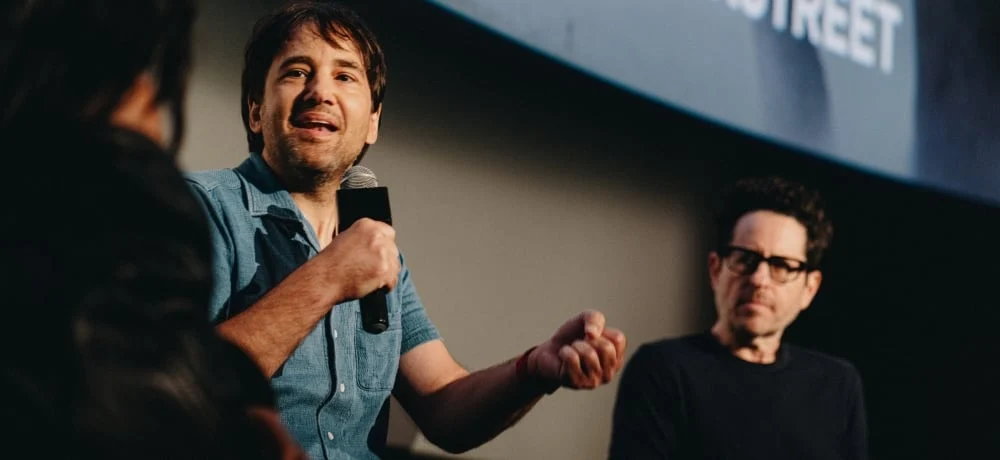
During a recent Q&A session, Mitchell was quick to distance his project from the standard Jurassic expectations. When asked about the challenges of reviving a genre that has seen so many failures, Mitchell emphasized his deep-rooted appreciation for the pioneers of practical effects and stop-motion magic.
"I grew up loving so many different kinds of dinosaur movies," Mitchell stated. "Like, of course, Jurassic Park. But I also watched all the Ray Harryhausen movies with my dad." He specifically cited the original King Kong (1933), the 1925 version of The Lost World, and the cult-classic The Valley of Gwangi.
This lineage is crucial. By reaching back to the roots of the genre, Mitchell is positioning The End of Oak Street not as a tech-demo for CGI, but as a love letter to the "big-hearted" thrillers of the 1980s.
The Poltergeist Connection: A Heart at the Center
Perhaps the most surprising revelation from the press preview was the primary tonal influence cited by the team: Tobe Hooper’s 1982 classic, Poltergeist.
J.J. Abrams noted that while the film contains terrifying sequences of prehistoric pandemonium, its soul remains grounded in the family dynamic. "There was something about Poltergeist that you always felt was big-hearted even though it was really scary," Abrams explained. "It brings the chills and the thrills, but it’s not a sadistic movie. It’s got a big heart at its core."
This "big-hearted" approach is intended to make the inevitable carnage feel personal. In the screened footage, the audience witnessed the family struggling with the sudden loss of a neighbor and the disappearance of their pet dog, Starbuck. The horror is punctuated by moments of dark, domestic humor—a hallmark of Mitchell’s writing style—which serves to humanize the characters even as their world descends into chaos.
Supporting Data: The Character-Driven Narrative
What separates The End of Oak Street from typical creature features is the heavy focus on internal conflict. Abrams emphasized that the dinosaurs are merely the catalyst for an internal unraveling.
"Each of the characters has a secret," Abrams teased. "But they’re a family that you’re so connected to, you’re so rooting for, that you believe in."
This structural choice is a deliberate move to ensure that the audience remains tethered to the human stakes. Mitchell’s approach to directing the cast—which includes Academy Award-winner Anne Hathaway and Ewan McGregor—focuses on the "juggling of balls." As the family navigates the physical danger of the predators, they are simultaneously forced to confront the interpersonal tensions that existed long before the dinosaurs arrived.
The film’s marketing, particularly the trailers, highlights this duality. The characters bicker about trivial domestic matters even while facing down extinction-level threats, providing a sharp, biting commentary on how humans process trauma through the lens of normalcy.
Official Responses and Creative Intent
When questioned about why he chose a specific sequence—the morning after the "storm"—as the primary showcase for the film’s tone, Mitchell was clear. "I think it’s a good sample of the suspense, mystery, and some of the humor of the movie."
The sequence effectively introduces the audience to the "new normal" of the film. By starting with the loss of power and water, Mitchell sets a baseline of discomfort before introducing the prehistoric threats. This deliberate pacing is intended to build "nightmare" scenarios that the audience can identify with.
Abrams, clearly impressed by his collaborator’s vision, noted the precision behind the chaos. "The thing that makes you care is you’re really tracking all these different characters despite the madness of it," he said. "You might think, ‘Oh, this is a sequence where the dinosaurs persevered,’ but there’s so much more going on and all of it is intentional and setting up things for later."
Implications: The Future of the Dinosaur Genre
The release of The End of Oak Street represents a high-stakes test for the film industry. Can a director known for mid-budget, high-concept psychological thrillers successfully pivot to a massive, creature-feature spectacle?
If the film succeeds, it may signal a shift in how studios approach the dinosaur genre. By moving away from the "theme park" aesthetic and toward a more intimate, character-focused, and "inescapable" horror, Mitchell is potentially carving out a new sub-niche.
Furthermore, the notable absence of herbivores in the marketing materials suggests that Mitchell may have a different vision for how these creatures function within the story. Instead of the majestic, awe-inspiring dinosaurs of the 90s, we are seeing a version of the prehistoric that is predatory, intrusive, and psychologically taxing.
As August 14 approaches, the industry is watching closely. If The End of Oak Street can balance its "big heart" with the visceral terror of the prehistoric, it may very well be the film that finally escapes the shadow of the past, proving that the scariest place to be is not an island, but your own front yard.