Haunting Harmonies: Exploring the Sonic Landscape of Netflix’s ‘The East Palace’
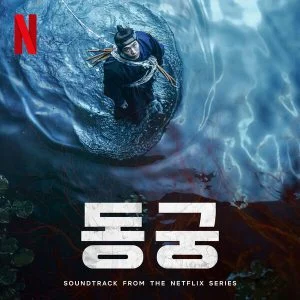
The release of a new high-budget South Korean limited series is always a significant event in the global streaming landscape, but the premiere of The East Palace on Netflix marks a particularly atmospheric milestone. As the series debuts today, YG PLUS and Netflix Music have simultaneously unveiled the official soundtrack, a massive, 47-track collection that serves as the sonic backbone for one of the most anticipated fantasy-horror dramas of the year.
The soundtrack, composed by a powerhouse team of South Korean musical talent—including Kim Jun-seok, Jung Se-rin, Byun Sang-hoo, and Juin-ro—is more than just background noise. It is an intricate tapestry of orchestral dread, ethereal tension, and historical gravitas designed to pull viewers into the cursed, spectral world created by showrunners Choi Jung-kyu, Kwon So-ra, and Seo Jea-won.
Main Facts: A Convergence of Talent and Terror
The East Palace arrives with a heavy burden of expectation. Its premise—a dark fantasy blend of period drama and chilling horror—centers on a unique duo: Gu-cheon, a man with the rare, spectral ability to traverse the world of ghosts, and Saeng-gang, a court lady burdened by a dangerous, long-held secret. Summoned by the King to investigate the inexplicable occurrences within the walls of a cursed royal palace, the two must navigate a landscape of political intrigue and supernatural peril.
The cast features a formidable lineup of South Korean stars, including Nam Joo-hyuk, Roh Yoon-seo, Cho Seung-woo, Kwak Dong-yeon, Tae In-ho, Jang Young-nam, Hwang Young-hee, Hong Seo-jun, Hong Su-zu, and Lee Hong-nae. With such a robust ensemble, the music needed to be equally commanding. The soundtrack album, now available for streaming and download on all major digital platforms via Amazon and other services, is a sprawling testament to the depth of the series’ world-building.
Chronology of the Production
The journey to The East Palace began long before today’s Netflix drop. Development of the series was characterized by a meticulous approach to genre-blending. While historical dramas (Sageuk) are a staple of Korean television, the inclusion of high-concept "ghost-traversing" mechanics required a sophisticated visual and audio approach.
- Early Development (2024): The project was greenlit with a focus on combining the prestige aesthetic of traditional court dramas with the high-octane tension of contemporary horror.
- Casting Phase (Late 2024 – Early 2025): The production team secured a star-studded cast, ensuring that the human drama remained the grounding force for the series’ supernatural elements.
- Composition and Scoring (2025 – 2026): Under the guidance of seasoned composers like Jung Se-rin and Kim Jun-seok, the score was developed to mirror the duality of the palace: the opulent, rigid structure of the throne room versus the decaying, shadow-filled reality of the spirit realm.
- Distribution Strategy: Netflix partnered with YG PLUS to ensure that the music would not merely exist as an afterthought, but as a standalone experience. By releasing the 47-track album on the day of the premiere, the producers have signaled their intent to treat the audio as a core pillar of the East Palace brand.
Supporting Data: An In-Depth Look at the Score
The composition team for The East Palace represents a who’s who of modern Korean film and television scoring. Jung Se-rin, for instance, has long been a staple in the industry, known for her ability to weave emotional resonance into suspenseful narratives. Her contributions, such as "What Lies Beneath the East Palace" and "The Burden of the Throne," anchor the series in a sense of historical weight.
The tracklist, totaling 47 pieces, provides a chronological guide to the emotional and narrative arc of the show.
Selected Track Highlights
- The Atmospheric Tension: Tracks like "The Distorted Shadow" (Juin-ro) and "Grotesque Nightmare" (Kim Jeong Wan) highlight the horror elements, utilizing dissonant strings and deep, percussive pulses.
- The Human Connection: "Unbreakable Bonds" and "Shared Hearts" (Jung Se-rin) provide the necessary respite from the spectral horror, focusing on the developing relationship between the leads.
- The Royal Stakes: "The King" (Shin You Jin) and "Royal Blood" (Kim Taejin) utilize regal, imposing arrangements that remind the audience of the political power struggle that underpins the supernatural conflict.
The sheer volume of the score—nearly 150 minutes of music—suggests a series that relies heavily on its environment to tell the story. For viewers, listening to the tracks before or after watching provides a different perspective; the music often reveals the "truth" of a scene before the dialogue does.
Official Responses and Creative Vision
The creative team has been vocal about the importance of sound design in The East Palace. In interviews, the showrunners have emphasized that the "cursed palace" is not merely a setting, but a character in its own right.
"We wanted the music to sound like the palace was breathing," says a spokesperson for the production. "The composers were tasked with creating a soundscape where silence is as important as the score. When the ghost world meets the human world, the music shifts from traditional instrumentation to more experimental, jarring textures."
The collaboration with YG PLUS has also been framed as a strategic effort to elevate the "K-OST" (Korean Original Soundtrack) phenomenon. By releasing such a comprehensive album, the studio is catering to an international audience that increasingly views Korean drama music as a standalone genre of high-art pop and orchestral composition.
Implications for the Future of K-Drama
The release of The East Palace and its massive accompanying score carries several implications for the future of international streaming content:
1. The Elevation of the "Prestige" Soundtrack
Historically, television soundtracks were functional. With The East Palace, Netflix is demonstrating that the score is a value-add that drives engagement. Fans who discover the music on Spotify or Amazon are likely to be converted into viewers, creating a reciprocal marketing loop between the streaming platform and the music industry.
2. Genre Hybridization
The success of this series—if the early reception of its production values holds—will likely encourage more creators to experiment with genre-blending. The synthesis of historical, political, and horror elements requires a specific type of musical support, and the success of this 47-track collection proves that the audience is ready for complex, long-form scores in episodic formats.
3. Globalized Production Standards
By utilizing a team of multiple composers, the producers of The East Palace have mimicked the "super-producer" model often found in Hollywood blockbuster films. This collaborative approach allows for a diverse sonic palette, ensuring that the horror scenes feel distinct from the romantic or political ones, all while maintaining a cohesive "sound" for the series.
A Final Note on the Viewing Experience
As The East Palace premieres, audiences are encouraged to pay attention to the interplay between the visuals and the score. The track "Inevitable Cooperation" (Kim Jun-seok), which opens the album, perfectly sets the tone for the series—a mixture of fatalism and urgent action.
Whether one is a fan of high-stakes historical fiction, a devotee of the horror genre, or a collector of cinematic music, the soundtrack for The East Palace offers a deep, rewarding dive into the dark heart of a cursed dynasty. The music is available now, and the journey into the palace has officially begun. As the series progresses, these tracks will likely serve as the definitive map of the characters’ descent into—and, perhaps, emergence from—the shadows of their own history.
For those ready to start their binge-watch, the link to the official Netflix page is live, and the full weight of the soundtrack awaits. It is a haunting, beautiful, and terrifying journey that is best experienced with the volume turned up.