The Imperial Succession Debate: UN Advocacy Meets Japanese Tradition in Legislative Reform
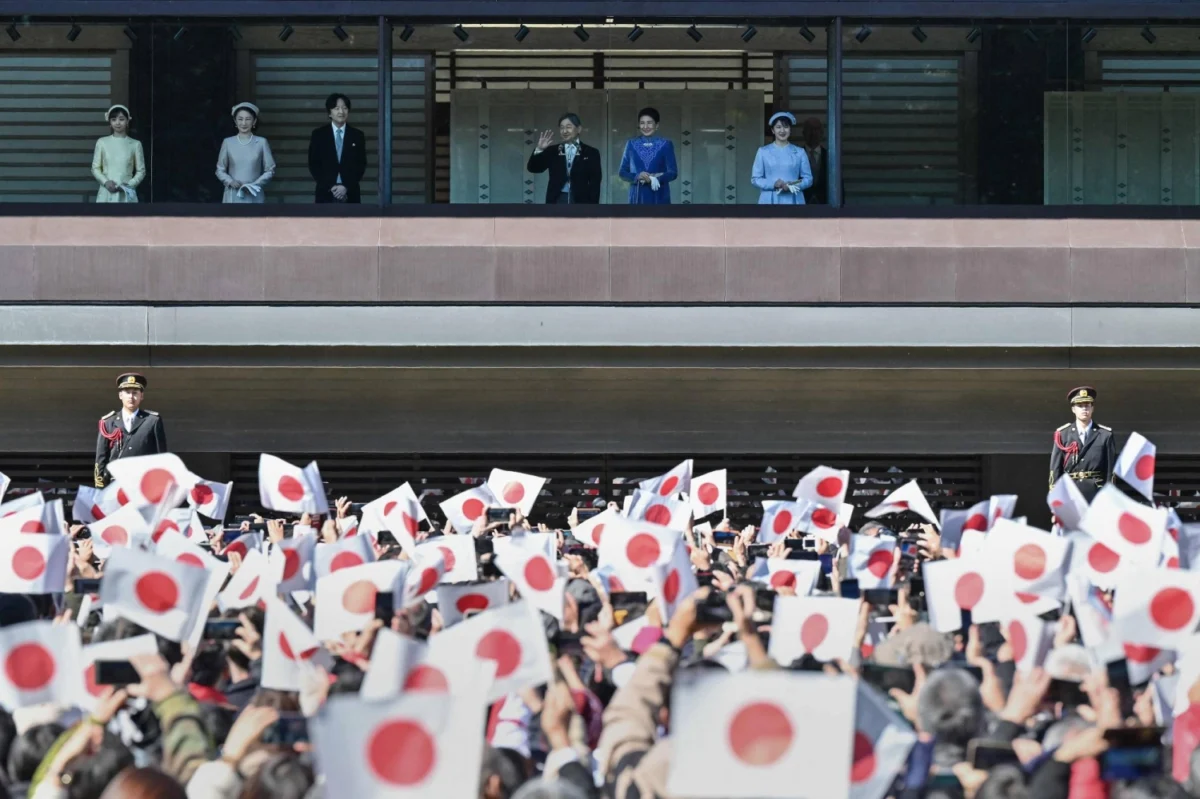
NEW YORK/TOKYO — The delicate balance between ancient tradition and modern egalitarian standards has once again moved to the forefront of international discourse following the Japanese parliament’s recent enactment of a landmark bill to revise the Imperial House Law. While the legislation seeks to address the existential crisis facing Japan’s monarchy—specifically, the shrinking pool of eligible royals—it has simultaneously reignited a global conversation regarding gender equality and the role of women in the world’s oldest continuous hereditary monarchy.
On Friday, the United Nations signaled its continued stance on the matter, emphasizing that the global body remains a staunch advocate for inclusive policies that dismantle barriers to women’s leadership.
Main Facts: A Legislative Milestone and a Persistent Stagnation
The Japanese Diet’s recent passage of the bill marks the first substantive legislative shift regarding the Imperial House Law since its inception in 1947. The primary objective of the reform is to address a growing demographic deficit within the Imperial household. For decades, the pool of potential heirs and working royals has dwindled, placing the future of the institution in a precarious position.
However, the bill—while achieving its goal of ensuring the survival of the imperial family through procedural adjustments—has preserved the controversial, centuries-old patrilineal succession rule. Under the current law, the Chrysanthemum Throne remains strictly reserved for male descendants in the male line. Despite the bill’s passage being hailed by proponents as a pragmatic solution to a systemic shortage of imperial personnel, critics argue that it represents a missed opportunity to modernize the institution in accordance with contemporary international human rights standards.
Chronology: From Post-War Law to Modern Contention
The history of the Imperial House Law is one defined by both stability and recent, mounting pressure.
- 1947: The current Imperial House Law is enacted under the post-World War II constitution. It codifies the male-only succession rule, reflecting the social and legal structures of the time.
- 2000s: As the number of births of male children in the imperial family drops, the debate over succession begins to gain public traction.
- 2006: A government panel proposes allowing women to ascend the throne, but the recommendation is shelved following the birth of Prince Hisahito, the first male heir born into the family in over four decades.
- 2024: The United Nations Committee on the Elimination of Discrimination against Women (CEDAW) issues a formal, high-profile recommendation urging Japan to amend the law to allow for female succession, framing it as a matter of fundamental gender equality.
- 2025–2026: Parliamentary deliberations intensify as the shrinking size of the imperial family becomes an urgent administrative concern.
- July 2026: The Japanese parliament passes the revision bill. While it allows for the retention of female members within the imperial household, it stops short of granting them succession rights.
Supporting Data: The Shrinking Chrysanthemum Throne
The impetus for the recent legislative action is not merely ideological; it is rooted in cold, demographic reality.
Data from the Imperial Household Agency indicates that the number of imperial family members has been in steady decline for years. Following the post-war reforms, many branches of the imperial family were removed from their royal status, leaving a small group of individuals to carry out state duties, represent the nation at diplomatic events, and perform religious rites.
The current structure relies on a handful of individuals. As female members marry commoners, they are required by law to relinquish their royal status and leave the palace. This "exodus" of female royals has left the monarchy with few active members to support the Emperor and Empress. Proponents of the recent bill argue that keeping these women within the imperial structure—even without the right to the throne—is the only way to prevent the total collapse of the institution’s ability to function.
However, skeptics point out that if the law allowed for female succession, the demographic problem would be solved more naturally, while simultaneously aligning the nation with the global trend toward gender-neutral inheritance laws, as seen in many European monarchies such as Sweden, the Netherlands, and the United Kingdom.
Official Responses: A Diplomatic Friction
The tension between the United Nations and the Japanese government has been palpable throughout the legislative process.
On Friday, following the enactment of the bill, Farhan Haq, deputy spokesperson for U.N. Secretary-General Antonio Guterres, addressed the media in New York. While avoiding a direct condemnation of the specific Japanese law, Haq reiterated the Secretary-General’s broader mandate:
"The Secretary-General encourages all countries to adopt inclusive policies that will empower women in all walks of life and in all forms of employment."
This statement serves as a thinly veiled reference to the 2024 CEDAW recommendation. The U.N. committee has consistently argued that the exclusion of women from the throne is not merely a domestic tradition, but a discriminatory practice that sends a message of inferiority regarding women’s capacity for leadership.
The Japanese government, however, remains unmoved by these international critiques. Tokyo’s official position is that the Imperial House Law is a matter of profound national sovereignty and cultural heritage. Following the 2024 CEDAW recommendation, the Japanese Foreign Ministry issued a sharp rebuttal, arguing that the succession to the imperial throne concerns the "very foundations of the state" and is deeply rooted in the nation’s history and identity. Officials argue that international human rights bodies often fail to grasp the unique, religious, and symbolic nature of the Japanese monarchy, which is intertwined with Shinto traditions.
Implications: The Path Forward
The enactment of this bill is unlikely to settle the debate. Instead, it appears to have drawn a clearer line between two competing visions of Japan’s future.
The Traditionalist Vision
For traditionalists, the preservation of the male-line succession is essential to the "unbroken" nature of the imperial line. To them, the throne is not a political office that should be subject to modern trends in gender equality, but a sacred position whose legitimacy is derived from antiquity. They view the current reforms as a successful compromise: maintaining the purity of the lineage while ensuring the practical functionality of the family.
The Progressive Vision
Conversely, advocates for gender equality argue that Japan is increasingly out of step with the global community. By choosing to bypass female succession, critics suggest the government is missing an opportunity to signal a commitment to equality that would resonate across all sectors of Japanese society. The implication is that if the nation’s highest, most symbolic institution continues to exclude women, it becomes harder for the government to champion equality in the corporate boardroom, the political arena, or the household.
The Diplomatic Fallout
Looking ahead, Japan will likely face continued pressure from international organizations. While the U.N. has no enforcement mechanism to compel a change to a nation’s constitutional or imperial law, the ongoing diplomatic friction could impact Japan’s soft power and its standing in global human rights indices.
The debate has moved beyond the palace walls. It has become a reflection of a nation grappling with its identity in the 21st century: How much of the past must be preserved to maintain national integrity, and how much must be sacrificed to ensure a future that is inclusive, equitable, and aligned with the values of the modern world?
As the dust settles on the recent legislative victory, the fundamental question remains: Will the Chrysanthemum Throne eventually evolve to mirror the changing roles of women in Japan, or will it remain a solitary bastion of tradition in a world that is moving rapidly in the other direction? For now, the answer remains firmly rooted in the past, even as the world around it changes.