
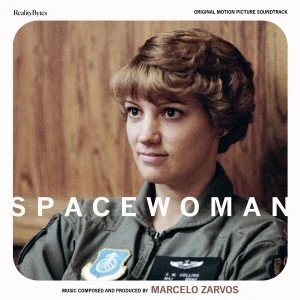
Scoring the Stars: Marcelo Zarvos’ Sonic Journey Through Spacewoman
The intersection of celestial exploration and musical composition has long been a fertile ground for cinematic storytelling. In the newly released documentary Spacewoman, director Hannah Berryman crafts a definitive portrait of Eileen Collins, the pioneering astronaut who shattered the glass ceilings of the U.S. Air Force and NASA. Complementing this visual journey is a profound, atmospheric score composed by Emmy Award nominee Marcelo Zarvos. Released through MovieScore Media’s Reality Bytes label, the soundtrack offers a window into the technical precision and emotional weight of one of history’s most daring explorers.
Main Facts: A Stellar Collaboration
The Spacewoman soundtrack is now available across all major digital music platforms, including Amazon, marking another significant chapter in the prolific career of Marcelo Zarvos. Zarvos, whose previous credits include the critically acclaimed Fences, The Good Shepherd, May December, and Wonder, has long been recognized for his ability to translate complex human narratives into evocative soundscapes.
For Spacewoman, Zarvos was tasked with the challenge of underscoring not only the technical rigor of space flight but the deeply personal sacrifices made by Eileen Collins as she navigated a male-dominated field. The resulting score serves as the heartbeat of the film, oscillating between the mechanical tension of a shuttle launch and the intimate, domestic stillness of life on Earth.
Chronology: From DOC NYC to Global VOD
The documentary Spacewoman first captured public attention during its debut at the 2024 DOC NYC festival, where it was lauded for its archival depth and intimate access to Collins’ life. Following its festival run, the film transitioned to a limited U.S. theatrical release this past March, drawing audiences interested in the intersection of aviation history and feminist milestones.
As of this writing, the film has migrated to Video-on-Demand (VOD) services, allowing a wider global audience to engage with the story of the first woman to pilot and command a U.S. spacecraft. The soundtrack release acts as the final pillar of the film’s distribution, allowing listeners to experience Zarvos’ compositions as a standalone narrative arc.
Supporting Data: The Soundtrack Tracklist
The score is composed of 28 distinct tracks, mapping out the trajectory of Collins’ life from her formative years to her four high-stakes space shuttle missions. The tracklist itself reads like a mission log:
- First Women Astronauts
- Homelife
- Spacewoman
- Elmira
- Pilots Logbook
- The Collins House
- A Woman at the Controls
- Russian Collaboration
- First Launch
- Docking with Mir
- Atlantis Landing
- Bridget
- Commander Collins
- Family Support Plan
- Columbia Explosion
- All Eyes On Us
- All It Takes
- Poverty
- Leaving for STS
- Discovery Launch
- Launch Damage
- Family Call from Space
- Dangerous Maneuver
- Spacewalk
- Landing Discovery
- Home Life
- Visit
- Credits
The Composer’s Perspective: Marcelo Zarvos’ Musical Language
Marcelo Zarvos is a master of the understated. His work on Spacewoman eschews the bombastic, orchestral clichés often associated with space exploration in favor of a more nuanced, intimate approach. By blending subtle electronic textures with acoustic instrumentation, Zarvos reflects the duality of Collins’ life: the vast, cold vacuum of space versus the warmth and fragility of the home she leaves behind.
In tracks like "First Launch" and "Discovery Launch," Zarvos employs rhythmic intensity that mimics the mounting pressure of a countdown. Conversely, tracks such as "Family Call from Space" and "The Collins House" utilize delicate piano melodies that ground the documentary in the emotional reality of a mother and daughter separated by hundreds of miles of atmosphere.
Official Responses and Industry Reception
While the film has garnered praise for its biographical accuracy, the score has been singled out by film music enthusiasts for its technical sophistication. Critics have noted that Zarvos avoids "hero-worship" music, instead opting for a sound that is inquisitive and reflective.
Director Hannah Berryman has spoken previously about the importance of the score in bridging the gap between the archival footage—often grainy and chaotic—and the modern, clean aesthetic of the interviews. The music acts as the connective tissue, ensuring that the transition from a 1990s training facility to a 2020s interview room feels seamless.
Implications: The Legacy of Eileen Collins and the Power of Documentary Scoring
The release of Spacewoman and its accompanying soundtrack arrives at a time of renewed public interest in the space program, particularly regarding the role of women in STEM. By documenting the career of Eileen Collins, the film reminds viewers of the systemic barriers that existed only a few decades ago.
The implication of this work is two-fold. First, it serves as an educational tool, archiving the experiences of a woman who proved that gender is irrelevant to the command of a spacecraft. Second, it highlights the vital role of the film composer in documentary filmmaking. In an era where "stock music" is increasingly prevalent, Zarvos’ bespoke score reinforces the idea that a dedicated musical vision is essential to elevating a documentary from a mere report of facts to an immersive emotional experience.
Technical Analysis of the Score
For those interested in the craft of film scoring, the Spacewoman soundtrack provides a masterclass in pacing. Zarvos structures the album to follow the life cycle of a shuttle mission. The early tracks, such as "First Women Astronauts," possess a sense of curiosity and intellectual discovery. As the album progresses to the middle tracks, the music becomes darker and more fraught with the realities of danger—specifically in "Columbia Explosion" and "Launch Damage."
"Columbia Explosion" is a standout piece of composition. Rather than utilizing aggressive or dissonant sounds to represent the tragedy, Zarvos leans into a melancholic, lingering tone that prioritizes the gravity of the event over sensationalism. It is a testament to the composer’s maturity that he understands when to let the silence and the space within the music speak louder than a full orchestra.
Conclusion: A Sonic Monument to Achievement
Spacewoman is more than a documentary; it is an act of historical preservation. By pairing the visual record of Eileen Collins’ extraordinary career with the emotional complexity of Marcelo Zarvos’ score, the project creates a holistic experience that resonates with both the mind and the heart.
As audiences continue to discover the film on VOD, the soundtrack stands as a testament to the power of film music to illuminate the human condition. Whether you are a fan of space exploration, a follower of documentary cinema, or a student of contemporary composition, the Spacewoman soundtrack offers a compelling, sophisticated, and deeply moving listening experience.
For those who wish to delve deeper into the narrative, the film is currently available on VOD, and the soundtrack is available for streaming and download on all major music platforms. Through these mediums, the story of Eileen Collins and the evocative musical landscape of Marcelo Zarvos will continue to inspire a new generation of dreamers, pilots, and explorers for years to come.