Venice Film Festival 2026: Film Comment Wraps Up the Lido with Final Dispatch on NAZA, Company, and Festival Standouts
Main Facts
The 2026 Venice Film Festival has officially drawn to a close, concluding two weeks of high-profile premieres, critical debates, and cinematic celebrations along the picturesque shores of the Lido di Venezia. As the dust settles on the prestigious Italian event, Film Comment has released its final podcast episode covering the festival’s high-stakes closing stretch.
Co-editor Devika Girish assembled a panel of distinguished international film critics—Mariona Borrull, Leonardo Goi, Luke Hicks, and Öykü Sofuoğlu—to dissect the most talked-about late-festival screenings. Chief among the titles analyzed on the podcast are Yuval Abraham and Rachel Szor’s urgent documentary feature NAZA, Casey Affleck’s narrative project Company, and Ali Asgari’s A Bit of Light.
Beyond the formal discussions of these specific titles, the critical roundtable provided a comprehensive post-mortem on the 2026 edition of the world’s oldest film festival. The panel evaluated overarching thematic trends, surprising audience reactions, and personal highlights that defined the cinematic landscape of Venice this year. The episode serves as the capstone for Film Comment’s extensive on-the-ground reporting, which has brought international cinephiles daily updates, reviews, and interviews straight from the historic Palazzo del Cinema.
Chronology of the 2026 Festival and Podcast Coverage
To understand the context of the final Film Comment podcast, it is helpful to trace the trajectory of the 2026 Venice Film Festival over its intense two-week run.
- Week One (Late August): The festival kicked off under clear Mediterranean skies with major international red carpets and high-profile opening night selections. From the outset, critics on the Lido noted a strong slate of politically engaged cinema and daring formal experiments in the main Competition and parallel sections like Orizzonti.
- Mid-Festival: As the midpoint approached, the festival rhythm accelerated with back-to-back press screenings and gala premieres. Critics navigated dense daily schedules, balancing major auteur projects with breakout features from emerging global talents.
- The Final Stretch (Early September): Entering the home stretch, anticipation peaked for several late-breaking titles. It was during this high-intensity window that Ali Asgari’s A Bit of Light, Casey Affleck’s Company, and Yuval Abraham and Rachel Szor’s NAZA made their world premieres, generating intense debate among the press corps.
- The Weekend Wrap: The festival concluded its official screenings and announced its prize winners over the weekend.
- Post-Festival Release: Following the festival’s close, Devika Girish and her panel recorded and published the final Film Comment podcast episode, crystallizing the critical consensus on the festival’s closing days and offering a retrospective look at the event’s overall success.
Supporting Data and Critical Breakdown
The final Film Comment podcast features detailed timestamps guiding listeners through specific critical evaluations of the festival’s late-stage heavyweights.
A Bit of Light (Discussion begins at 4:30)
Directed by Ali Asgari, A Bit of Light entered the conversation with high expectations given Asgari’s reputation for empathetic, tightly wound social realism. The panel explored how the film navigates complex emotional terrain, focusing on themes of redemption, societal judgment, and personal trauma. The critics discussed Asgari’s directorial choices, assessing how the film fits into the broader contemporary Iranian cinematic movement—one that continually finds ways to probe deep ethical questions despite systemic pressures.
Company (Discussion begins at 8:42)
Casey Affleck’s Company drew considerable attention on the Lido, shifting the panel’s focus toward American independent cinema and auteur-driven character studies. The critics unpacked Affleck’s directorial approach, analyzing the atmospheric tone, pacing, and thematic preoccupations of the project. The discussion touched upon Affleck’s visual grammar and how the film handles performance spaces, prompting a broader debate among the panel regarding its resonance within the competitive landscape of the festival.

NAZA (Discussion begins at 15:25)
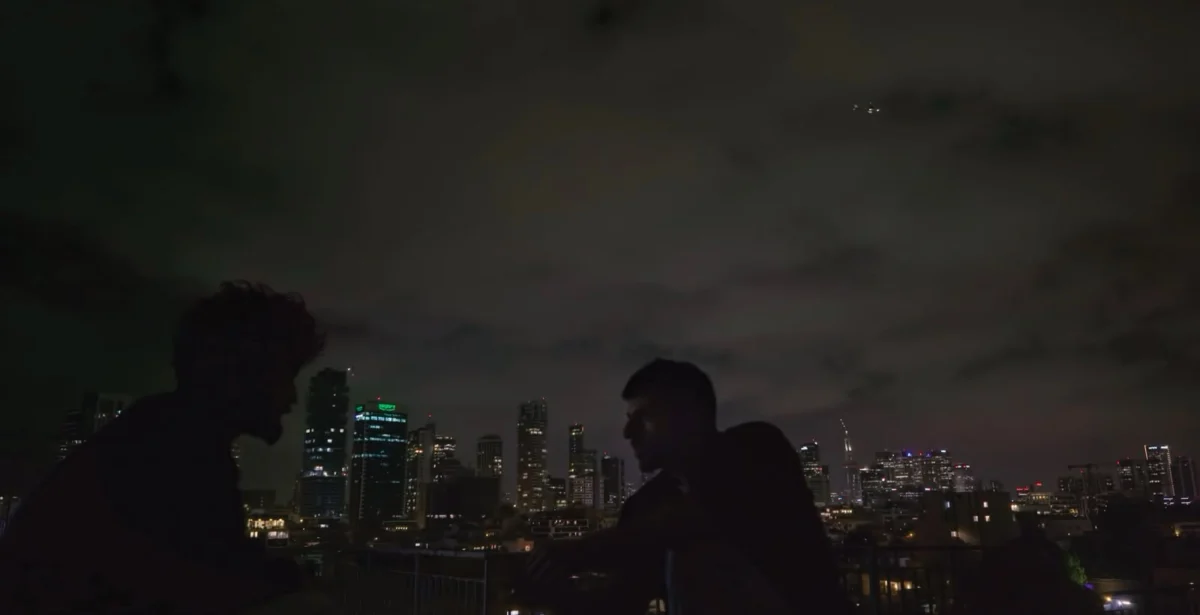
Perhaps the most politically charged and urgent discussion centered around Yuval Abraham and Rachel Szor’s NAZA. Arriving with substantial anticipation, the documentary feature provoked intense reactions from critics and audiences alike. The panel—comprising Mariona Borrull, Leonardo Goi, Luke Hicks, and Öykü Sofuoğlu—grappled with the ethical, aesthetic, and socio-political dimensions of the film. They analyzed how NAZA uses its medium to document reality under duress, sparking a vital conversation about the role of documentary filmmaking as an act of witness and resistance in contemporary geopolitics.
Festival Highlights and Personal Standouts
To conclude the episode, the critics moved beyond the official three-film docket to share their personal highlights from Venice 2026. This segment offered listeners a curated snapshot of the festival’s hidden gems, unexpected emotional peaks, and critical darlings that may have flown under the radar of mainstream prize juries but left an indelible mark on the accredited press corps.
Official Responses and Industry Reception
The reception of the late-festival premieres on the Lido reflected the broader volatility and excitement of the 2026 Venice selection. Festival organizers, led by artistic director Alberto Barbera, have increasingly curated a lineup that balances glamorous red-carpet spectacles with gritty, socially conscious international cinema.
While official press conferences for titles like Company and NAZA drew packed auditoriums and sharp questioning from international journalists, the real-time reactions on social media and in festival daily trades highlighted a deeply engaged critical community. The inclusion of rigorous analytical platforms like Film Comment remains vital for contextualizing these industry events. By bringing together diverse critical voices—such as Borrull, Goi, Hicks, and Sofuoğlu—the publication provided a multi-faceted view that counterbalanced the initial hype of red-carpet premieres with thoughtful, measured discourse.
Furthermore, the publication’s integration of this coverage into its Summer 2026 print issue and ongoing digital newsletters (The Film Comment Letter) underscores a commitment to long-form film criticism in an era dominated by instantaneous, brief hot-takes.
Implications for the Fall Film Festival Circuit and Awards Season
The conclusions drawn from the Film Comment Venice wrap-up podcast carry significant implications for the remainder of the autumn film festival circuit, which flows directly from the Lido to Toronto, New York, and beyond.
- Awards Momentum: Films that premiere late in Venice—particularly those generating fierce critical debate like Company and NAZA—often enter the North American festival circuit with built-in momentum. The critical consensus formed on the Lido frequently dictates the early Oscar and international film award narratives for the upcoming season.
- The Rise of Hybrid and Politically Urgent Documentaries: The heavy focus on NAZA highlights an industry-wide appetite for non-fiction cinema that tackles urgent, real-world conflicts with formal rigor. The discussions in Venice suggest that documentary features are increasingly claiming space in conversations traditionally dominated by high-budget narrative dramas.
- The Health of Global Auteur Cinema: Through the analysis of works by directors like Ali Asgari and Casey Affleck, the festival demonstrated the ongoing vitality of transnational and independent filmmaking. Despite financial and logistical hurdles facing global cinema, Venice 2026 proved that distinct directorial voices continue to find platforms for challenging, risk-taking material.
- The Evolution of Film Criticism: The collaborative format of Film Comment’s podcasting efforts points to a growing trend in modern film journalism: real-time, conversational audio dispatches that allow critics to process complex cinematic experiences collectively. As audiences seek deeper engagement beyond star ratings and capsule reviews, these extended roundtables offer a crucial space for nuanced interpretation.
For complete, unabridged coverage of the 2026 Venice Film Festival, including daily reviews, interviews, and deep-dives into the Summer 2026 issue, readers and cinephiles are encouraged to subscribe to Film Comment and sign up for The Film Comment Letter.