The Echo of Silence: Exploring the Musical Landscape of Vincent Garenq’s ‘Forsaken’
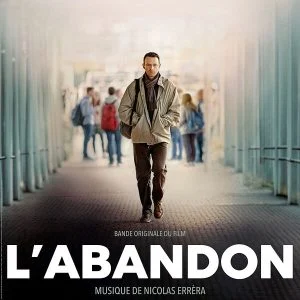
The release of a film soundtrack is often more than a mere commercial tie-in; in the case of cinema that tackles the most sensitive wounds of a nation, the score becomes the emotional architecture of the narrative. ENKA has officially released the soundtrack album for the poignant French biographical drama Forsaken (originally titled L’Abandon). Featuring a stirring, atmospheric score by the acclaimed composer Nicolas Errèra, the album offers a haunting musical companion to one of the most significant and tragic events in contemporary French history.
The Musical Vision: Nicolas Errèra’s Score
Nicolas Errèra, a composer whose versatility has been proven through an extensive filmography ranging from the high-octane energy of Raging Fire and Hidden Man to the intimate character studies of My Mother, God, and Sylvie Vartan, brings a somber, nuanced touch to Forsaken.
The score is designed to navigate the heavy thematic weight of the film—a story that balances the quiet dignity of a dedicated educator against the creeping shadow of radicalization and systemic failure. Errèra’s approach eschews melodrama in favor of a restrained, minimalist soundscape. By utilizing sparse instrumentation, he creates an auditory space that allows the gravity of the events to resonate without forcing an emotional response from the audience. For those looking to immerse themselves in this sonic experience, the album is currently available on Amazon and other major digital streaming platforms, where listeners can also preview the full tracklist.
A Chronicle of Tragedy: From Classroom to Cinema
The film Forsaken, co-written and directed by Vincent Garenq, serves as a cinematic adaptation of Stéphane Simon’s investigative book, The Last Days of Samuel Paty. The narrative focus is narrow, intentional, and harrowing: it chronicles the final eleven days of Samuel Paty, the French school teacher whose life was cut short in October 2020.
The Historical Context
In October 2020, the French Republic was thrust into a period of profound national mourning and introspection. Samuel Paty, a middle-school history and geography teacher, was murdered in Conflans-Sainte-Honorine. The act followed a classroom lesson on freedom of expression in which Paty had shown caricatures of the Prophet Muhammad—a standard part of the French civic curriculum regarding the freedom of the press.
The tragedy acted as a flashpoint for a country already grappling with deep-seated tensions regarding secularism (laïcité), the boundaries of free speech, and the integration of marginalized communities. The subsequent public outcry and the debates that swept through the National Assembly and the streets of Paris underscored a fundamental crisis of values. Garenq’s film aims to translate these abstract national debates back into the human experience, focusing on the isolated, mounting pressure faced by one man in the days leading up to his death.
The Cinematic Journey
The production of Forsaken was marked by a commitment to journalistic integrity. Garenq, known for his ability to handle sensitive, real-world subject matter, worked closely with the source material provided by Stéphane Simon. The film stars Antoine Reinartz as the central figure, supported by a cast including Emmanuelle Bercot, Nedjim Bouizzoul, Azize Kabouche, and Emma Boumali.
The film made its highly anticipated premiere at this year’s Cannes Film Festival, where it was met with both critical acclaim for its restrained direction and a respectful, albeit somber, reception from audiences. It subsequently opened in French theaters this past May, reigniting public conversation about the security of educators and the role of the state in protecting intellectual freedom.
Supporting Data: Production and Distribution
Forsaken is not merely a biography; it is a document of a societal fracture. The production team faced the delicate task of balancing the need for dramatic pacing with the responsibility of depicting a real-life tragedy that still feels fresh in the national consciousness.
- Director/Co-Writer: Vincent Garenq
- Key Cast: Antoine Reinartz, Emmanuelle Bercot, Nedjim Bouizzoul, Azize Kabouche, Emma Boumali
- Source Material: The Last Days of Samuel Paty by Stéphane Simon
- Composer: Nicolas Errèra
- Release Status: Available now in France; international distribution pending.
While the film has solidified its place in the French cinematic landscape, its global reach remains to be determined. As of mid-2026, there is no official word regarding a domestic (North American) distribution deal. The international market for European political dramas is often selective, but the universality of the themes presented in Forsaken—education, the threat to democracy, and the dangers of online misinformation—makes it a likely candidate for acquisition by platforms specializing in prestige independent cinema.
Official Responses and Public Reception
The reaction to Forsaken has been inextricably linked to the ongoing legacy of Samuel Paty. When the film premiered in Cannes, the press focused heavily on the moral responsibility of the filmmaker. Garenq has stated in interviews that his goal was not to create a polemic, but to reconstruct the "mechanics of an abandonment."
The title, L’Abandon, refers to the feeling that Paty was left to face an escalating crisis with insufficient support from the administrative institutions that were meant to protect him. This narrative choice has prompted responses from educators’ unions and political figures in France, who view the film as a sobering indictment of the bureaucratic inertia that allowed a teacher to become a target.
Critics have noted that the strength of the film lies in its refusal to simplify the antagonists. Instead of a straightforward "good vs. evil" portrayal, the film explores the social media echo chambers, the misunderstandings within the school community, and the breakdown of communication that ultimately led to the tragedy.
Implications: The Legacy of the Film
The release of the soundtrack by ENKA provides an opportunity to reflect on the film’s lasting impact. Beyond the theater walls, Forsaken serves as a piece of "living history."
The Role of Art in Civic Memory
By documenting the final eleven days of a man whose life became a symbol of national identity, Garenq and Errèra have contributed to the "memory work" required by a modern democracy. The music, in particular, serves to bridge the gap between the viewer and the subject. Where words might fail or incite further polarization, the score invites empathy.
Future Distribution and Accessibility
The lack of a domestic distribution deal in the United States and other English-speaking markets remains a point of interest for cinephiles. The trajectory of Forsaken will likely mirror that of other high-profile French dramas that find their way to international audiences through streaming services rather than wide theatrical releases. Its presence on digital music platforms allows the international audience to engage with the thematic essence of the film even before the picture itself becomes widely available.
Conclusion: A Score for a Somber Subject
As the dust settles on the theatrical run in France, the music of Nicolas Errèra remains the most enduring aspect of Forsaken for many listeners. It is a score that does not demand attention, but rather commands it—a reflection of the quiet, disciplined life that Samuel Paty led, and the loud, chaotic world that eventually claimed it.
The release of this album is a reminder that cinema is a collaborative act of remembrance. Through the lens of Vincent Garenq and the evocative compositions of Nicolas Errèra, the story of Samuel Paty continues to serve as a stark warning about the fragility of our shared values. Whether or not the film finds a home in global markets, the soundtrack stands as a testament to the fact that, even in the face of abandonment, there remains a need to listen, to process, and to remember.
For those interested in exploring the musicality of this tragic chapter, the soundtrack is now available across all major digital platforms. It is more than just a list of tracks; it is an invitation to engage with the solemnity of a story that, years later, continues to define the spirit of a nation.