The Art of the Narrative: ‘Dancing With the Stars: The Next Pro’ Heats Up in Emotional Second Week
The race to secure a coveted spot as a professional dancer for Season 35 of Dancing With the Stars is officially intensifying. Following a brutal premiere that saw the initial field of hopefuls trimmed down to ten, the pressure shifted from pure technical proficiency to the soul-baring demands of emotional storytelling in the series’ second episode, "Stories Without Words: Storytelling With Brandon Armstrong."
As the competitors continue to navigate the high-stakes environment of the ballroom, the message from the judges is clear: technique will get you in the door, but vulnerability will win you the Mirrorball.
The State of the Competition: A Fresh Start
The second week of Dancing With the Stars: The Next Pro acted as a metaphorical reset button. After the departures of Briar Nolet and Jake Monreal in the season opener—both felled by fundamental issues with posture, foot placement, and stamina—the remaining ten dancers were tasked with proving they could evolve.
Judge Mark Ballas set the tone for the evening, reminding the contestants that the competition is fluid. "Remember, every challenge tests a new set of skills, so wipe the slate clean and attack with a vengeance," Ballas urged. This directive was particularly vital for those who narrowly escaped elimination in the premiere, such as Tristen Sanders and Natalie Jolley. Conversely, for frontrunners like Adele Zaikman and Selena Hamilton, the challenge was to avoid complacency and prove that their early-season success was not a fluke.

The Philosophy of Movement: Brandon Armstrong’s Vision
The episode centered on the theme of storytelling, an essential skill for any professional choreographer or partner on the flagship Dancing With the Stars series. The guest mentor for the week, Brandon Armstrong, provided the blueprint for success by sharing his own deeply personal narrative.
Armstrong, who has been open about his upbringing, performed a routine inspired by his experience being adopted into a white family. "Story is the essential skill as a pro," Armstrong noted. "We’re going to be looking for a clearly expressed narrative that sparks a strong emotional reaction." His choreography was a masterclass in dynamic tension, beginning with heavy, grounded movements to reflect the struggle of his past, and transitioning into a lighter, fluid conclusion that symbolized the positive growth and gratitude he feels toward his family today.
Chronology of the Challenges: Pairing Up for Success
The producers threw a tactical curveball by forcing the dancers into pairs, requiring them to synthesize their personal histories into a cohesive routine. The pairings were:
- Erik Linder and Natalie Jolley
- Benji Castro and Nina Mayster
- Tristen Sanders and Stephani Sosa
- AJ Pritchard and Selena Hamilton
- Allen Genkin and Adele Zaikman
The process of selecting these stories revealed as much about the contestants’ characters as the actual dances. Tristen and Stephani leaned into the narrative of self-acceptance for a Latina navigating a predominantly white culture. Benji and Nina tackled the heavy subject of perseverance following the death of a parent. Allen and Adele chose to honor the memory of Allen’s mother, who was the driving force behind his career before her untimely passing when he was 15. Erik and Natalie explored the struggle of finding one’s voice, while AJ and Selena chose a more triumphant, if less emotionally resonant, story regarding AJ’s 2013 British Open victory.

Conflict and Communication: The Breaking Point
The journey to the stage was far from harmonious. The most visible tension occurred between Benji Castro and Nina Mayster. In an unscripted moment at the practice house, the pair aired their grievances in front of their competitors. Nina felt that Benji was passive, allowing her to shoulder the burden of the creative process, while Benji argued that his input was consistently ignored.
This lack of synergy proved to be a harbinger of their performance. Meanwhile, other teams faced different hurdles. AJ Pritchard, a seasoned professional from Strictly Come Dancing, struggled to pivot from his role as an instructor to an equal partner, with mentors noting that he approached the choreography with a "teacher-first" mindset rather than a collaborative one.
Allen Genkin also faced significant internal hurdles. The raw emotion of telling his mother’s story caused him to struggle during rehearsals. This led to a poignant heart-to-heart with host Robert Irwin, who shared his own experiences regarding the emotional weight of performing a tribute to a deceased parent—a moment that served as a turning point for Genkin’s focus and resolve.
Performance Analysis: The Judges’ Verdicts
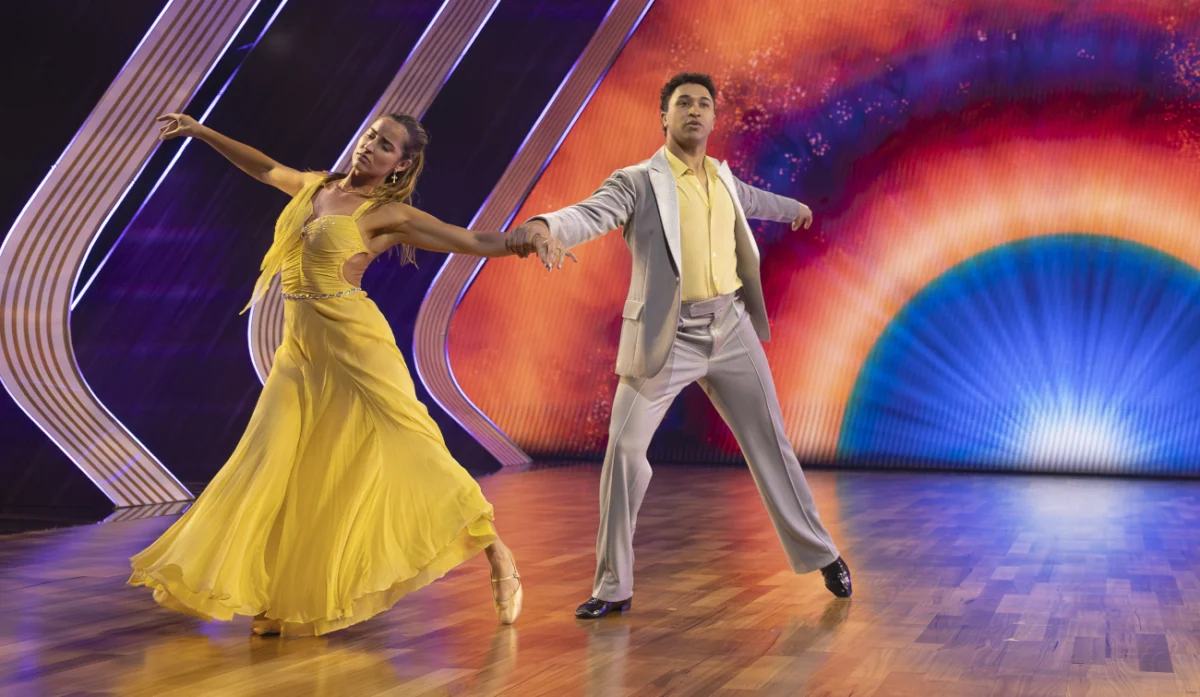
Erik and Natalie (Viennese Waltz)
This pair delivered a performance that signaled a true turnaround. Shirley Ballas specifically commended Natalie’s newfound confidence, noting the shift from her timid premiere performance. Erik was lauded for his "Prince Charming" stage presence and his ability to frame his partner effectively. Brandon Armstrong went as far as to label their performance "top-notch," marking them as a team that has found its rhythm.

Benji and Nina (Rumba)
The performance was widely criticized for being disjointed. Mark Ballas questioned the lack of connection during rehearsals, noting that Benji’s failure to speak up and Nina’s tendency to take control ultimately hindered their chemistry. Shirley Ballas was particularly harsh regarding the choreography, pointing out that the inclusion of backflips in a rumba—a dance that demands intimacy and groundedness—was a fundamental misunderstanding of the style.
Tristen and Stephani (Rumba)
Tristen and Stephani managed to turn their technical limitations into an emotional asset. Mark Ballas praised Stephani’s physical lines and emotional commitment, while Tristen was commended for his unwavering focus on his partner. Even with minor technical errors, the judges felt the strength of their partnership was palpable.
AJ and Selena (Jive)
While technically sound, the performance left the judges cold. Shirley Ballas expressed confusion over the choice to revisit the jive, and Brandon noted that while it was the only high-energy routine of the night, the narrative felt disconnected. Mark Ballas summarized the consensus: the routine lacked the necessary "oomph" to stand out in such an emotional field.
Adele and Allen (Rumba)
The evening culminated in a standing ovation for the final pair. The routine, dedicated to Allen’s mother, moved both the judges and the competitors to tears. Brandon Armstrong admitted that the performance would stay with him for the rest of his life. Shirley Ballas, visibly moved, declared it "one of the most beautiful things I’ve ever witnessed," solidifying the pair as the ones to beat.

The Elimination: A Final Bow
As the night drew to a close, the jeopardy was narrowed down to Benji and Nina. Despite the team’s internal friction, it was Benji who was ultimately sent home. Shirley Ballas delivered the news with a somber tone, emphasizing that in a competition of this caliber, the ability to communicate and connect is just as important as the ability to execute a perfect flick or turn.
Benji, in his final remarks, remained gracious. "Looking back on my journey, I’m most proud that I was able to represent the entire Latino community," he said. "I stayed genuine and true to myself. I always put my best forward, so I truly believe no matter who I was partnered with, it was my time."
Implications for the Season
With the field now at nine, the competition is beginning to take a clear shape. The success of Allen and Adele, combined with the steady improvement of Erik and Natalie, suggests that the "Next Pro" title will likely go to a pair that can balance technical brilliance with authentic, relatable storytelling. The pressure is now squarely on the remaining dancers to maintain their emotional vulnerability while navigating the increasingly difficult technical challenges that lie ahead in the coming weeks.
As Dancing With the Stars: The Next Pro continues to air on ABC, with episodes streaming on Disney+ and Hulu, the audience is witnessing not just a competition, but a masterclass in the evolution of professional dancers. The "storytelling" lesson has fundamentally changed the stakes, and the remaining contestants now understand that in this ballroom, the most important step isn’t just the one you take with your feet—it’s the one you take with your heart.