Beyond the Hype: Reevaluating Jumbo and the Power of the "Smart Kampung" Narrative
When the animated feature Jumbo began to fade from the marquee—having already crossed the threshold of ten million viewers—I finally decided to purchase a ticket. My initial reluctance was rooted in skepticism. I viewed the film as a product of over-marketing and excessive industry backing. In the current Indonesian landscape, where the stand-up comedy circuit has aggressively expanded its influence from YouTube to television, cinema, and political discourse, I was wary of a project spearheaded by a comedian-turned-director. I questioned the competence behind the creative vision, suspecting that the film was merely riding the wave of its creator’s public profile.
I walked into a screening at Mall Artha Gading, North Jakarta, on May 27, 2025—nearly two months after its premiere. With low expectations and a critical eye, I prepared myself for a predictable, "overrated" experience. What I encountered, however, was a film that forced me to dismantle my own prejudices, revealing a depth that transcends simple animation and celebrity voice-acting.
The Premise: More Than Just a Coming-of-Age Story
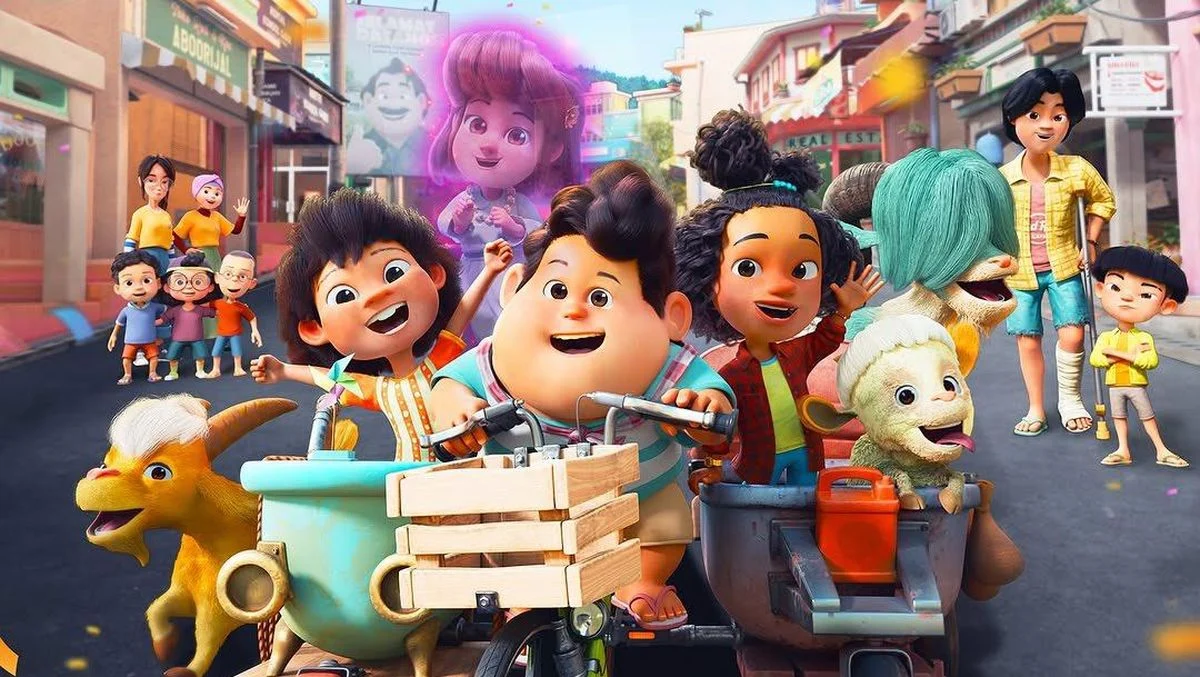
Jumbo tells the story of Don, a 10-year-old orphan navigating the trials of childhood. On the surface, the plot follows familiar beats: a protagonist seeking belonging, the power of friendship, and the pursuit of dreams. Directed by Ryan Adriandhy and co-written with Widya Arifianti, the 102-minute film utilizes an ensemble cast including Bunga Citra Lestari, Ariel Noah, Cinta Laura, and Angga Yunanda.
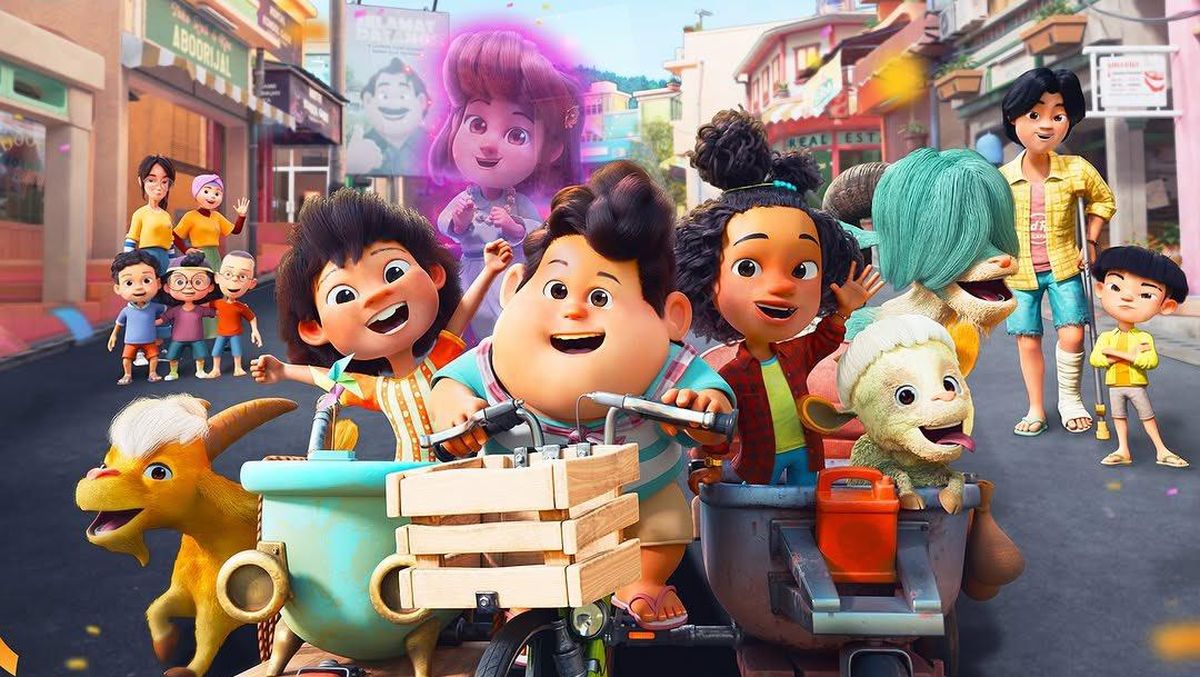
Initially, I dismissed the star-studded cast as a classic marketing ploy designed to maximize box office returns. However, as the film progressed, my cynicism waned. The narrative centers on Don, who is bullied for his weight and his propensity for "storytelling"—a trait that makes him an outcast among his peers. His only allies are his friends, Nurman and Maesaroh ("Mae"), and a spectral companion named Maria ("Meri").
While many critics focused on the film’s moral lessons regarding family and friendship, I found myself drawn to the director’s choice of setting: the kampung (village/neighborhood).
Chronology of a Cultural Phenomenon
The trajectory of Jumbo is a testament to the evolving appetite of the Indonesian audience.
- Early 2025: Pre-release marketing reaches a fever pitch, utilizing the immense social media followings of the cast and the director.
- April 2025: The film premieres to massive commercial success, swiftly becoming a national conversation piece.
- May 2025: The "post-peak" phase begins, where critical discourse shifts from box office numbers to the sociological implications of the film’s narrative choices.
- Mid-2025: Debates emerge regarding the film’s inclusion of supernatural elements (the ghost, Meri) and its handling of complex socio-political themes like land development.
The "Smart Kampung" as a Narrative Anchor
The true strength of Jumbo lies in its refusal to aestheticize Indonesia through the lens of Mooi Indië (the romanticized "Beautiful Indies" style). Instead, Adriandhy grounds the story in the reality of the Indonesian kampung.
Drawing from Melani Budianta’s seminal work, Smart Kampung: Doing Cultural Studies in the Global South (2019), we can view the kampung not as an administrative relic or a site of poverty, but as a "counter-narrative" to the sterile, technocratic vision of the "smart city." Budianta argues that the kampung is a locus of living culture—a place where collective ethics, tradition, and ecological resilience thrive against the encroachment of modernization.
In Jumbo, the kampung is the stage where childhood is lived: games of kasti, hide-and-seek, and the presence of neighbors like the local electronic repairman. It is a world where cats roam freely and the community functions through a visible, if sometimes flawed, social structure of village heads and neighborhood watch (hansip). By centering the story here, the film establishes a profound intimacy with its audience—the millions of Indonesians who live in such neighborhoods, not in the sanitized high-rises of the elite.
The Interplay of Myth and Reality: The Land Grab Subplot
Perhaps the most controversial aspect of Jumbo is its inclusion of a land-development dispute. Don and his friends discover that the ghost, Meri, and her parents are being "captured" by the village head. The official’s motive is sinister: he intends to seize the land where their graves lie to pave the way for a road project.

Critics have argued that this narrative is too heavy for children, or that the inclusion of ghosts and supernatural elements encourages superstition. However, I posit that this is precisely where the film succeeds. By using the myth of the "ghost" as a proxy for the traumatic reality of land displacement, the film allows children to grapple with adult issues through a playful and accessible medium.
This aligns with Durkheimian theory, where myths serve as instruments of social control and collective understanding. In many traditional Indonesian cultures, myths—like the threat of spirits for children who wander out at maghrib—are not merely meant to terrify, but to provide structure and safety. In Jumbo, the supernatural is a tool of empowerment. It provides the children with an agency that would be impossible to express in a purely "logical" or "modern" setting. If we strip away the myth, we strip away the children’s ability to defend their home against the encroachment of a corrupt bureaucracy.
Supporting Data and Industry Context
The film’s performance—reaching ten million viewers—cannot be attributed solely to the "celebrity effect." It points to a growing hunger for indigenous, locally-grounded content.
- Cultural Representation: Jumbo acts as a cultural repository, documenting the transition from traditional outdoor play to the digital age.
- Economic Impact: The film’s success highlights the viability of the "local-but-global" animation style, proving that Visinema Pictures and other studios can compete with international giants like Disney or Pixar by focusing on specificity rather than universality.
- Social Discourse: The prevalence of community festivals, as depicted in the film, mirrors the real-world rise of local cultural initiatives, bolstered by government programs like Indonesiana.
Official Responses and Public Reception
Public reception has been polarized. On social media, conservative commentators have criticized the film for allegedly promoting beliefs that contradict religious teachings. Conversely, educators and cultural observers have praised the film for its "anthropological" value.
The production team, led by Ryan Adriandhy, has maintained that the film was designed to be interpreted through the eyes of a child. "We wanted to create a world where the problems of the adult world—like land grabbing—are faced with the innocence and creativity of children," noted a spokesperson for Visinema. They argue that the film does not aim to provide a political manifesto, but rather to spark a conversation between generations.

Implications: A New Era for Indonesian Animation
The implications of Jumbo are profound for the future of the Indonesian creative industry.
- The Death of the "Overrated" Label: Jumbo proves that popular success and artistic substance are not mutually exclusive. When a film roots itself in the lived experiences of its audience, the "hype" becomes a reflection of genuine cultural resonance.
- The Re-legitimization of the Local: By treating the kampung as a site of potential rather than a site of backwardness, the film encourages a re-evaluation of national identity. It challenges the "smart city" obsession that defines so much of contemporary Indonesian urban planning.
- The Power of Narrative Agency: By allowing children to solve complex social problems through the lens of myth, the film empowers a younger generation to question the status quo. It teaches them that their "stories"—even those dismissed by adults—can be a form of resistance.
Conclusion
As I left the theater in North Jakarta, my initial cynicism felt misplaced. I had walked in looking for a reason to dislike a film that seemed to embody everything wrong with the current industrialization of Indonesian pop culture. I walked out realizing that Jumbo is a quiet, necessary act of subversion.
If we remove the supernatural elements, we lose the magic of childhood. If we remove the kampung, we lose our cultural footing. By blending the two, Jumbo provides a mirror to the society that produced it. It asks us, as adults, to reconsider our logic and our obsession with "progress." Perhaps, in a world that is rapidly losing its soul to development, the most revolutionary thing a child can do is tell a story that saves their home.
Whether the creators intended it or not, Jumbo has successfully translated the anxieties of the contemporary kampung into a language that every child can understand. It is a film that deserves to be watched not for the celebrities on the poster, but for the profound, human truth hidden in its animated heart.