Echoes of Corruption: Composer Sarah Warne Scores ITV’s Gripping New Crime Drama The Blame
September 20, 2026 — As the British television landscape continues to be defined by high-stakes crime dramas, ITV has unveiled its latest ambitious project: The Blame. Premiering tonight across the network and the ITVX streaming platform, the six-part series arrives with significant anticipation, bolstered by a powerhouse creative team and a haunting, atmospheric score composed by the acclaimed Sarah Warne.
Known for her ability to weave tension into the fabric of narratives, Warne’s latest work promises to elevate the series’ investigation into the dark underbelly of institutional malpractice.
The Core Narrative: Uncovering the Web of Silence
At its heart, The Blame is a psychological crime thriller that transcends the standard "whodunnit" format. Developed for the screen by Megan Gallagher—whose previous work includes the taut suspense of Wolf and All Her Fault—the series is an adaptation of Charlotte Langley’s critically lauded debut novel of the same name.
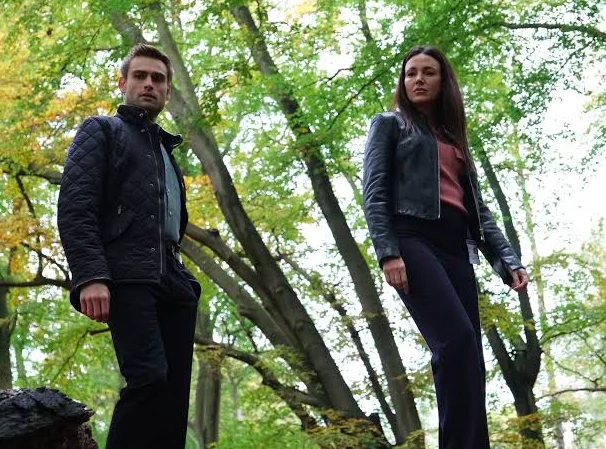
The plot centers on two detectives tasked with investigating the brutal murder of a teenage girl. However, as they peel back the layers of the case, they find themselves trapped in a labyrinthine web of institutional cover-ups and deep-seated police corruption. The narrative serves as a blistering indictment of systems that prioritize self-preservation over justice.
The production boasts an impressive ensemble cast, featuring Michelle Keegan, Douglas Booth, Ian Hart, Nathan Mensah, Nigel Boyle, Joe Armstrong, Gavin Spokes, Matilda Freeman, Ceallach Spellman, and Josh Bolt. Their performances are expected to anchor the series, grounding the high-concept political thriller in visceral, human stakes.
The Sound of Suspense: Sarah Warne’s Sonic Signature
For composer Sarah Warne, The Blame represents another milestone in a career defined by gritty, high-pressure television. Warne has become a go-to talent for producers looking to capture the specific anxiety of modern British crime fiction. Her previous credits read like a "who’s who" of acclaimed drama: Des, Harlan Coben’s Lazarus, Time, The Long Shadow, Humans, Dark Money, Steeltown Murders, Hollington Drive, and The Drowning.
In The Blame, Warne’s score is tasked with doing the heavy lifting in scenes where dialogue is stripped away. Given the themes of systemic rot and moral ambiguity, industry insiders suggest that Warne has leaned into a minimalist, synth-heavy, and percussive aesthetic to mirror the detectives’ claustrophobic pursuit of the truth.
A Track Record of Excellence
Warne’s consistent output has established her as a vital architect of the "ITV sound." Her ability to build dread without resorting to overt melodrama is what makes her a favorite among showrunners. Alongside her work on The Blame, Warne continues to serve as the lead composer for the U&Alibi hit Bookish. With Bookish having recently returned for its second season and already secured for a third, Warne is currently one of the most prolific and in-demand composers working in the UK television sector today.
Production Pedigree: The Power Behind the Lens
The quality of The Blame is further guaranteed by the heavyweights behind the camera. The series is a Quay Street production, a banner that has become synonymous with prestige television. The executive producing team includes Nicola Shindler—the visionary behind It’s a Sin and Nolly—alongside Richard Fee (Fool Me Once, Missing You) and Polly Hill (The Night Manager, The Last Kingdom).
This creative triumvirate has a proven history of identifying narratives that resonate with contemporary audiences. By merging Charlotte Langley’s source material with a seasoned production team, The Blame is positioned not just as a weekly procedural, but as a "water-cooler" series capable of driving national conversation regarding police accountability.
Chronology of Development: From Page to Screen
The journey of The Blame from a debut novel to a prime-time ITV flagship has been swift, reflecting the current industry appetite for literary adaptations.
- Pre-Publication (2024): Charlotte Langley’s debut novel garners significant attention from production houses before it even hits bookshelves, thanks to its harrowing exploration of cold-case methodology and corruption.
- Development (Early 2025): Megan Gallagher is brought on board to adapt the novel for the screen. Quay Street Productions picks up the project, with Nicola Shindler leading the effort to secure a network home.
- Production (Late 2025 – Early 2026): Principal photography begins across the UK. Sarah Warne is tapped early in the post-production phase to begin conceptualizing the score, working closely with the editors to ensure the music reflects the shifting moral landscape of the plot.
- Release (September 20, 2026): The series premieres, marking the culmination of an intensive 18-month production cycle.
Supporting Data: The Rise of the "Prestige Procedural"
The success of dramas like The Blame is part of a broader shift in British media toward the "Prestige Procedural." Data from the past three years indicates that viewers are increasingly migrating toward series that combine the comforting familiarity of a detective narrative with the complex social commentary found in high-end drama.
According to industry analysts, viewers are gravitating toward shows that offer:
- Serialized Complexity: Unlike the episodic formats of the 1990s, modern audiences demand long-form, six-to-eight-episode arcs that allow for deeper character development.
- Sound-First Storytelling: The reliance on composers like Sarah Warne to define the "mood" of a show has increased. Soundtracks are now treated as primary characters rather than background noise.
- Institutional Critique: Themes of police corruption, political scandal, and institutional failure have become the primary drivers of engagement in the post-2020 landscape.
Official Responses and Creative Intent
In a recent press briefing, showrunner Megan Gallagher spoke about the challenge of adapting a novel that deals so heavily with the weight of "blame."
"We wanted to ensure that the audience felt the weight of the investigation," Gallagher remarked. "It’s not just about who killed the girl; it’s about who allowed the system to ignore her. That’s a heavy question. When we brought Sarah [Warne] on, we told her we didn’t want a traditional thriller score. We wanted something that felt like it was breaking down, something that felt as corrupted as the world our detectives are walking through."
The network’s decision to pair this series with the current momentum of ITVX reflects a strategy to capture both the live linear audience and the on-demand digital viewer. ITV executives have expressed confidence that the combination of high-profile casting and a topical script will drive significant traffic to their streaming platform.
Implications for the Future of British Television
The release of The Blame holds several implications for the future of the UK television industry. First, it reinforces the dominance of the "Northern/British Noir" genre. By setting these stories in regional hubs and focusing on institutional failure, producers are finding success in mirroring the anxieties of the British public.
Second, the continued reliance on composers like Sarah Warne highlights a trend toward "auteur scoring." Producers are no longer outsourcing music to generic libraries; they are commissioning bespoke, experimental work that acts as a brand identifier for the series itself.
Finally, the success of this project may dictate future investments in literary adaptations. If The Blame hits its projected viewership numbers, it is likely that we will see a surge in competitive bidding for debut novels that offer similarly dark, character-driven mysteries.
As the credits roll on the first episode tonight, the question for the audience will remain: Who is actually to blame? With Sarah Warne’s haunting score guiding the way, the audience is in for a journey that promises to be as sonically immersive as it is narrative-heavy.
For further updates on The Blame and more on the latest in television scoring, stay tuned to the Film Music Reporter.