Unraveling the Ghosts of History: Edmund Yeo Tackles the Impossible Adaptation of Li Zi Shu’s ‘The Age of Goodbyes’
TORONTO — Every nation carries a foundational scar, a historical pivot upon which its collective memory hinges. For Malaysia, that scar is May 13, 1969—a day when race riots broke out in Kuala Lumpur in the wake of a bitterly contested general election. The resulting bloodshed claimed hundreds of lives, forced a state of emergency, and hardened ethnic and political fault lines that continue to cast long shadows over the Southeast Asian nation today.
It is fitting, then, that Edmund Yeo’s cinematic adaptation of Li Zi Shu’s sprawling literary masterpiece, The Age of Goodbyes, swings precisely on the hinge of this historical trauma. Premiering in the Special Presentations section of the Toronto International Film Festival (TIFF), Yeo’s fifth fiction feature transforms an infamously "unadaptable" postmodern novel into a sweeping, labyrinthine cinematic experience. Spanning five decades of Malaysian history, the film traces the ripples of a generational curse through the lives of a woman named Du Li An and the two men—one long vanished, the other bearing his exact face—who define her existence.
Main Facts: Translating the Untranslatable
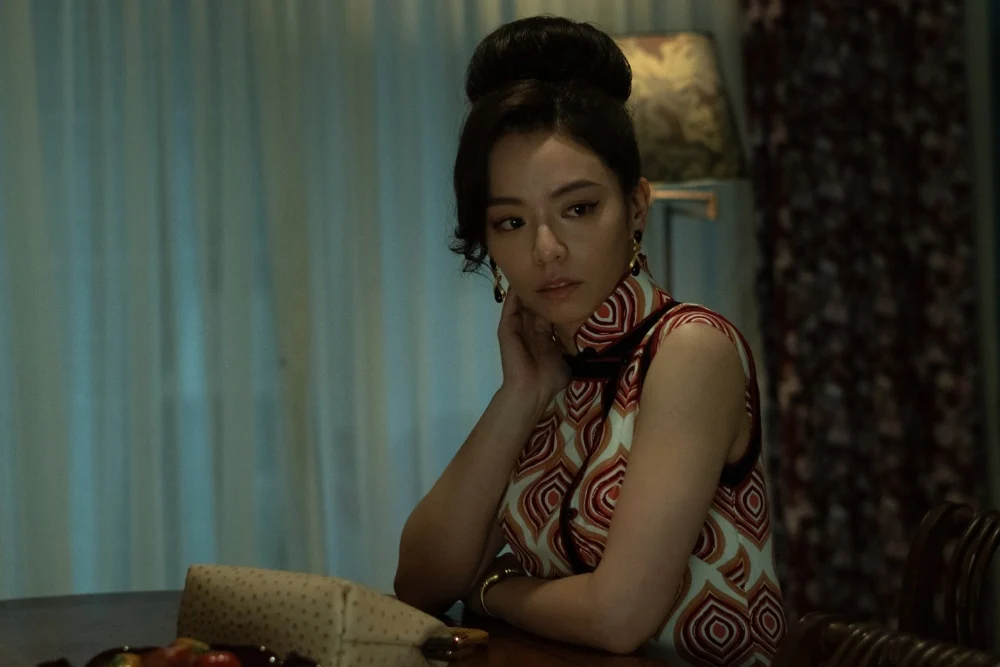
At its core, The Age of Goodbyes is a narrative about memory, myth, and the heavy inheritance of the past. The film’s frame story introduces a young boy named Kai (Troy Liu), who stumbles upon a mysterious novel titled The Age of Goodbyes. Through the book, he is pulled into the world of Du Li An (Vivian Sung), a woman whose vibrant romance with Lin Sang (Stanley Yau) in Ipoh in 1969 abruptly shatters when Lin Sang disappears after confiding in her about a family curse of early death.
Years later, a stranger named Mong Sang—also played by Yau—arrives carrying Lin Sang’s identical face, yet adamantly insisting he is someone else entirely.
Produced as a complex Taiwan-Malaysia co-production, the film is a linguistic mosaic, dialogue unfolding across Mandarin, Cantonese, Malay, Thai, and English. It represents the latest evolution in Yeo’s filmography, following acclaimed indie features like River of Exploding Durians, We, the Dead, Malu, and Moonlight Shadow.
Yet, bringing Li Zi Shu’s book to the screen was a task many deemed foolhardy. The novel itself opens on page 513—a deliberate, structural nod to the May 13 tragedy. Its narrative folds inward, featuring unreliable narrators, fractured timelines, and a porous boundary between historical reality and domestic myth.
"I wasn’t interested in taking this very labyrinthine novel and making everything neat and chronological for the audience," Yeo tells Variety. "I wanted to find a cinematic equivalent for the experience of reading it."
Chronology: From the Chaoshan Ancestral Shrine to the Toronto Screen
The genesis of Yeo’s cinematic journey with The Age of Goodbyes stretches back across personal and historical timelines, echoing the themes of migration and memory present in the film itself.
- 1969 (May 13): The historical backdrop of the film. Post-election racial violence erupts in Kuala Lumpur, fundamentally altering Malaysia’s social and political landscape. In Yeo’s fictionalized Ipoh, this historic upheaval swallows ordinary lives.
- Decades Prior: Yeo’s parents record a series of original songs in the 1970s—melodies that would eventually find a second life woven into the soundscape of their son’s film decades later.
- Recent Years: Following a pilgrimage to his family’s ancestral shrine in Chaoshan, China, Edmund Yeo learns new, fragmentary details about his great-grandfather’s migration to Southeast Asia—including family lore of a kung-fish master leaping across moving trains. This personal encounter with oral history heavily influences his artistic direction.
- Pre-Production & Casting: Taiwanese actress Vivian Sung relocates to Malaysia, spending five to six months mastering a 1960s Malaysian Chinese Cantonese and Hokkien accent, while living in Kuala Lumpur and Ipoh to steep herself in the era’s atmosphere.
- TIFF Premiere: The film debuts in the Special Presentations section of the Toronto International Film Festival, capturing critical attention for its bold structure and emotional resonance.
Supporting Data: Behind the Production and Creative Choices
Adapting a monumental literary work required bold creative leaps. Most notably, Yeo made a significant structural departure from Li Zi Shu’s text. In the novel, Lin Sang vanishes on the very day Du Li An marries another man, Steely Bo. In Yeo’s cinematic adaptation, that disappearance is directly tied to the racial violence of May 13.
"They are ordinary people living inside history, and its consequences are felt through fear, absence, separation, rumors, memories, and things people don’t say," Yeo explains.
This philosophy shaped every facet of production:
- The 40-Minute Title Card: Yeo deliberately withheld the film’s title card until the 40-minute mark—the exact narrative juncture where Li Zi Shu’s novel officially begins. Everything preceding it is Yeo’s cinematic expansion of hints left on the page.
- Linguistic Subtleties: To anchor the performance, Vivian Sung navigated complex linguistic shifts. Du Li An speaks Cantonese at home, Mandarin with Lin Sang, and Cantonese with Mong Sang. Sung notes that when her character occasionally slips into Mandarin with Mong Sang, it reveals that she is subconsciously speaking to the ghost of Lin Sang rather than the man standing before her.
- Authentic Soundscapes: In a deeply personal touch, the film’s soundtrack features songs written and performed by Yeo’s parents in the 1970s. "Suddenly my mother’s actual voice, singing a song composed by my father and recorded when they were young, was being transmitted through a film I was making decades later," Yeo reflects.
Official Responses: Navigating Doubt and Discovery
When Edmund Yeo first approached the author about the adaptation, even Li Zi Shu harbored deep skepticism.
"In fact, when I first met Li Zi Shu to discuss the project, her first question to me was, ‘Are you sure it is adaptable?’" Yeo recalls. Knowing he could not recreate the novel sentence-for-sentence, Yeo relied on lessons learned from adapting Banana Yoshimoto’s novella Moonlight Shadow. That previous experience taught him that a successful adaptation is "a conversation with the original work," requiring a filmmaker to capture its soul rather than safeguard every plot point.
For lead actress Vivian Sung, entering the world of Du Li An required embracing profound psychological ambiguity. Describing her character as a "survivor," Sung had to navigate the surreal emotional landscape of staring into the face of a man who looked identical to her lost love.
"My mind was telling me very clearly, This isn’t him," Sung recalls of filming her first encounter with Mong Sang. "But my body and my memories believed something else."
To achieve this level of historical and physical immersion, Sung worked closely with two language coaches and was gifted the qipaos she wore during fittings by the costume department. "There was this strong feeling that I wasn’t simply wearing a costume," she says. "It felt like my body had somehow stepped into another era."
Implications: The Weight of Intergenerational Trauma
The Age of Goodbyes arrives at a time when global cinema is increasingly grappling with the transmission of historical trauma, diaspora identities, and the ways macro-political events fracture domestic tranquility. By framing national catastrophe through the intimate lens of a family curse and romantic loss, Yeo elevates personal history to the realm of myth.
"The whole film is about things being transmitted from one generation to another: stories, memories, trauma, myths, even gestures," Yeo notes.
This thematic obsession shows no sign of abating in the filmmaker’s future. Fresh off completing his rigorous adaptation, Yeo is already looking ahead to several ambitious new projects, including a century-spanning vampire narrative set across Borneo, Macau, and Kaohsiung, and a multigenerational drama linking Malaysia and Japan through a family of filmmakers.
"Apparently, after making a film about people being haunted by stories from the past, I responded by developing several more films about people being haunted by stories from the past," Yeo remarks with a wry smile.
Ultimately, The Age of Goodbyes proves that while historical events like May 13 can scatter families, silence truths, and alter destinies, art possesses the unique capacity to retrieve those voices from the ether—allowing past and present to converse in the dark of the cinema.