Inside Pixar’s Intergalactic Course Correction: How ‘Elio’ Overcame Creative Turmoil to Reach the Stars
Main Facts
Pixar Animation Studios has a storied history of bringing deeply personal, wildly imaginative original stories to the silver screen, but the path to theatrical release is rarely a straight line. Under the creative leadership of Chief Creative Officer Pete Docter, the studio’s latest sci-fi comedy-adventure, Elio, serves as a prime case study in the high-stakes balancing act required to make original animated films succeed in a crowded theatrical market.
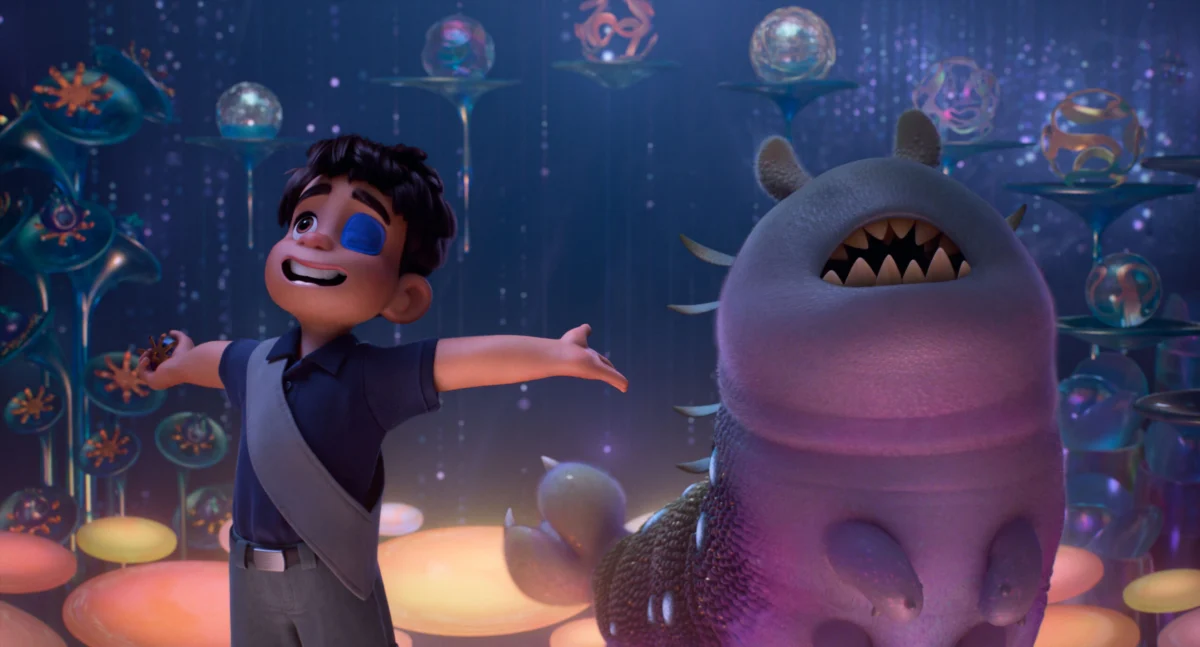
The film centers on Elio (voiced by Yonas Kibreab), an imaginative, space-obsessed young boy living on an Air Force base who feels profoundly isolated from the world around him. His life changes forever when he is beamed up to the Communiverse—an interplanetary space station populated by eccentric alien lifeforms—and is mistakenly identified as the official ambassador of Earth.
However, getting Elio to its final form required a major behind-the-scenes course correction. First-time director Adrian Molina, celebrated for co-directing Pixar’s acclaimed Coco, ultimately departed the project to reunite with Lee Unkrich on Coco 2. To shepherd his pet project across the finish line, Molina entrusted the director’s chair to Coco story artist Madeline Sharafian. Sharafian was later joined by Turning Red director Domee Shi, forming a powerhouse creative trifecta alongside Molina and producer Mary Alice Drumm.
Faced with early pushback from Pixar’s legendary "Brain Trust," the creative team undertook substantial rewrites and narrative restructuring. They leaned heavily into themes of loneliness, orphanhood, and the desperate search for belonging. By heightening the emotional stakes, subverting traditional alien abduction tropes with sharp sci-fi and horror pastiches, and sharpening the dynamic between Elio and his stressed-out aunt Olga (voiced by Oscar winner Zoe Saldaña), Pixar transformed Elio from a routine cosmic misadventure into a deeply resonant emotional journey about family, acceptance, and finding where you truly belong.

Chronology: The Evolution of a Cosmic Journey
The timeline of Elio’s production highlights the rigorous, iterative nature of Pixar storytelling, where films are routinely torn down and rebuilt to achieve maximum emotional resonance.
- Early Conceptions and Pitch: Adrian Molina initially conceived Elio drawing heavily from his own childhood experiences as an imaginative kid with a military family background who felt out of place. The early iteration featured a more traditional alien abduction narrative and a different family dynamic, with America Ferrera originally cast to voice Elio’s mother, Olga.
- The Leadership Transition: As creative challenges mounted regarding the film’s emotional core and pacing, Adrian Molina stepped away from the director’s chair to rejoin the Coco 2 team. Recognizing a kindred spirit who deeply understood the material, Molina tapped Coco story artist Madeline Sharafian to take over as director.
- Sharafian and Shi Steer the Ship: Sharafian injected fresh perspective into the project, defending vulnerable character moments during Brain Trust meetings. She was soon joined by Turning Red director Domee Shi. Motivated by a rallying cry from WALL-E director Andrew Stanton to "make me care," Sharafian and Shi spearheaded a complete narrative overhaul.
- Casting and Character Shifts: Due to availability shifts, Zoe Saldaña stepped into the role of Olga, who was rewritten from Elio’s mother to his stressed-out aunt after the creative team made the heavy choice to make Elio an orphan. This change magnified Elio’s profound isolation and established space as his ultimate emotional beacon.
- Late-Stage Rewrites and Polishing: With the help of screenwriter Julia Cho, the production underwent crucial late-stage revisions. These adjustments refined the antagonistic arc of the alien warlord Lord Grigon (Brad Garrett), deepened the emotional parallels between Grigon’s relationship with his worm-like son Glordon (Remy Edgerly) and Olga’s relationship with Elio, and crafted a poignant, eye-patch-removing climax that cemented the film’s core theme of mutual visibility and familial love.
Supporting Data & Production Insights
To understand the mechanics of Elio’s transformation, one must examine the specific creative choices, musical cues, and cinematic homages that shaped the finished film.
- The Voyager Connection: One of the most fiercely defended early sequences involved Elio watching the Golden Record Voyager spacecraft leave Earth. Despite pushback from colleagues who questioned its necessity, Sharafian fought to keep the scene, arguing that it gracefully eases the audience into the film while establishing Elio’s thematic connection to the cosmos.
- Musical and Visual Motifs: To ground Elio’s obsessive, quirky quest for abduction, the directors utilized a comedic and character-defining montage set to the Talking Heads classic "Once in a Lifetime." This sequence showcases Elio wearing a pasta colander as a makeshift helmet and tuning into radio signals, instantly endearingly eccentricizing him to the viewer.
- Genre Subversions: Domee Shi brought a love of sci-fi and horror to the production, consciously pushing Pixar’s boundaries to induce thrills, gasps, and suspense alongside traditional laughter and tears. This is prominently displayed in the Alien-esque introduction of Glordon—initially perceived as a terrifying threat before being revealed as a lonely kid much like Elio—and a clever subversion involving an ever-pleasing, creepy clone of Elio left behind on Earth.
- The Iconic Eye Patch: The physical design of Elio’s eye patch—the result of an altercation with a schoolyard bully named Caleb (Jake Getman)—was originally conceived to highlight his earthbound insecurity. However, the creative team realized its true narrative potential during the climax. When Aunt Olga gently peels off the eye patch during their beachside reunion, it serves as a powerful visual metaphor: two characters who couldn’t bear to look at each other in Act 1 finally seeing each other clearly, signaling that Elio is truly wanted and loved.
Official Responses and Creative Perspectives
The filmmakers behind Elio have been remarkably transparent about the vulnerability, collaboration, and executive guidance that steered the project to completion.
Producer Mary Alice Drumm emphasized how deeply personal the film’s core themes were to the creative team, noting that Molina, Sharafian, and Shi shared a similar worldview.

"With Adrian, he had grown up as an artsy kid," Drumm recalled to IndieWire. "His dad was a military dentist, and he would talk about being this kid that didn’t fit in and feeling lonely. And I think Maddie and Domee both have that similar story and overlap a lot. They’re like a Venn Diagram of taste. And so I think the more we can ground ourselves in a personal connection with the character, the more it resonates."
Drumm noted that once the crew embraced loneliness as the central thesis, it became the guiding light of the production:
"It really galvanized us. It became our North Star… a weird boy who learns to connect with aliens in outer space. That’s what we were tracking."
Madeline Sharafian recounted the intense pressure of protecting Molina’s original vision during grueling executive meetings.

"I remember being in some of those later meetings with Adrian fighting for some of the scenes in the movie," Sharafian said. "One was that early scene where Elio watched the Golden Record Voyager leave Earth, and there were some voices in the room that didn’t think it was necessary. I could see Adrian’s face sort of stricken, and I was like, ‘No, you have to ease the audience into the movie. This is thematically relevant, it’s about Elio connecting with that [NASA] satellite in space.’"
Reflecting on the film’s tonal expansion, Domee Shi highlighted the value of keeping audiences on the edge of their seats:
"Pixar movies make you laugh or they make you cry, but I feel like movies can make you thrilled or on the edge of your seat, or gasping, surprised, and I love getting those reactions out of audiences, too."
On the emotional payoff of the final reunion between Elio and his aunt, Sharafian explained the evolution of the scene:

"We realized what it really was about was these two characters who didn’t even know how to look at each other in Act 1. And having Olga peel off that eye patch, and finally, they’re seeing each other for the first time, and she realizes she knows him, and he finally feels wanted. It was such a delightful payoff."
Implications for Pixar and Original Animation
The journey of Elio reflects broader, systemic challenges facing the animation industry at large, and Pixar specifically, as the studio navigates a post-pandemic theatrical landscape.
As original animated features face an increasingly steep uphill battle to capture public attention—frequently overshadowed by established intellectual property and nostalgic sequels—studio leadership under Pete Docter faces mounting pressure to ensure every original swing hits its emotional target. The pivot from a standard alien abduction comedy to a deeply psychological exploration of orphanhood, neurodivergence, and familial estrangement underscores Pixar’s historical reliance on emotional truth as the ultimate commercial and artistic anchor.
By empowering new voices like Madeline Sharafian and Domee Shi to reshape a struggling project through radical vulnerability and personal identification, Pixar has demonstrated a willingness to course-correct mid-stream rather than rush a compromised product to theaters. Whether Elio ultimately breaks the box-office curse frequently haunting original theatrical animation, the intense collaborative effort behind its creation proves that Pixar’s legendary "Brain Trust" system—while occasionally brutal and iterative—remains committed to finding the beating heart beneath the sci-fi spectacle.