Into the Surreal: How Netflix’s ‘In Your Dreams’ Reimagines the Grammar of Animation
Some experiences are reserved strictly for the subconscious: the sudden, inexplicable arrival at a final exam for a class you never attended, or the heart-pounding urgency of fleeing a town overrun by the undead. These are the illogical, visceral beats of the dreamscape—a realm that defies the physical laws of our waking world. While live-action cinema often struggles to capture the fluid, shape-shifting nature of dreams, the medium of animation is uniquely equipped to manifest them.
Netflix’s latest feature, In Your Dreams, directed by the creative duo of Erik Benson and Alex Woo, serves as a masterclass in this specific brand of visual storytelling. It is a film that doesn’t just depict dreams; it treats them as a playground where the rules of physics, tone, and genre are merely suggestions.
The Premise: A Quest for a Perfect Family
At the heart of the narrative are two siblings, Stevie (voiced by Jolie Hoang-Rappaport) and Elliot (Elias Janssen). Their journey begins with the discovery of a fabled book belonging to the Sandman (voiced by Omid Djalili), the legendary curator of the dream world. For Stevie and Elliot, this isn’t merely a piece of literature; it is a doorway to potential salvation.
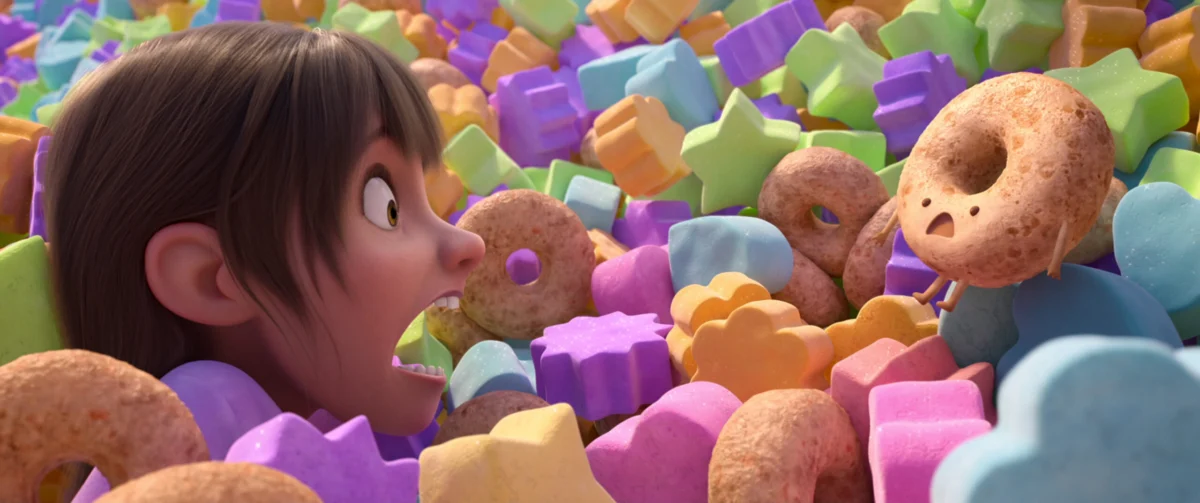
The siblings are driven by a singular, deeply relatable desire: to heal the fractured marriage of their parents, played by Simu Liu and Cristin Milioti. In their quest for a "perfect family," the siblings find that falling asleep is no longer a nightly chore, but a mission of paramount importance. As they traverse the bizarre, kaleidoscopic landscapes of their own psyches, they encounter everything from snarky stuffed giraffes to literal zombie breakfast foods. It is a high-stakes adventure where the barrier between the mundane domestic sphere and the infinite possibilities of the imagination is paper-thin.
The Craft of the Dream: A Chronology of Vision
The production of In Your Dreams was defined by a commitment to creating a distinct "film language." Director Alex Woo emphasized that for a project built on the logic of dreams, every transition and movement had to be meticulously engineered.

"Every film has its own grammar and language, and you have to set up certain rules and pay them off," Woo explained in an interview with IndieWire. "The rules of how dreams work and how you go in and out of dreams, all that stuff needs to be established because you cannot take it for granted."
The film’s visual transitions—particularly the moments where characters slip from the "real world" into the dream state—became focal points for the animation team. One standout sequence features a physics-defying, floating camera that orbits Stevie as she drifts into slumber. The sequence is warm, immersive, and serves as a vital bridge between the two worlds. According to Woo, these transitional shots were not merely functional; they were "purely cinematic," designed to signal to the audience that they were entering a space where the rules of reality had been suspended.
Cinematic DNA: The Influences of a Spielberg Generation
For Alex Woo, In Your Dreams is a deeply personal project, functioning as a vibrant collage of the films that shaped his formative years. "I was definitely a ‘Spielberg kid,’" Woo admitted. "Elliot is named after the protagonist of E.T. I was a big fan of Hook, The Goonies, and Labyrinth."
However, the film’s aesthetic reach extends beyond Western pop culture. Having spent half his life in Hong Kong, Woo credits Asian animation—specifically the work of Hayao Miyazaki—as a fundamental pillar of his creative identity. This cultural synthesis is visible throughout the film:
- The Spielbergian Influence: The film utilizes a "zolly" shot (a dolly zoom) that feels ripped straight from the playbook of 1980s adventure classics.
- Anime Dynamism: When characters power up or transform, the film shifts into the high-octane visual language of Dragon Ball Z and the elaborate, rhythmic transformation sequences found in Sailor Moon.
- Miyazaki’s Legacy: The dream world’s "Breakfast Town" is populated by creatures that evoke the susuwatari (soot sprites) from My Neighbor Totoro. Yet, in keeping with the film’s penchant for tonal shifts, these adorable sprites take on a more menacing, Goonies-esque edge as the dream turns into a nightmare.
"Art is all remix, right?" Woo noted. "I thought a movie about the dream world was the perfect venue to pull all of these references and movies that I loved. You have so much latitude, aesthetically and creatively. It was the perfect movie for me to create a love letter to all these films."

Pushing the Limits: The Intensity of Nightmares
One of the most significant challenges in developing In Your Dreams was determining how much "scare" to inject into the narrative. Woo was adamant about not sanitizing the experience for younger viewers, recalling his own childhood appreciation for being genuinely thrilled—and occasionally unsettled—by cinema.
"I didn’t want to soft-pedal anything because, when I was a kid, I really liked being scared at the movies," Woo said. "There’s something thrilling about it. Of course, there’s a line beyond which it becomes traumatizing, but you just don’t know where that line is until you test it out."
During the production process, the team experimented with early iterations that pushed the intensity of the nightmare sequences significantly further than the final cut. By testing these limits, the animators were able to find a "sweet spot"—a balance between the thrill of the macabre and the warmth of a family adventure. This iterative process is only possible in animation, where every frame and pixel can be adjusted to calibrate the exact emotional response of the audience.
The Power of Late-Stage Refinement
The agility of the animation medium allowed for critical creative pivots even late into production. One of the film’s defining features—Stevie’s witty, meta-commentary voiceover—was a late addition to the script.
"We all had that ‘sit-up’ moment when the voiceover comes in and you do that freeze frame," Woo explained. "You talk to the audience, and suddenly, people are like, ‘Oh, this is not just a straightforward animated movie.’ There are layers to this."

By breaking the fourth wall, the filmmakers were able to add a layer of narrative sophistication that elevates the film above standard family fare. It establishes a sense of intimacy between the protagonist and the audience, effectively turning the act of watching the film into a dream-like dialogue.
Implications for Modern Animation
In Your Dreams arrives at a time when the boundaries of animation are being stretched by both technology and an audience hungry for non-linear storytelling. The film’s success rests on its ability to be precise in its execution while remaining wild in its imagination.
By leveraging the "remix" culture of modern cinema—blending the nostalgia of 80s live-action blockbusters with the fluid, expressive potential of traditional and contemporary animation—Benson and Woo have created a blueprint for how to handle high-concept fantasy.
The implication for the industry is clear: audiences are looking for films that respect their intelligence and aren’t afraid to lean into the uncanny. Whether it is through the precise camera movements that ground the transition between the waking world and the dreamscape, or the willingness to embrace the darker, more "traumatizing" elements of the subconscious, In Your Dreams proves that animation remains the most powerful medium for exploring the impossible.
Ultimately, the film acts as a reminder that the "grammar" of film is not static. Just as a dream can turn from a whimsical flight of fancy into a harrowing chase, a movie can shift tones, styles, and influences to create something entirely new.

In Your Dreams is currently streaming on Netflix. As viewers dive into the world of Stevie and Elliot, they are invited to do what the characters do: let go of the rigid expectations of reality, embrace the absurdity, and see where the dream takes them.