Behind the Iron Curtain: How ‘Star City’ Reimagines the Space Race Through a High-Stakes Lens
Editor’s Note: This story contains significant spoilers for the Season 1 finale of Apple TV+’s "Star City."
For nearly a decade, showrunners Ben Nedivi and Matt Wolpert have established themselves as masters of the "Apollo 13-style puzzle box." In their critically acclaimed alternate-history series For All Mankind, they chronicled a version of the 20th century where the Soviet Union reached the moon first, triggering a relentless, decades-long escalation of technology and geopolitical tension. Now, with the launch of the spinoff series Star City, the duo shifts the perspective entirely behind the Iron Curtain, exploring the clandestine, often perilous reality of the Soviet space program.
The Genesis of a Shadow Program
The premise of Star City was not a late-stage addition to the For All Mankind universe; it was a concept that haunted Nedivi and Wolpert since they began their initial research. While For All Mankind focused on the American response to a shifting global landscape, the writers were always fascinated by the "true cowboys" of the era: the Soviet cosmonauts and scientists who operated in the dark, often with limited resources and extreme personal risk.
"The Soviet program was so secretive that we don’t really know the full extent of what happened," Wolpert explained in a recent appearance on IndieWire’s Filmmaker Toolkit podcast. This lack of historical transparency became the "secret magic sauce" for the series. By operating in the gaps of history, Nedivi and Wolpert gained the creative freedom to construct a narrative that feels both grounded in reality and wildly unpredictable.

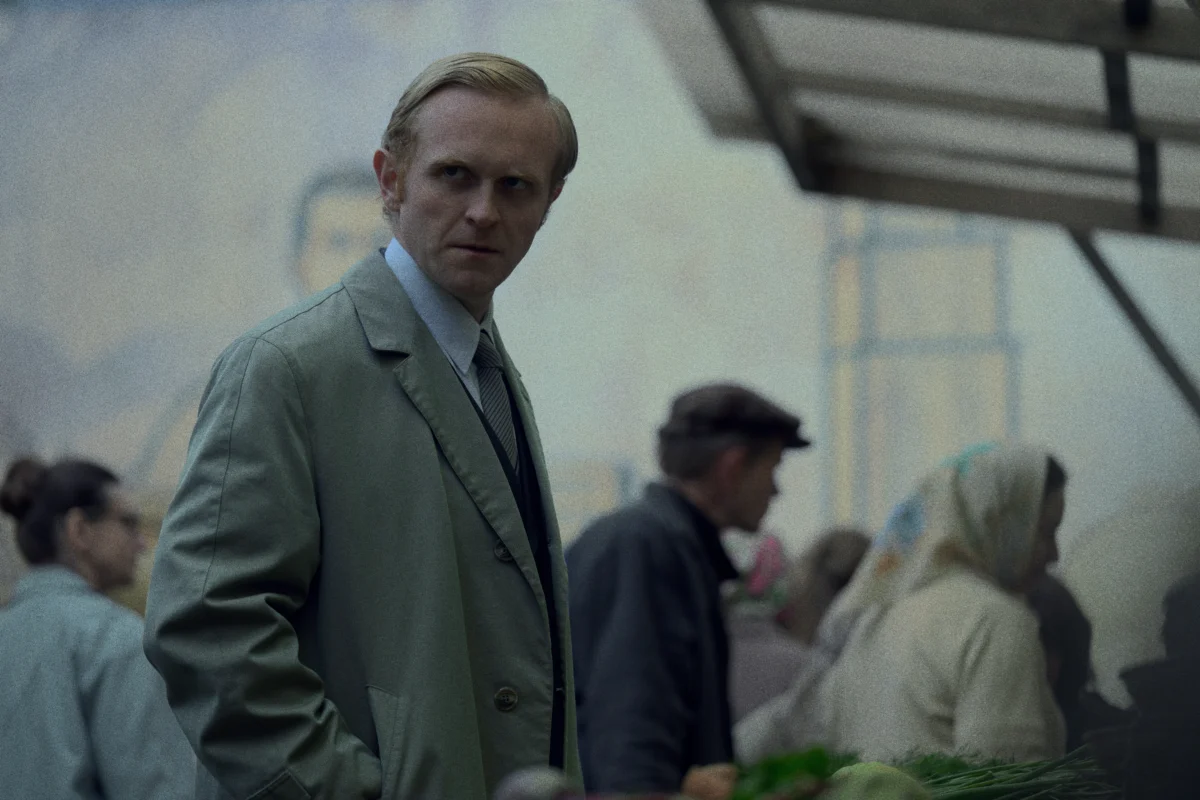
The show’s commitment to historical accuracy—at least in spirit—is best exemplified by its cold open. The pilot episode mirrors the real-life story of Yuri Gagarin, whose wife did not know he was in space until he had already successfully launched. While American media coverage of the era was defined by pomp, circumstance, and televised spectacle, the Soviet experience was defined by silence. This contrast serves as the bedrock for Star City, a series that is as much a political thriller as it is a space drama.
Chronology of a Crisis: The Finale
The first season of Star City culminates in a tension-filled finale that moves away from the competitive "space race" of the earlier episodes and toward a high-stakes survival thriller. The central conflict of Episode 8, titled "The Wolves," concerns the mysterious reappearance of the Chief Designer’s (played by the formidable Rhys Ifans) secret shuttle, Venera.
Presumed destroyed, Venera returns with a harrowing report: the crew has completed a tour of Venus, but their unauthorized mission has placed them in the crosshairs of the Soviet government. If they return to the U.S.S.R., they face certain punishment, or worse. Meanwhile, cosmonaut Valya (Adam Nagaitis) has been revealed as a mole for the West, adding another layer of betrayal to the already volatile situation.
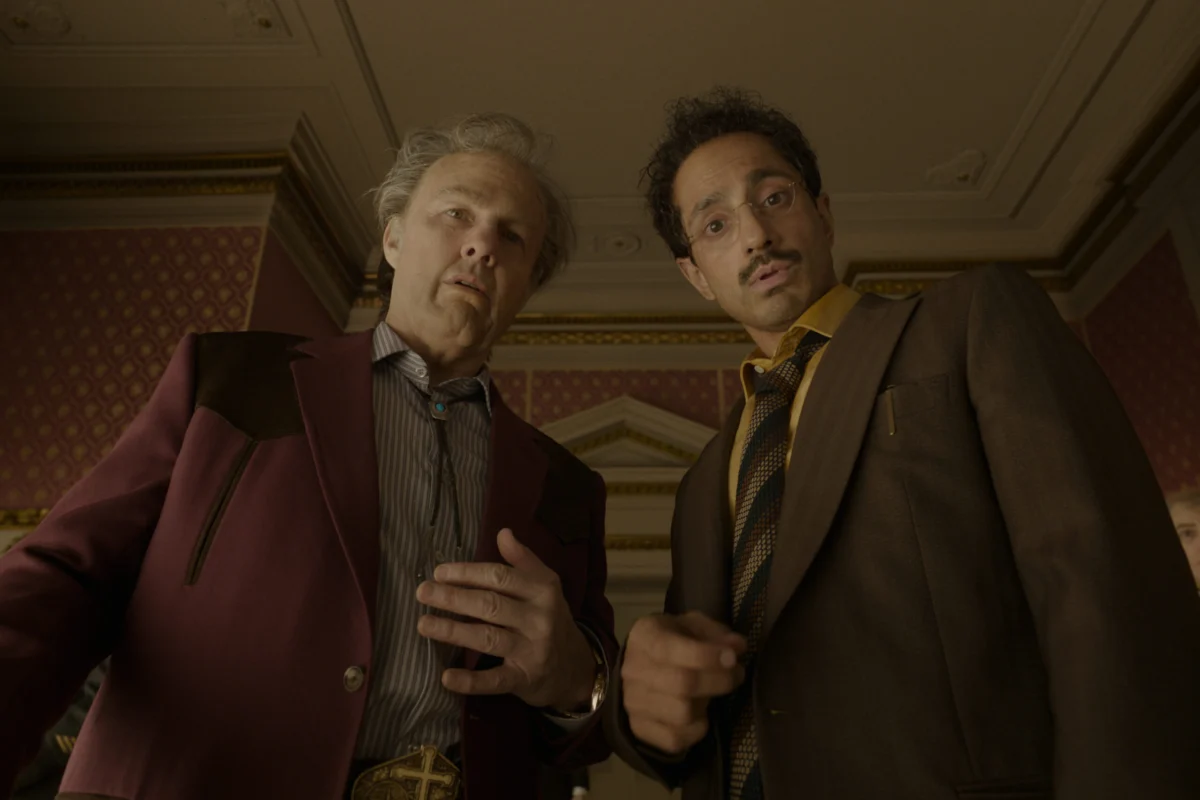
The final act of the season is a race against time. The Chief Designer, alongside characters Sergei (Josef Davies), Anastasia (Alice Englert), and Stepanov (Sam Troughton), must orchestrate a daring extraction. Their goal: guide the surviving cosmonauts, Sasha (Solly McLeod) and Lakshmi (Priya Kansara), to a safe landing in neutral Finland before the ruthless KGB Colonel Lyudmilla Raskova (Anna Maxwell Martin) can intercept them. It is a sequence that blends the technical grit of orbital mechanics with the visceral intensity of a ground-level jeep chase.

The "Hard Way" Philosophy: Craft and Production
One of the most striking aspects of Star City is its aesthetic, which reflects the brutalist, often decaying infrastructure of the Soviet era. This visual identity was not achieved through digital shortcuts, but through an obsessive commitment to practical production design.
The production team, led by Paul Spriggs, worked primarily in Lithuania, utilizing local crews who brought a unique level of dedication to the project. Nedivi noted that the crew was largely composed of builders and industrial contractors who were rarely given the opportunity to work on high-budget science fiction. Their emotional investment in the project resulted in a level of detail that even the showrunners found startling.
A prime example occurred during the filming of the season finale. The script called for Anastasia to be aboard a Soviet space station, a location that the showrunners originally intended to keep small and contained to save time and budget. "We were like, ‘Look, we’ll shoot her in a corner. Just give us a corner of the space station,’" Wolpert recalled. The Lithuanian art department rejected this compromise, choosing instead to build the entire station set. When the showrunners arrived on set, they were met with a fully realized, immersive environment that elevated the performances of the actors.
"No one chose the easy path," Nedivi said. "And I think in television, if there is a key to getting things right, it’s doing it the hard way."

Auditory Atmosphere: The Sound of Obsession
The intensity of the show is mirrored by the musical score composed by Federico Justid. In an era where many television productions rely on digital synthesizers and music libraries to cut costs, Justid insisted on using live instrumentation.
"On TV, you’re doing eight to ten hours of score," Nedivi explained. "Federico refused to use synths to recreate instruments. Every time we’d give notes, he’d have to bring the musicians back to address them. We kept telling him, ‘This is madness.’" Yet, that "madness" is precisely what gives Star City its haunting, organ-heavy soundscape, which feels both archaic and terrifyingly modern.
Implications: The Creep of Authoritarianism
While Star City is a period piece, its themes are deeply rooted in the contemporary zeitgeist. By focusing on the struggle of individuals—scientists, engineers, and pilots—attempting to innovate within a system that is inherently suspicious of creativity, the show offers a sobering commentary on the nature of control.
"The story is one that’s more relevant than ever," Wolpert noted. "It really was about the kind of things happening both in the Soviet space program and in some of the politics around the world about the creep of authoritarianism and how people are struggling with less freedom."

The inclusion of younger versions of familiar characters from For All Mankind, such as Irina Morozova and Sergei Nikulov, serves to bridge the two shows, but Star City succeeds because it stands on its own. It is a show about the human cost of progress, the danger of secrets, and the resilience of the human spirit when pushed to the absolute edge of existence.
Conclusion: A New Frontier
Star City has managed to redefine the scope of the For All Mankind franchise. By trading the optimism of the American space dream for the gritty, shadow-filled hallways of the Soviet Union, Nedivi and Wolpert have proven that they are not just interested in the "what if" of history, but the "who" behind the headlines.
The season finale leaves the audience with a poignant mix of triumph and tragedy. The escape of the cosmonauts is a victory for individual agency, but the cost—the loss of home, the sacrifice of personal relationships, and the ever-present shadow of the KGB—remains heavy. As viewers look ahead to potential future seasons, the question remains: can the spirit of discovery survive in a world where the state demands total conformity? If the first season is any indication, the answer lies in the "hard way"—through the dangerous, beautiful, and uncompromising pursuit of the truth, no matter the cost.
Star City Season 1 is currently available to stream in its entirety on Apple TV+.