Navigating the Labyrinth of Malaysian Film Censorship: Insights from the Freedom Film Network Conference
KUALA LUMPUR, MALAYSIA – In an era where digital platforms offer unprecedented access to global content, the conversation around film censorship remains acutely relevant, particularly in Southeast Asia. While audiences in countries like Indonesia might associate film censorship with familiar blurs, cuts, or the omnipresent "Budaya Sensor Mandiri" jingle, the experience in neighboring Malaysia reveals a far more intricate and often contentious landscape. This nuanced reality was the central focus of the inaugural Freedom Film Network (FFN) Conference, a landmark event held in Kuala Lumpur on September 7-8, 2023.
Organized by the Freedom Film Network – a prominent advocacy group championing freedom of expression in Malaysia’s film and arts scene – in collaboration with the Content Forum, the conference marked a pivotal moment. For two decades, FFN has been known for its impactful Freedom Film Festival, providing a crucial platform for narratives that challenge prevailing norms and highlight human rights issues. This conference, however, represented a strategic evolution, shifting the spotlight from showcasing alternative cinema to directly confronting the systemic challenges of film censorship across Malaysia and the broader Southeast Asian region. Under the overarching theme of "Content Creation, Choice, and Control in the Digital Age," the event brought together a diverse array of stakeholders, including representatives from Malaysia’s Lembaga Penapisan Filem (LPF, the equivalent of Indonesia’s Film Censorship Board), the National Film Development Corporation Malaysia (FINAS), and the Malaysian Communications and Multimedia Commission (MCMC), alongside filmmakers, academics, journalists, and regional experts.
Main Facts: A Glimpse into Malaysia’s Contentious Cinematic Landscape
At its core, the issue of film censorship in Malaysia is characterized by complexity, opacity, and a perpetual struggle between artistic liberty and perceived public morality. The FFN Conference served as a critical forum to dissect these multifaceted challenges, revealing a system that, while ostensibly designed to protect societal values, often generates significant friction within the creative community.
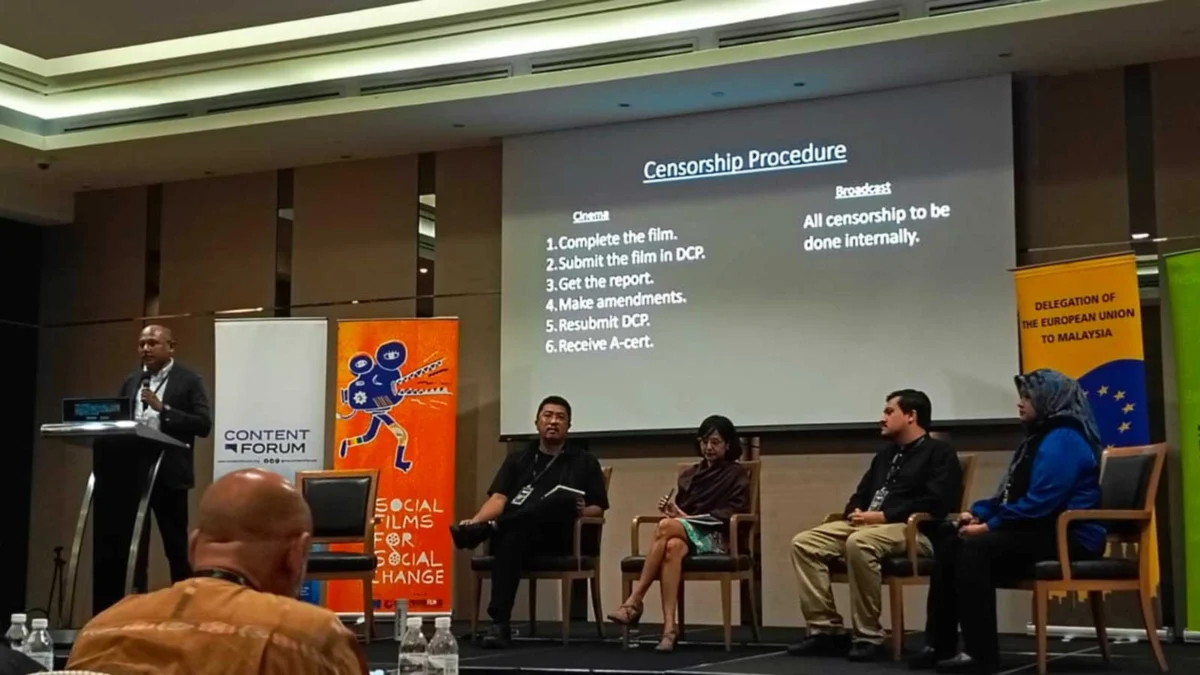
A key distinction highlighted at the conference is the bifurcation of censorship mechanisms within Malaysia. For broadcast television, the onus of censorship largely falls upon the individual television stations themselves, granting them a degree of autonomy in content curation, albeit within general regulatory frameworks. In stark contrast, films destined for cinematic release are subject to a more rigid and centralized process. Every feature film must be submitted to the Lembaga Penapisan Filem (LPF) in Digital Cinema Package (DCP) format. The LPF then undertakes a comprehensive review, often necessitating cuts or adjustments before a film can receive its certification for public viewing. Crucially, a film can be entirely rejected and barred from screening if it is deemed to possess the "potential to disturb society," a phrase whose interpretation remains a significant point of contention and ambiguity.
The conference underscored that these regulatory frameworks are not merely theoretical constructs but have tangible, often severe, implications for filmmakers and their audiences. The discussions revealed a recurring pattern of films facing either outright bans, extensive edits, or intense public backlash, underscoring the delicate balance between cultural sensitivities, religious adherence, and the aspirations of artistic expression in a diverse nation. The event’s very existence, therefore, was a testament to the growing urgency among Malaysian film practitioners and advocates to critically examine and, ultimately, reform the existing censorship apparatus.
Chronology: Tracing the Discourse and Evolution of Censorship
The journey towards a dedicated conference on film censorship by the Freedom Film Network is rooted in two decades of consistent advocacy. Since its inception, the Freedom Film Festival has served as Malaysia’s premier platform for social commentary and human rights narratives, often showcasing films that, by their very nature, push against the boundaries of conventional discourse. This history of fostering critical thought and providing a voice to marginalized stories laid the groundwork for the 2023 conference, which marked a strategic pivot from presenting censored or challenging content to actively engaging with the mechanisms of censorship itself. The decision to host this inaugural conference specifically on censorship signaled a recognition of the escalating pressures on filmmakers and the need for a more direct, collaborative approach to policy reform.
The conference officially commenced with a series of opening remarks from key organizers. Anna Har and Brenda Danker of the Freedom Film Network, alongside Mediha Mahmood of the Content Forum, set the tone for the two-day event. Mediha Mahmood’s address, in particular, resonated deeply, as she articulated a vision of an "ideal world" where filmmakers could freely create and audiences could experience art precisely as intended by its creators. However, she tempered this idealism with a pragmatic acknowledgement of the current reality: "Unfortunately, this is not something we have now and, if I may say, also not something we can have in the immediate future. An ideal world is what we aim for, but it takes time. It takes dedication and commitment and the involvement of stakeholders." This statement underscored the conference’s purpose – not to demand immediate, radical change, but to initiate a sustained, multi-stakeholder dialogue towards a more equitable and transparent censorship system.
The urgency for such a dialogue has been amplified by a series of high-profile censorship controversies in recent years, which served as stark examples throughout the conference. One of the most prominent cases cited was the film Mentega Terbang (2023). This independent drama, which explored themes of religious pluralism and interfaith dialogue through the lens of a Muslim teenager questioning her faith, premiered on the streaming platform Viu in January 2023. By March, it had been controversially pulled from the platform following a significant public outcry. The film faced accusations of blasphemy and apostasy from conservative groups and religious authorities, leading to widespread social media backlash and even threats against its director, Khairi Anwar. The Malaysian Islamic Development Department (JAKIM) initiated an investigation, and the Home Ministry subsequently declared the film illegal. This incident epitomized the phenomenon of "societal censorship," where public pressure, often fueled by religious and conservative figures, can override or influence official decisions, leading to the effective banning of content without a formal LPF ruling.
Another crucial case brought to light was the experience of veteran director Syafiq Yusof with his 2014 action-comedy Abang Long Fadil. Syafiq recounted his "most bitter experience" with the LPF during the film’s review. Despite Abang Long Fadil being an "anti-gangsterism" narrative, culminating in the community uniting against criminal elements, the film was subjected to nine cuts and still received an 18+ classification. Syafiq expressed profound bewilderment, arguing that the LPF’s decision failed to consider the overarching context and moral message of his work. This incident, while predating Mentega Terbang, highlighted a consistent pattern of subjective interpretation within the censorship board, where specific elements, rather than the complete narrative, dictate the cuts and classifications. These cases, presented chronologically, provided concrete evidence of the systemic issues plaguing Malaysian film censorship, from official regulatory ambiguity to the potent influence of public opinion.
Supporting Data: Unpacking the Mechanisms and Interpretations
The Malaysian film censorship system, locally known as "penapisan filem," operates on a set of guidelines and criteria designed to safeguard public order, national security, religious harmony, and morality. However, the precise interpretation and application of these guidelines remain a persistent source of friction. The LPF’s review process, involving the submission of films in DCP format, is followed by an assessment where content is scrutinized against these broad criteria. While the intent is to prevent material that could "potentially disturb society," the specific triggers for such a determination are often vague, leading to inconsistent outcomes. Common problematic themes include depictions of nudity, excessive violence, political dissent, LGBTQ+ content, and any material perceived to challenge religious tenets, particularly Islam.
A particularly striking piece of supporting data revealed at the conference was the differentiated treatment of films based on their ethnic and cultural origins. In Malaysia, a notable distinction is made between Malay-language films and those produced by the Chinese and Indian communities. Malay films, being intrinsically linked to the national identity and the predominantly Muslim population, are often held to a stricter standard of adherence to Islamic sharia. This means content must not only avoid direct challenges to Islamic teachings but also steer clear of themes that could be interpreted as fostering conflict or contention against these principles. This implicit, and sometimes explicit, segregation raises critical questions about artistic freedom and creates a potential double standard, where narratives from different communities are judged by varying moral and religious benchmarks. The implications for Malay filmmakers are significant, often leading to self-censorship to avoid religious backlash or LPF rejection, thus limiting the scope of storytelling within the nation’s dominant cinematic tradition.
Filmmaker Syafiq Yusof’s testimony further illuminated the practical consequences of this ambiguity. While acknowledging that he agrees with many aspects of the LPF’s published guidelines, his primary criticism centered on what he termed "kekaburan garis panduan dan garis panduan ini dibuat secara tidak terperinci" – the lack of clarity and detail in the guidelines. This vagueness, he argued, empowers LPF examiners to make highly subjective interpretations. Recalling the case of Abang Long Fadil, Syafiq lamented, "Walaupun dia anti-gangsterism, tetapi dia pakai baju gangster, tetap ini gangster, kita potong. Jadi dia akan dipotong melalui penafsiran, bukan dipotong melalui garis panduan." (Even though it’s anti-gangsterism, but they wear gangster clothes, it’s still gangster, we cut it. So it will be cut based on interpretation, not based on guidelines.) This anecdotal evidence underscores a systemic issue where individual biases or interpretations can override the artistic intent and narrative context of a film, leading to arbitrary cuts that compromise the integrity of the work.
Beyond the official LPF framework, the phenomenon of "societal censorship" emerged as a potent force. The case of Mentega Terbang is a prime example of how conservative groups, often leveraging traditional media and increasingly social media, can mobilize public sentiment to demand content removal or bans. This form of extra-legal censorship, driven by vocal segments of society, can exert immense pressure on content platforms and even influence governmental bodies, sometimes compelling actions that bypass formal regulatory processes. It creates an environment where filmmakers not only contend with state censorship but also navigate a minefield of potential public outrage.
The conference’s theme, "Content Creation, Choice, and Control in the Digital Age," was particularly pertinent in this context. The rise of streaming services has fundamentally altered how content is distributed and consumed. While these platforms offer filmmakers new avenues for distribution, they also present new challenges for traditional censorship models. The question of who regulates content on these platforms – LPF, MCMC, or the platforms themselves – is still being negotiated. The global nature of digital content means that films banned in cinemas can often be easily accessed online, raising questions about the efficacy and relevance of national censorship in the internet era.

A significant portion of the discussion also centered on the crucial balance between protecting children and preserving adult freedom of expression. The conference emphasized the concept that "it takes a village to raise a child," underscoring that parental control alone is insufficient in the vast digital landscape. Speakers highlighted the vital role of schools in providing media literacy education to children, empowering them to critically evaluate content. Furthermore, media platforms themselves bear a responsibility to implement robust age-gating and content rating systems to ensure child-safe environments. This discussion acknowledged the legitimate need to shield minors from inappropriate content, but also probed whether child protection arguments are sometimes co-opted to justify broader censorship that limits adult viewing choices and artistic exploration.
Official Responses: Voices from the Regulators and Beyond
While no direct statements from the Lembaga Penapisan Filem (LPF) were explicitly quoted in the report, their attendance at the conference was a significant indicator. The presence of LPF representatives, alongside FINAS and MCMC, suggested an acknowledgement from regulatory bodies of the need for dialogue, even if their inherent stance remains rooted in upholding existing laws and protecting public order and morality. The implied position of the LPF, based on their mandate and past actions, is that they operate within a framework designed to reflect societal values and national sensitivities. However, the recurring criticism from filmmakers, as voiced by Syafiq Yusof, points to a clear disconnect: where LPF sees itself as implementing guidelines, filmmakers often perceive ambiguity, leading to subjective interpretations that stifle creativity.
FINAS (National Film Development Corporation Malaysia) typically focuses on promoting and developing the Malaysian film industry, including funding, training, and international representation. The impact of censorship on these aspects is profound; restrictive policies can deter international co-productions, limit the global appeal of Malaysian cinema, and disincentivize innovative storytelling. MCMC (Malaysian Communications and Multimedia Commission), on the other hand, is the primary regulator for the communications and multimedia sector, including online content. Their role becomes increasingly crucial in the digital age, especially concerning streaming platforms and online media. The overlap and potential for conflicting mandates between LPF and MCMC, particularly as content distribution blurs traditional lines, underscore the complexity of regulatory oversight.
Mediha Mahmood’s opening remarks, representing the Content Forum, served as a crucial bridge between the industry and regulators. Her call for "dedication and commitment and the involvement of stakeholders" was not merely rhetorical; it framed the Content Forum’s role as advocating for a more balanced, transparent, and collaborative approach to content regulation. The Content Forum, as an industry body, aims to foster self-regulation and promote responsible content creation, making it a key voice in negotiating the fine line between creative freedom and societal responsibility. Their presence and active participation highlighted a willingness from certain industry-aligned bodies to work towards systemic improvements rather than merely reacting to individual censorship incidents.
The general stance of the Malaysian government, though not explicitly debated at the conference, forms the overarching context for all regulatory bodies. Government policies typically balance the promotion of arts and culture with the maintenance of national unity, religious harmony, and public morality. This delicate balance often manifests in conservative approaches to content, particularly when themes touch upon religion, race, or sexuality, which are considered sensitive in Malaysia’s multiracial and multi-religious society. The conference, therefore, implicitly challenged this broader governmental posture by advocating for greater artistic freedom and transparency, suggesting that the current balance might be overly skewed towards control.
Implications: Far-Reaching Consequences for Malaysian Cinema and Society
The implications of Malaysia’s complex censorship regime extend far beyond individual film bans or cuts, casting a long shadow over artistic freedom, the economic viability of the film industry, and the very fabric of societal discourse.
One of the most profound consequences is the pervasive culture of self-censorship. Vague guidelines and the unpredictable nature of LPF rulings, coupled with the potent threat of "societal censorship," compel filmmakers to pre-emptively dilute their narratives. This stifles bold storytelling, discourages the exploration of challenging or sensitive themes, and ultimately leads to a homogenization of content. Creativity is curtailed, and the industry struggles to produce works that truly reflect the diverse, complex realities of Malaysian society, thereby dampening innovation and critical thought. Talented filmmakers, seeking environments where their artistic visions are less constrained, may choose to pursue opportunities abroad, contributing to a "brain drain" that further impoverishes the local industry.
Economically, censorship carries significant costs. Films that are banned or heavily edited face diminished commercial prospects, leading to lost revenue for producers, distributors, and exhibitors. The need for reshoots or re-edits to comply with LPF demands adds to production budgets, often without a guarantee of success. Furthermore, if Malaysia is perceived as an overly restrictive environment, it can deter international co-productions and foreign investment, limiting the industry’s growth potential and its ability to compete on a global stage.
Societally, a restrictive censorship environment limits the scope of public discourse. When films are censored or banned for addressing sensitive topics like religious pluralism (Mentega Terbang), political dissent, or social inequalities, society is deprived of opportunities to engage with challenging ideas, foster empathy, and critically examine its own values and norms. This can lead to a reinforcing of conservative narratives and a suppression of dissenting or alternative viewpoints, hindering the development of a more open and inclusive society. Paradoxically, in the digital age, banning films in cinemas often proves ineffective in preventing consumption, as audiences can easily access content through unregulated online sources. This not only renders official censorship futile but also drives audiences towards platforms where age restrictions and content warnings are often absent, undermining the very goal of "protection."
The conference highlighted the critical importance of regional and international solidarity. The presence of delegates from Indonesia, the Philippines, Thailand, Singapore, and Australia underscored that film censorship is a shared challenge across Southeast Asia, albeit with varying manifestations. Alex Sihar and Tito Imanda from Indonesia’s Badan Perfilman Indonesia (BPI) offered invaluable insights from the "Masyarakat Film Indonesia (MFI)" movement. They recounted MFI’s arduous 15-year struggle to abolish the film censorship system in Indonesia, a campaign that ultimately succeeded in shifting the paradigm from pre-screening censorship to a classification system with a stronger emphasis on self-regulation and public literacy. Their experience serves as a powerful testament to the possibility of change, demonstrating that sustained advocacy, public engagement, and multi-stakeholder collaboration can lead to significant reforms. Key to MFI’s success was mobilizing public opinion, engaging with policymakers, and proposing viable alternative frameworks.
Patrick F. Campos from the UP Manila Film Institute and King Catoy from Cinemata, representing the Philippines, further emphasized the value of regional support. While the Philippines’ censorship challenges may differ from Malaysia’s, Patrick stressed that this cross-border solidarity is crucial to ensure that Malaysian filmmakers know they are not alone in their struggle. Such regional dialogue fosters mutual learning, allowing countries to share best practices, understand different regulatory approaches, and collectively push for greater artistic freedom within the ASEAN bloc.
The path forward for Malaysian cinema is clear, though arduous. It necessitates a concerted effort to advocate for clear, detailed, and context-sensitive guidelines that minimize subjective interpretation by LPF examiners. This requires increased dialogue and genuine collaboration between filmmakers, regulatory bodies, and civil society, moving beyond reactive measures to proactive policy development. Furthermore, investing in comprehensive media literacy programs for all ages, from primary schools to adult education, is paramount. Empowering audiences with critical media skills can foster a more discerning public capable of navigating diverse content responsibly, thereby reducing the perceived need for heavy-handed censorship. Ultimately, Malaysia must critically revisit the very purpose and efficacy of film censorship in a rapidly evolving digital landscape, striving towards a system that truly balances artistic expression with societal well-being, fostering a vibrant and reflective national cinema for generations to come.
This report is the result of a visit by a Cinema Poetica editorial member to the Freedom Film Network Conference 2023.