A Master of the American Soul: Locarno Honors James Gray with Lifetime Achievement Award
The Pinnacle of Auteur Cinema
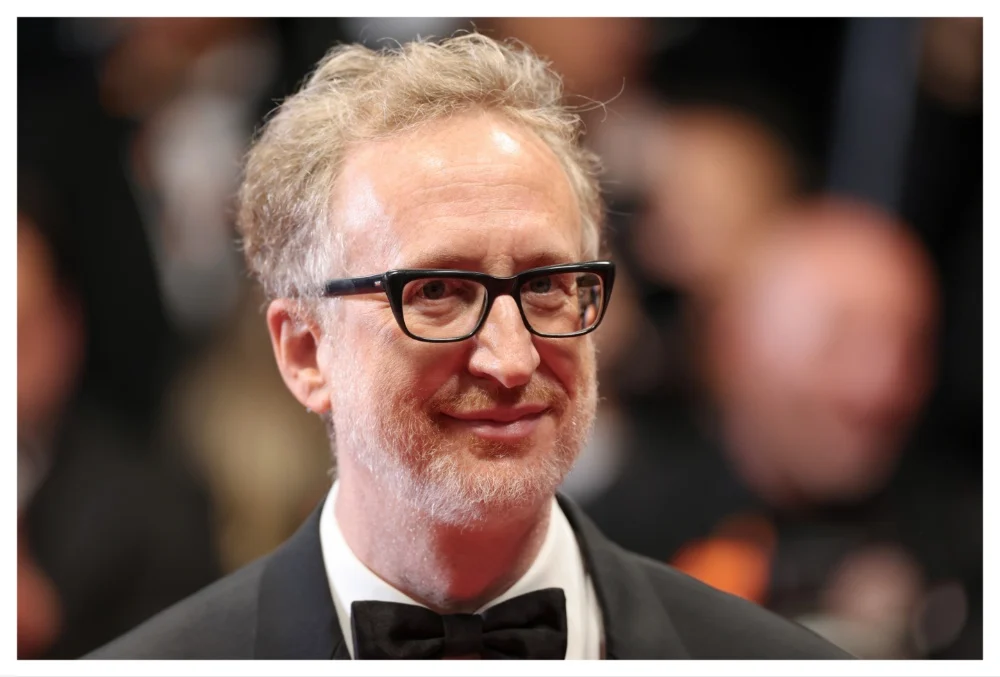
The Locarno Film Festival, one of the most prestigious platforms for global independent cinema, has announced that it will bestow its highest honor, the Pardo alla Carriera (Lifetime Achievement Award), upon the celebrated American director James Gray. This recognition serves as a testament to a career defined by unflinching realism, profound emotional complexity, and a stylistic evolution that has seen Gray transition from the gritty streets of Brooklyn to the furthest reaches of the cosmos.
The ceremony, scheduled for August 9, will be a focal point of the 79th edition of the festival, which runs from August 5 to August 15 in the picturesque Swiss town. As part of the tribute, the festival will screen several of Gray’s seminal works, including the 2007 police drama We Own the Night and the deeply intimate romantic tragedy Two Lovers (2008).
However, the centerpiece of the festivities will be the screening of Gray’s latest project, Paper Tiger, at the festival’s iconic Piazza Grande—a sprawling outdoor venue that captures the communal spirit of cinema. Having made its initial debut at the Cannes Film Festival in May, the film is poised to continue its momentum in Locarno before moving to its highly anticipated North American premiere as the opening night film of the 64th New York Film Festival on September 25.
A Cinematic Tapestry: The Plot of ‘Paper Tiger’
Paper Tiger represents a return to the thematic roots that first launched Gray’s career, while simultaneously pushing the boundaries of his narrative scope. Set against the atmospheric backdrop of 1986 New York City, the film is a taut, character-driven drama that examines the fractures within a family unit.
The story follows two brothers: Irwin, played by Miles Teller, and Gary Pearl, portrayed by Adam Driver. Driven by a desperate, get-rich-quick scheme to revitalize the polluted Gowanus Canal, Irwin finds himself in over his head, entangled in the dangerous web of the Russian mob. As the walls close in, the responsibility of salvation falls upon his brother, Gary, a former police officer. The film promises a quintessential Gray experience—one that blends the tension of a crime thriller with the granular, heart-wrenching details of familial obligation. By casting two of Hollywood’s most formidable talents, Gray continues his tradition of eliciting career-best performances from his leads.
Chronology of a Singular Career
To understand the weight of the Pardo alla Carriera award, one must look at the trajectory of James Gray’s filmography. His rise to prominence was meteoric. At the age of just 25, he garnered international acclaim for his debut feature, Little Odessa (1994), which secured the Silver Lion at the Venice Film Festival.
Throughout the late 1990s and early 2000s, Gray established himself as a chronicler of the Russian-Jewish immigrant experience in Brighton Beach. His early works—including The Yards (2000), We Own the Night (2007), and Two Lovers (2008)—were characterized by their focus on the criminal underworlds of New York, rendered with an exacting, almost obsessive attention to detail. These films were not merely genre exercises; they were meticulous family portraits that echoed the structures of classic European and American auteur cinema.
As his career progressed into the second decade of the 21st century, Gray began to broaden his thematic horizons. While he remained grounded in the study of the "American Dream," he began to test the limits of his own artistic identity. The Lost City of Z (2016) saw him master the epic of colonial exploration; Ad Astra (2019) allowed him to project his internal anxieties onto the vast, silent canvas of space; and Armageddon Time (2022) returned to the personal, offering a poignant look at the racial and class prejudices of his own upbringing. This progression from the localized crime drama to the universal existential epic has solidified his position as one of the most intellectually curious directors of his generation.
Official Perspectives: The Visionary and the Critic
The Locarno Film Festival’s leadership has been vocal about why Gray represents the ideal recipient for this year’s lifetime achievement honor. In an official statement, the festival organizers noted that Gray has "forged a singular career rooted, with piercing realism, in his upbringing in New York’s Russian-Jewish community."
The statement further emphasized his evolution: "As he has established himself at the top tier of filmmakers in the United States, Gray’s explorations of the often elusive promise of the American dream have expanded into more varied thematic terrain—colonial exploration, space travel, racial prejudice—that reshaped the popular understanding of his work while remaining distinctively his own."
Giona A. Nazzaro, the artistic director of the Locarno Film Festival, provided a more poetic assessment of the director’s contribution to the medium. "James Gray is the last great novelist of American cinema," Nazzaro remarked. "His films form a rich body of work that echoes the Jewish diaspora, film noir, and Russian as well as North American literature. He is a filmmaker with a humanist sensibility and profound cinephile knowledge who has experimented with genres such as science fiction and adventure while retaining his own artistic identity and voice."
A Legacy Among Legends
The Pardo alla Carriera is not awarded lightly. It is a distinction that places the recipient in the company of the most significant figures in the history of the seventh art. Previous winners of this award include luminaries such as Francesco Rosi, Bruno Ganz, Claudia Cardinale, Johnnie To, Harry Belafonte, Jane Birkin, Costa-Gavras, Tsai Ming-liang, Shah Rukh Khan, and Jackie Chan.
By joining this list, Gray is recognized not just for his output, but for his sustained influence on the language of film. Unlike directors who rely on spectacle or fleeting trends, Gray’s work is built to endure. His ability to synthesize the influences of masters like Sidney Lumet and Francis Ford Coppola with the intimate, soul-searching nature of Russian literature has created a filmography that feels both timeless and urgently modern.
Implications for the Future
The decision to honor Gray at this specific juncture—following the release of Paper Tiger—signals a moment of transition for the director. Having tackled big-budget science fiction and deeply personal dramas, Gray is currently at the height of his powers. The award is a reminder to the global film community to re-evaluate the breadth of his contribution.
As Paper Tiger prepares for its North American debut at the New York Film Festival, the attention generated by the Locarno tribute will undoubtedly amplify the discourse surrounding his work. For scholars, critics, and audiences, the festival provides a unique opportunity to view his earlier, "smaller" dramas alongside his later, "larger" epics, illustrating the continuity of his vision.
The implications for the independent film circuit are also significant. In an era where the mid-budget drama is increasingly struggling to find space in theaters, Gray’s ability to command international attention and secure major awards serves as a beacon of hope for filmmakers dedicated to character-driven storytelling.
As the 79th Locarno Film Festival approaches, the cinematic world turns its eyes to Switzerland, where James Gray will take his place among the pantheon of the greats. It is a celebration of a man who has spent three decades proving that the most expansive landscapes in cinema are not found in space or the wilderness, but in the complicated, often painful, and always beautiful terrain of the human heart.