Aaron Sorkin Was His Own ‘Second Choice’ to Direct ‘The Social Reckoning’ — David Fincher Was His First
More than a decade after it redefined the cinematic language of the digital age, The Social Network remains an undisputed modern masterpiece. Often dubbed the "Citizen Kane for millennials," the 2010 film serves as the creation myth of how a cadre of brilliant, ambitious, and ultimately unscrupulous young men forged the social media infrastructure that now commands a vice grip on global society.
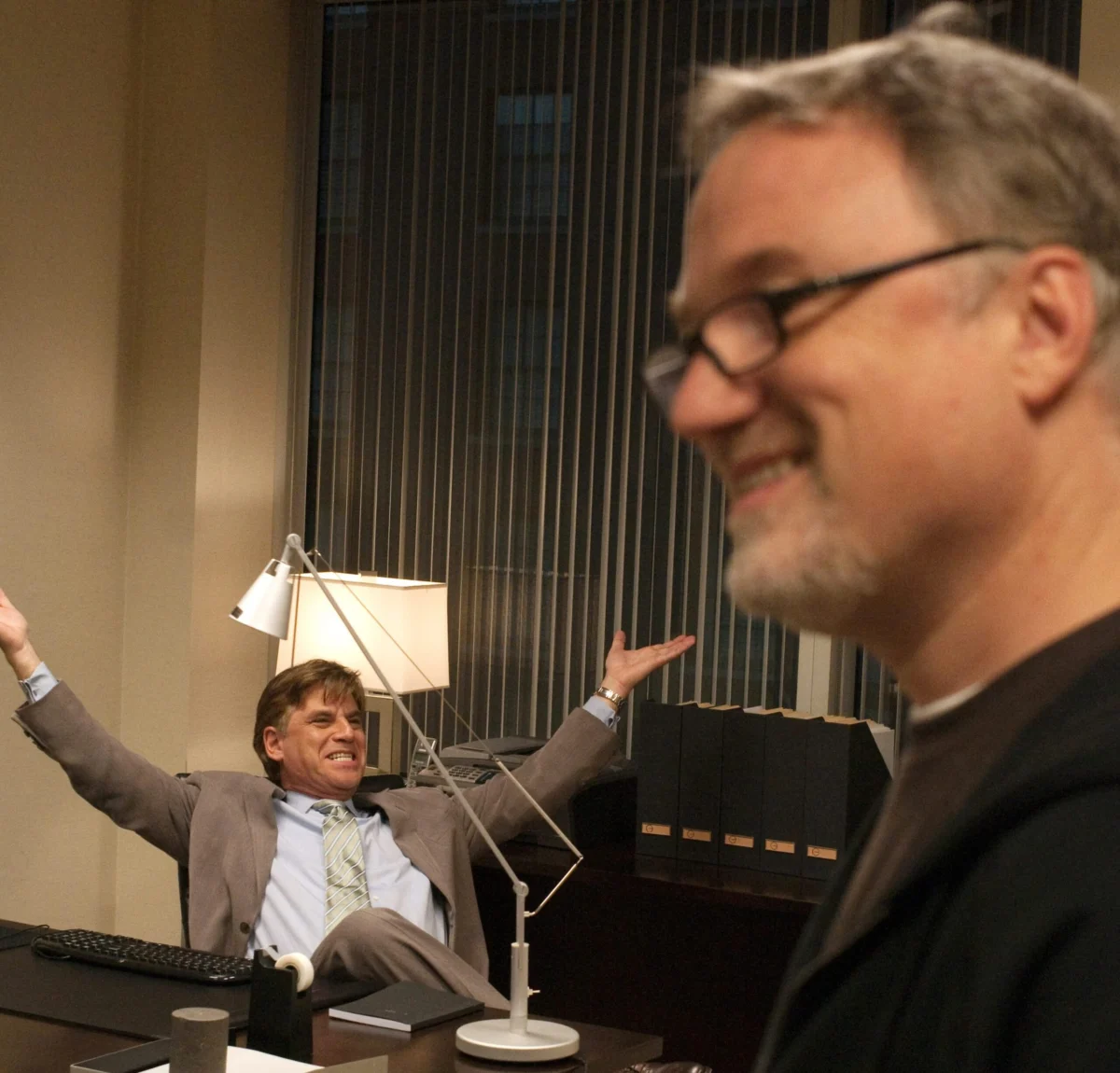
Its unprecedented success was forged in the creative fires of an unlikely union: the earnest, fast-talking optimism of screenwriter Aaron Sorkin paired with the cold, clinical cynicism of director David Fincher. That chocolate-and-peanut-butter alchemy yielded box office triumphs, critical acclaim, and cultural ubiquity.
Yet, as Sorkin prepares to re-enter the digital thunderdome with his upcoming script, The Social Reckoning—which charts Facebook’s tumultuous internal and external crises between 2018 and 2021—fans and industry insiders alike have confronted a bitter pill: David Fincher is not behind the camera.
In an extensive and revealing conversation on an upcoming episode of the Filmmaker Toolkit Podcast, Sorkin pulled back the curtain on why this dream team failed to reunite, how the original lightning-in-a-bottle partnership came to be, and why the new film is less a traditional sequel and more a stark, necessary warning about the modern information ecosystem.
The Chronology: From Accidental Director to Digital Historian
To understand the dynamic between Sorkin and Fincher, one must look back to the inception of the original project in 2009. Surprisingly, The Social Network almost became Sorkin’s directorial debut.
At the time, producer Scott Rudin and then-Sony Pictures chief Amy Pascal were aggressively pressuring the celebrated writer to step behind the camera. Sorkin, who had never expressed an interest in directing, found himself overwhelmed by the prospect.

"I had never raised my hand and said, ‘Uh, could I try?’ I’ve never asked to direct anything," Sorkin recalled. "They had decided that I should direct it. I got very nervous, and I said, ‘OK, listen, let’s just send the script to David Fincher. He’s going to pass, he passes on everything, and if he passes, I’ll direct it.’"
It was a strategic bluff that backfired in the best possible way. Within hours of receiving the script, Fincher reached out directly. He introduced himself, announced his intention to direct the film, and asked if he could come over immediately to get to work.
The resulting collaboration fundamentally altered the trajectories of both men. Sorkin looks back on the production with profound fondness, often sharing anecdotes that illustrate Fincher’s eccentric genius. Among them is the legendary story behind the film’s iconic opening sequence: a wide, high-angle tracking shot of a frantic Mark Zuckerberg (Jesse Eisenberg) racing through the streets of Cambridge back to his Harvard dorm after being dumped by Erica Albright (Rooney Mara).
"We’ve got a camera set up on a rooftop in Cambridge, working a hot street—meaning we haven’t closed it off, those people walking through, the cars, they were all the real deal," Sorkin explained.
When Fincher found himself frustrated by a lack of ambient light hitting a specific patch of sidewalk—restricted from mounting equipment directly onto the historic walls of Harvard Yard—he engineered a uniquely Fincher-esque solution. He hired a street mime who happened to be working nearby with a cart fitted with decorative lights. Because the crowd was distracted by the mime, extras walked by naturally without breaking the fourth wall, and Fincher got his illumination.
Supporting Data and Creative Evolution: The "Director in the Aggregate"
Working alongside Fincher offered Sorkin an invaluable masterclass in visual storytelling, but it also instilled a deep humility regarding his own limitations as a filmmaker.

"There’s a limit to how much someone like me can learn from someone like David just by watching," Sorkin admitted. "It would be like me watching [Mikhail] Baryshnikov, and then being able to dance—just watching him isn’t going to do the trick. David has a magnificent eye for the frame; that’s something of David’s that I can’t imitate."
Instead of attempting to carbon-copy Fincher’s meticulous visual style, Sorkin adapted a philosophy he famously dramatized in another of his celebrated scripts, Moneyball. When Oakland A’s general manager Billy Beane (played by Brad Pitt) had to replace superstar first baseman Jason Giambi, he realized finding a single player with identical offensive output was impossible. Instead, he built a "player in the aggregate."
Sorkin applied this exact logic to his transition into directing with films like Being the Ricardos and now The Social Reckoning. Knowing he could not replicate Fincher’s innate framing instincts on his own, Sorkin brought in elite collaborators—most notably cinematographer Jeff Cronenweth, the master lensman behind Fight Club and The Social Network. By surrounding himself with trusted Fincher alumni for production design, costume design, and cinematography, Sorkin engineered a director "in the aggregate" to capture the dynamic tension of his trademark dialogue-driven scenes.
Official Responses and Casting Hurdles: Why Jesse Eisenberg Won’t Return
Despite their creative parting of ways, Sorkin and Fincher remain close allies. Fincher was the very first person to read the script for The Social Reckoning, meeting with Sorkin the morning after he finished writing it to offer enthusiastic support.
However, logistical hurdles made a directorial reunion impossible. Fincher remains locked into an exclusive overall deal at Netflix, where he was simultaneously helming The Further Misadventures of Cliff Booth. Furthermore, Sorkin was working on a strict self-imposed timeline.
"Even if he could have somehow gotten Netflix’s permission to go work at Sony, I didn’t want The Social Reckoning to come out a year after the midterm elections," Sorkin noted. "I didn’t think we were going to be in the mood anymore. I wanted it to come out now."

Casting proved to be another hurdle. Sorkin initially wrote the script for The Social Reckoning imagining the sharp-tongued, fast-paced delivery of Jesse Eisenberg reprising his role as Mark Zuckerberg—the sole character carrying over from the original film.
However, extensive conversations with Eisenberg revealed that the actor had firmly closed the door on the character. Eisenberg shared stories of personal toll, including teenage boys approaching him at airport baggage claims to hand him business cards emblazoned with the infamous line: "I’m CEO, bitch." The lingering cultural footprint of the role had become a burden, leading Sorkin to cast Jeremy Strong in the lead role, while Sorkin himself steps behind the camera to direct.
Implications: A Shift from Empathy to Alarm
For years, Sorkin maintained a curious distance from the real-world subjects of his work. To this day, he has never met the real Mark Zuckerberg. Yet, following the release of The Social Network, Sorkin felt a strange sense of admiration for how Zuckerberg handled the cultural fallout, noting his massive $100 million philanthropic donation to the Newark, New Jersey public school system.
"I felt like he’d been a good sport about it," Sorkin recalled. "It wasn’t a matter of not wanting to be associated with him; I didn’t want to jump up and down on him again with another movie. I don’t feel that way anymore."
What changed Sorkin’s mind—and hardened his perspective—was rigorous investigation into the modern mechanics of social media. Sorkin credits eye-opening exposés and firsthand accounts by Facebook whistleblower Frances Haugen (portrayed in the film by Mikey Madison), Wall Street Journal reporter Jeff Horwitz (Jeremy Allen White), and former Zuckerberg advisor Roger McNamee with fundamentally altering his worldview.
Consequently, Sorkin is quick to clarify that The Social Reckoning is not a sequel in the traditional sense.

"It’s not a sequel to The Social Network," Sorkin stated sharply. "It’s another movie about Facebook, written by the same writer who wrote The Social Network, and one of the characters from The Social Network is in this. It would be as if Henry Hill [Ray Liotta’s character in Goodfellas] showed up in Casino."
Instead of examining the genesis of a college startup driven by personal slights and social ambition, The Social Reckoning train its lens on institutional rot. The film directly confronts Facebook’s complicity in the global rise of political extremism, societal divisiveness, and hyper-partisanship.
As Sorkin discusses the project today, the earnest optimism that once balanced Fincher’s cynicism in The Social Network appears to have given way to genuine alarm. Listening to him detail the stakes of the new film, the transformation is complete: Sorkin’s view of the digital landscape has become stark, unyielding, and profoundly Fincher-esque.