From YouTube Indie Pilot to Prime Video Powerhouse: Inside the Evolution and Animation Pipeline of ‘Hazbin Hotel’
Introduction: The High Stakes of Adult Animation
Every web creator understands the vast chasm between a fully realized vision in their mind and the grueling resources required to bring that aesthetic to life on screen. It is one thing to conceptualize an ambitious story from its opening prologue to its final curtain, and entirely another to command the production muscle needed to execute it with precision.
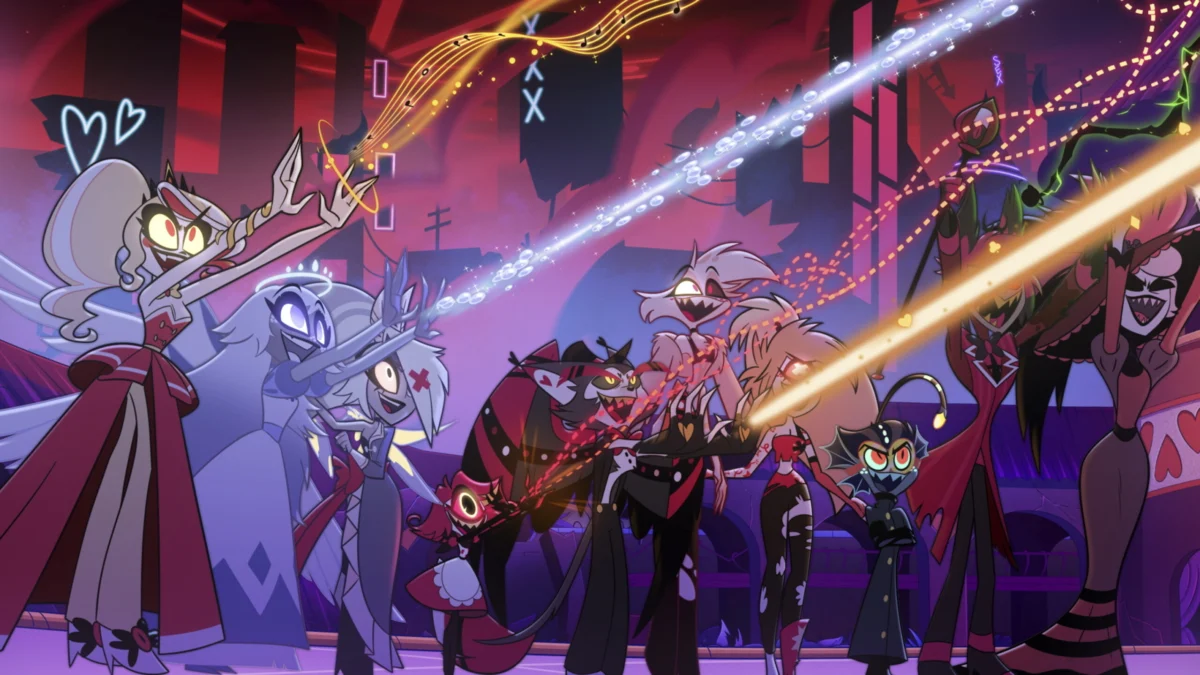
The challenge multiplies exponentially when the project in question is Hazbin Hotel, Prime Video’s profane, profoundly funny, and occasionally existential animated musical series. Created by Vivienne Medrano, the series follows Lucifer’s optimistic yet embattled daughter, Charlie Morningstar, as she operates a rehabilitation facility in Hell. Her goal? To help damned souls achieve redemption and earn a place in Heaven, all while navigating the geopolitical warfare between the celestial forces of Heaven and the fiery underbelly of Hell.
What began as an independent pilot project dropped onto YouTube has rapidly evolved into a multi-season heavyweight. Following the conclusion of its second season, Hazbin Hotel is already locked in for a four-season order on Prime Video. As the series cements its status as a cornerstone of modern adult animation—blending high-octane action, elaborate Broadway-style musical numbers, unapologetic vulgarity, and passionate fandom culture—its creators are pulling back the curtain on the grueling, collaborative, and often unpredictable animation pipeline that makes it all possible.
The Chronology of Chaos: From Independent Web Project to Streaming Giant
To understand the current scale of Hazbin Hotel, one must look back at its unorthodox origins. The property’s timeline reflects the shifting landscape of digital media and the democratization of animation production.
- The YouTube Era and the Pilot (Late 2010s): Vivienne Medrano, operating under the moniker VivziePop, spent years developing the core concepts and characters of what would become the Hazbin Hotel universe—characters originally conceived as independent webcomics and edgy internet original characters (OCs) during her youth. In October 2019, the self-funded animated pilot premiered on YouTube, instantly capturing a massive, rabid fanbase. The pilot proved that an appetite for independent, high-concept, serialized adult animation existed outside traditional studio gatekeepers.
- The A24 and Bento Box Partnership (Early 2020s): Following the runaway viral success of the pilot, indie powerhouse studio A24 optioned the series. This partnership bridged the gap between independent web animation and high-end television production. The animation pipeline was established as a multi-studio collaboration involving Medrano’s independent studio, Spindlehorse Toons, and Bento Box Entertainment.
- Prime Video Greenlight and Season 1 Debut: Prime Video secured the distribution rights, granting Medrano the corporate backing and financial infrastructure needed to produce a full series order. Season 1 debuted to immense viewership, breaking records for new adult animated series on the platform and establishing crossover appeal with its companion web series, Helluva Boss, which takes place in the same fictional universe.
- Season 2 and Beyond: Having recently wrapped its second season, Hazbin Hotel has successfully transitioned from a scrappy internet phenomenon into a polished, professional enterprise. With two additional seasons already greenlit, the series stands at a crossroads of expanding scope, maturing narratives, and heightened technical execution.
Production Mechanics: Inside the Animation Pipeline and Creative Collaboration
Scaling a passion project into a premier streaming series is rarely a frictionless process. For Medrano and her collaborators, the transition required building a pipeline capable of matching the show’s chaotic, densely layered aesthetic.

"It’s a very complicated show, and the studio that took it on had never really done a show like ours before, so there’s been a lot of learning, a lot of growth," Medrano explained in an interview with IndieWire. "Because obviously, the scope of the show just keeps growing. I have to give a shoutout to the incredible board artists who’ve worked on the show, both past and present, because it’s not easy. And it shows on the screen."
The Voice Cast as Co-Creators
One of the most fascinating revelations regarding the Hazbin Hotel production process is the symbiotic relationship between the vocal performances and the writing room. While characters often begin as broad archetypes matched with general vocal archetypes, the casting of specific actors fundamentally reshapes how Medrano and her team write and draw the characters.
"The voice just does so much to bring a character to life," Medrano noted.
A prime example is the character of Lucifer Morningstar, voiced by Broadway veteran Jeremy Jordan. Initially conceptualized as a goofy, P.T. Barnum-esque carnival barker with a bright, clean, zany musical energy, the character underwent a seismic shift once Jordan stepped into the recording booth.
"He was always meant to be this kind of goofy dad who was a big dreamer… But that could have gone so many different ways," Medrano said. Once Jordan infused the role with a specific, affectionately depressed yet dynamically theatrical energy, the writing staff adjusted. "He has now become my favorite character, due partially to Jeremy Jordan’s incredible characterization of him… Now we know how he performs Lucifer, I’m able to write him much more naturally, knowing the characterization that he has now."

Supporting Data and Creative Philosophy: Tone, Style, and Musical Evolution
Balancing extreme tonal shifts is a hallmark of Hazbin Hotel. Medrano’s aesthetic influences stem from a nostalgic blender of early Nickelodeon, Disney, and Warner Bros. animation, filtered through a modern, cynical, and deeply theatrical lens. This convergence allows for bizarrely tender yet profane tonal pairings, such as the hauntingly sweet redemption duet "Loser, Baby."
Finding the Line Between Dark and Cartoony
Despite the show’s setting in Hell and its frequent inclusion of visceral violence, gore, and crude humor, Medrano is acutely aware of the boundaries imposed by her signature visual style.
"There are times where I’m like, ‘I wish we could go darker.’ I just don’t know if my style is effective with it, especially in the violence," Medrano reflected. "Like, I would love to push that further. But I am mindful that my style is inherently a lighter look. Other shows like Invincible or even Rick and Morty have a style that serves that disturbance a lot more… [so] because of that, it’s fun finding the tone."
This self-awareness forms the bedrock of the show’s ethos: the creative team takes the internal emotional stakes of the characters and the world with absolute sincerity, while maintaining a healthy, self-deprecating distance regarding the medium itself.
The Evolution of the Songwriting Process
Music has always been the lifeblood of Hazbin Hotel, but the approach to integrating songs has matured significantly over the course of production. Seasons 1 and 2 relied heavily on open slates, where the narrative demanded musical interludes organically, or writers scrambled to invent character-defining tracks on the fly.

As the series progresses into its upcoming seasons, however, the production is increasingly arriving at musical beats that Medrano has envisioned since her early days sketching concepts on Tumblr.
Writers generally categorize songs into "wants," "needs," and "original vision" tracks. The "want" category often yields the most unpredictable creative breakthroughs. Medrano pointed to the character Niffty (voiced by Kimiko Glenn) as a prime example.
"Niffty was one of the wants. I was like, ‘Niffty needs a song,’ and we were like, ‘What do we have? What’s an opportunity?’ So we added her into this plot to hijack it, make the hotel look bad, but in her own twisted way, she’s praising it. That was our prompt, right? Then the songwriters absolutely killed it."
Official Responses and Creator Reflections
Reflecting on the journey from a precarious web pilot to an established streaming franchise, Medrano expresses a profound sense of validation, particularly regarding the artistic leap between the first two seasons.
"I will forever be obscenely proud of Season 1. We pulled off something really fucking hard," Medrano stated.

Regarding Season 2—which concluded with a massive cliffhanger phone call received by Charlie Morningstar in the finale, "Curtain Call"—Medrano points to increased creative latitude as the catalyst for the show reaching its aesthetic peak.
"[With] Season 2, I think what’s very cathartic for me is it was given more leeway. We had more time, in the runtime, to tell this story [and] because I knew there was a future for the show, it was able to allow this story to be more focused, and we found the creative team that really meshed with and made the show better. So for all those reasons, I feel like Season 2 is kind of the bar now for the show. Like, it just looks and feels the way I always wanted the show to look and feel."
Implications for the Future of Independent Animation
The trajectory of Hazbin Hotel carries significant implications for the broader entertainment industry, demonstrating a viable roadmap for independent creators transitioning into mainstream television:
- Audience-First Validation: By building an organic, highly engaged fanbase online prior to pitching to traditional studios, creators like Medrano retain unique leverage and creative vision that corporate executives are increasingly hesitant to dilute.
- Cross-Studio Collaboration: The successful pipeline established between Spindlehorse Toons, Bento Box Entertainment, and A24 proves that high-end independent aesthetics can be successfully scaled up without losing their idiosyncratic charm.
- The Resurgence of Adult Musical Animation: Hazbin Hotel has helped spearhead a modern renaissance for serialized, high-budget musical animation geared toward mature audiences, proving that audiences crave complex world-building paired with Broadway-caliber composition.
As Hazbin Hotel looks ahead to its guaranteed third and fourth seasons under Prime Video, the stakes for Charlie Morningstar and her fledgling redemption hotel have never been higher. Yet, for Vivienne Medrano and her crew, the ultimate triumph lies not just in the destination of their characters, but in the unyielding, chaotic joy of bringing their dark, glittering underworld to life.
Hazbin Hotel Seasons 1 and 2 are currently streaming on Prime Video.