The Moral Mirror: Agnieszka Holland and the Brutal Reality of the Green Border
For over four decades, Polish director Agnieszka Holland has wielded her camera not merely as a tool for storytelling, but as a scalpel for dissecting the moral rot of authoritarianism. From the harrowing, factual Holocaust survival narrative of Europa Europa (1990) to the fierce, eco-feminist intensity of Spoor (2017), Holland has consistently challenged her audiences to confront the uncomfortable intersection of politics and human dignity. Her latest cinematic endeavor, Green Border, serves as a culmination of this career-long crusade—a searing, novelistic examination of the migration crisis currently unfolding in the dense, primeval forests that straddle the border between Poland and Belarus.
The Genesis of a Crisis: From Observation to Celluloid
The catalyst for Green Border was deeply personal. A close friend of the director discovered the body of a man who had succumbed to hypothermia within the exclusionary zone—a strip of land caught in a geopolitical tug-of-war. For Holland, this was not merely a tragic event; it was a symptom of a systemic abandonment of humanitarian principles.
"The image of that young man, freezing to death here in my country… is so horrible," Holland remarked in a recent series of interviews. "In the face of this crisis manufactured by politicians, we must take a clear position as artists, as people, as a society, as a country."
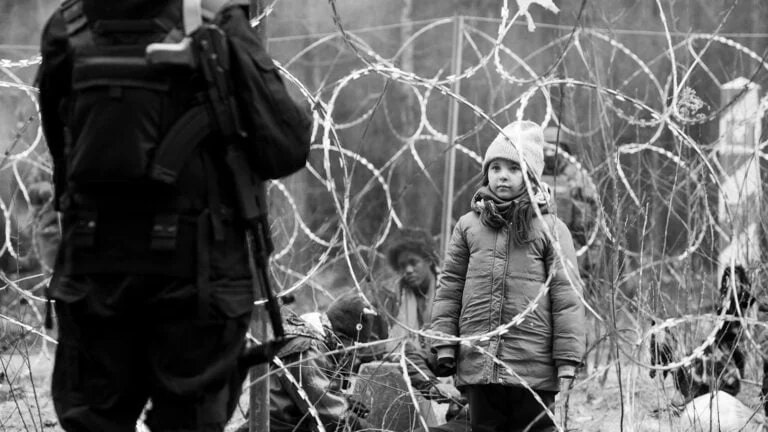
The film, structured into four interlocking chapters and an epilogue, maps the experiences of those caught in the crossfire. It begins with a Syrian family and other refugees lured by false promises of safe passage into the European Union via Belarus, only to find themselves treated as political pawns. They are pushed, beaten, and tossed across razor-wire fencing by border guards from both sides, left to perish in the treacherous swamps and unforgiving forests of the borderlands. The narrative shifts perspectives, moving from the exhausted refugees to a disillusioned Polish border guard, then to a group of well-meaning but ultimately ineffectual aid workers, and finally to a woman who chooses to break the law to provide sanctuary to three young men from the Congo.
Chronology of Contention: The Political Firestorm
Green Border was released in Poland in late 2023, just weeks before the nation’s pivotal parliamentary election. The impact was instantaneous and polarizing.
- Pre-Election Tensions: As the film hit theaters, the ruling Law and Justice (PiS) party, then in power, launched a vitriolic campaign against it. High-ranking government officials, including the Prime Minister and the Minister of Justice, publicly labeled the film a "collection of lies" and "disgusting." The Minister of Justice famously compared Holland to Josef Goebbels—a charge that, while historically grotesque, underscored the extreme hostility the film provoked.
- The Public Response: Far from silencing the film, the state-sponsored vitriol fueled a surge of curiosity. The film became a lightning rod for the opposition, mobilizing voters and drawing record audiences to cinemas. Q&A sessions following screenings transformed into town-hall-style debates, illustrating a society deeply divided by the crisis.
- The Post-Election Shift: Despite the defeat of the PiS government, the situation on the border has not improved. Holland notes with profound disappointment that the new democratic coalition has adopted the populist rhetoric of its predecessors. "Now the new government has adopted the populist language of the so-called European mainstream," she observes. "The result is that now the soldiers are allowed to shoot migrants, pretty much at will. The soldiers know they won’t be prosecuted. My worst fears are meeting reality."
Behind the Lens: The Aesthetics of Urgency
The production of Green Border was a feat of tactical filmmaking. Recognizing that they could not film in the actual exclusionary zone—and would likely face state interference—Holland and her team moved with lightning speed.
A Study in Chaos
Shooting the entire film in just 24 days, Holland utilized two units simultaneously. Eschewing traditional storyboards, she sought to capture a sense of "total chaos" that mirrored the lived experience of the refugees. "Nothing that happens is deliberately planned," she explains. "They are not scenes of war or of liberation. It is the expression of violence and chaos and despair."
The Black-and-White Aesthetic
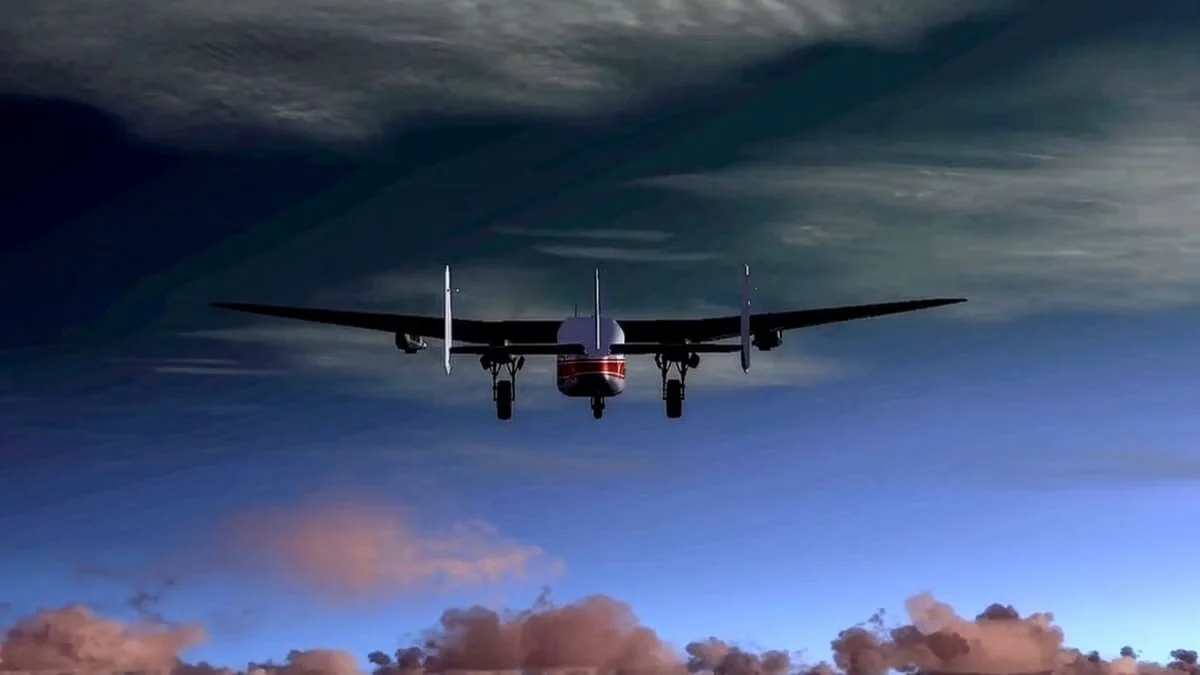
Cinematographer Tomasz Naumiuk played a pivotal role in establishing the film’s stark, haunting visual language. Shot primarily in black and white, the film gains an immediate, visceral connection to history. The sole exception—a drone shot of the forest in color at the very beginning—serves as a jarring reminder of the indifference of nature to the human suffering occurring within it.
The Global Implication: Racism and the "Nazi Past"
Perhaps the most devastating scene in the film occurs when the narrative shifts to the border between Poland and Ukraine. Here, the contrast is absolute: white Eastern European refugees are greeted with open arms, warmth, and sustenance.
This juxtaposition acts as a mirror to contemporary European racism. Holland argues that the Holocaust did not, as many hoped, act as an eternal inoculation against bigotry. Instead, she posits that the current crisis is a resurrection of old, visceral hatreds. "I had thought for a while that the Holocaust inoculated us against racism, but it has come back and it’s visceral," she says. "It’s stronger than economic fear."
This theme resonates far beyond the borders of Poland. The parallels to the crisis at the U.S.-Mexico border are striking. In both instances, politicians manipulate migration patterns to stir fear, using vulnerable populations as pawns in a broader game of nationalistic maneuvering. Holland’s critique is uncompromising: by mimicking the rhetoric and policies of the far-right in a desperate attempt to gain votes, center-right politicians are eroding the very human rights frameworks that define Western democracy.
The Philosophical Core: Hope Amidst Despair
Despite the grim subject matter, Holland rejects nihilism. In one of the film’s few moments of genuine connection, children from the Congo and children from a wealthy Polish family find common ground through the universal language of pop culture, music, and video games.
"Philosophically and existentially, I believe hope is necessary," Holland insists. She maintains that the responsibility of the artist is not to leave the audience in a state of hopeless paralysis, but to provide a catalyst for action. When the state fails to protect the vulnerable, or worse, becomes the perpetrator of violence, she argues that the individual has a moral imperative to intervene. "When the state is an illegitimate, fascist state, you have to act on your own. So I’m old enough to say: fight the state."
Looking Forward: The Kafkaesque Future
Following the completion of Green Border, Holland has dived into a new, equally ambitious project: a film about Franz Kafka. This exploration of the 20th-century visionary, whom she describes as a "brother" of sorts, seems to be a natural extension of her career.
"Kafka was very important to me when I was 14 or 15," she notes. "I saw this strange young man with neurotic double or triple identities and a visionary ability to look into the abyss." Her upcoming film promises to be a fragmented, puzzle-like structure that weaves together biographical elements with his literature and contemporary reality.
As Holland continues to hold a mirror to the world’s most uncomfortable truths, her work remains a vital, if painful, reminder of the fragility of civilization. Green Border is not just a film; it is a document of a turning point in history, a testament to the dangers of manufactured hysteria, and a call to maintain our humanity when the world demands that we cast it aside. Whether in the forests of Poland or the political arenas of the West, the monsters, she warns, will not disappear on their own. They must be faced.