Preserving the Silver Screen: Inside the Toho Archive’s Quest to Immortalize Japanese Cinema
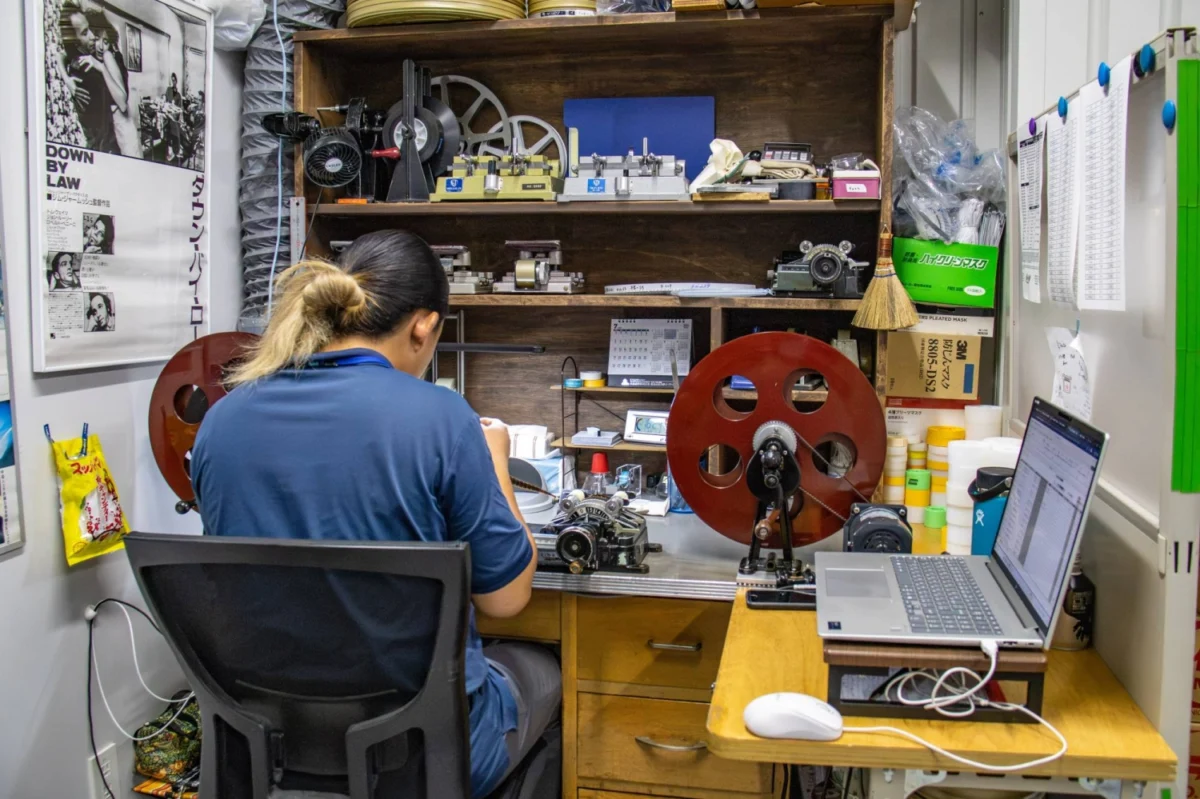
In the quiet, leafy residential enclave of Seijo, located in Tokyo’s Setagaya Ward, a meticulous transformation is underway. Away from the neon-soaked chaos of Shinjuku or the industrial hum of film studios, a specialized team of 25 dedicated professionals at Toho Archive is engaged in a high-stakes race against time. Their mission: to safeguard the physical legacy of Japanese cinema, ensuring that the flickering images of the 20th century survive well into the 21st.
The work being conducted here is not merely storage; it is an act of cultural resurrection. As digital streaming dominates the landscape, the delicate celluloid strips that birthed the golden age of Japanese film are facing the silent, inevitable decay of chemical degradation. Toho Archive serves as the final line of defense, holding the keys to a vault that contains the visual DNA of a nation.
The Weight of History: A Catalog of Legends
To leaf through the catalog of Toho Archive is to read the definitive syllabus of Japanese cinematic history. The vault houses the master negatives and original prints of works that defined the global perception of Asian storytelling.
Among the shelves, one finds the sweeping, rain-drenched action sequences of Akira Kurosawa’s Seven Samurai, the atomic-age terror of the original Godzilla series, the haunting, empathetic realism of Kenji Mizoguchi’s The Life of Oharu, and the introspective, domestic dramas of Mikio Naruse’s Floating Clouds. Beyond the "high art" classics, the archive also serves as the custodian of Japan’s most enduring pop-culture exports, including the long-running animated franchises of Doraemon and Detective Conan.
For the staff at Toho Archive, there is no hierarchy of importance between these titles. Whether it is a seminal masterpiece of the 1950s or a Saturday-morning animation staple, each frame represents a specific moment in Japanese social and creative history that requires stabilization and preservation.
A Legacy of Innovation: From Tokyo Laboratory to Toho Archive
While Toho Archive was officially established in December 2023, its institutional DNA stretches back nearly seven decades. It acts as the direct successor to Tokyo Laboratory, a legendary film-processing house founded in 1955.
Tokyo Laboratory was not merely a service provider; it was a hotbed of technical innovation that fundamentally changed the aesthetic possibilities of global cinema. Most notably, the laboratory pioneered the "gin-nokoshi" technique—internationally known as "bleach bypass." This process, which involves skipping the bleaching stage during film development, results in a high-contrast, desaturated look with retained silver content in the image. It is a look that has defined the visual language of countless directors, from the gritty war films of the mid-century to modern neo-noirs.
By inheriting the technical expertise and the extensive library of the Tokyo Laboratory, Toho Archive bridges the gap between the analog past and the digital future. The team in Seijo does not see itself as a museum curator but as a living bridge, keeping the physical techniques of the past alive to inform the preservation strategies of the future.
The Philosophy of Restoration: Fidelity Over Artifice
The challenge of film restoration is often misunderstood by the public, who have become accustomed to the "AI-upscaling" and "digital sharpening" that often plague modern home media releases. Nobushige Toshima, president and sales division manager of Toho Archive, is adamant about the ethics of the craft.
"The goal of restoration is not to artificially upscale but to return the film to the condition it was in ‘the very first day it appeared in the world,’" Toshima says.

This philosophy of "archival fidelity" stands in stark contrast to the trend of smoothing out film grain or boosting color saturation to suit modern high-definition displays. Toshima’s team views the grain of the film not as an imperfection to be scrubbed away, but as a textural component of the artist’s original intent. To remove it is to strip the film of its soul. Instead, the focus remains on physical repair: cleaning, stabilizing, and scanning at resolutions that respect the original photographic process.
The Mechanics of Preservation: A Chronology of Care
The life cycle of a film print within the archive follows a rigid, scientific process designed to arrest the natural decay of celluloid:
- Inspection (Year 0): Every reel is unspooled and examined for "vinegar syndrome," physical tearing, or chemical spotting.
- Climate Stabilization (Ongoing): The films are moved to temperature- and humidity-controlled vaults that mimic the conditions necessary to keep plastic-based film from brittleness.
- Chemical Remediation: Utilizing the specialized knowledge inherited from the Tokyo Laboratory, experts treat the film for any active degradation.
- Digital Capture: The films are scanned using custom-calibrated sensors that capture the full dynamic range of the original negative.
- Master Archiving: The physical film is returned to deep storage, while the digital master is stored across multiple geographic locations to ensure disaster recovery.
Supporting Data: The Fragility of Memory
The urgency of this work cannot be overstated. According to the International Federation of Film Archives (FIAF), roughly 90% of silent films have been lost forever, and a staggering percentage of color films produced before the 1980s are at risk of color fading due to the instability of early color dyes.
Toho Archive manages a collection numbering in the thousands of reels. Each reel represents a physical object susceptible to humidity, light, and the passage of time. In Japan, the threat is compounded by seismic activity. The archive’s facility in Seijo is built to withstand significant tectonic stress, acknowledging that even the most well-preserved film is worthless if the building housing it cannot survive a major earthquake.
Implications for Future Generations
The work performed by the 25-person team in Seijo has profound implications for global culture. As film historians point out, if we lose the original negatives of these films, we lose the ability to verify what the director intended. Every time a new "remaster" is made, if the source material is poor, the film slowly drifts further away from its original form. By maintaining the master negatives in pristine condition, Toho Archive ensures that future generations will have a "ground truth" to return to.
Furthermore, the archive provides a template for other nations struggling to preserve their cinematic heritage. The transition from private laboratory to public-facing archive is a model that demonstrates how corporate entities can pivot toward social responsibility.
Conclusion: A Living Legacy
As digital formats evolve, the hardware required to play back old media often becomes obsolete. Toho Archive’s role is to ensure that while the delivery mechanism (streaming, Blu-ray, or whatever comes next) may change, the source remains untouched.
"We are not working for the audience of today," says a senior technician at the facility. "We are working for the audience of 2124. When they watch Seven Samurai in a hundred years, we want them to see exactly what the audience in 1954 saw."
In the quiet of their Seijo facility, the team continues their slow, rhythmic work. They are the silent guardians of a century of dreams, ensuring that the light of Japanese cinema continues to glow—not artificially enhanced, but authentically preserved, just as it was on the very first day it appeared in the world.