
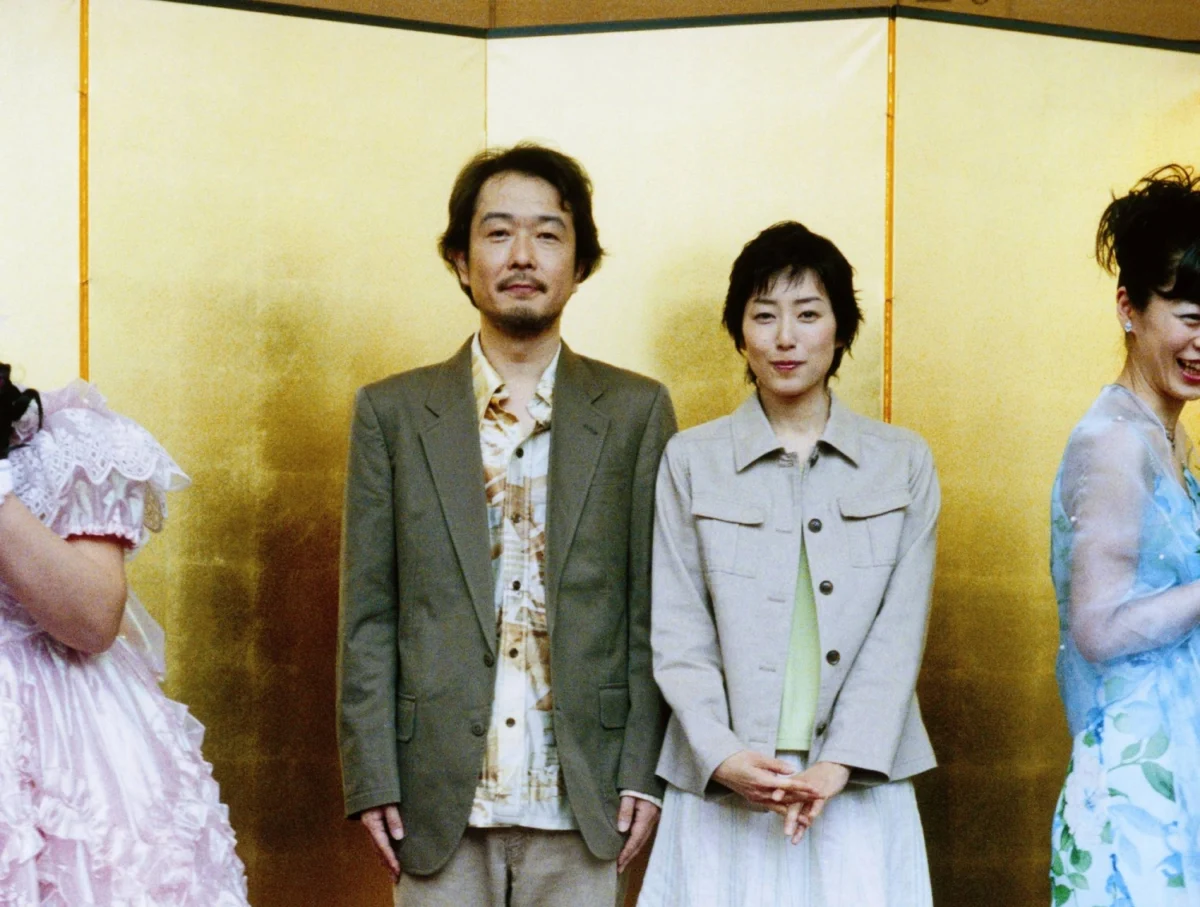
The Human Condition in High Definition: Reassessing the Cinema of Ryosuke Hashiguchi
In the landscape of contemporary Japanese cinema, few directors have managed to balance the intimacy of personal identity with the sweeping complexities of societal evolution as deftly as Ryosuke Hashiguchi. A filmmaker who emerged during a period of transition for Japanese independent cinema, Hashiguchi has consistently defied the reductive labels often placed upon queer directors. By anchoring his narratives in the raw, often uncomfortable truths of human connection, he has crafted a body of work that serves as both a mirror to the past and a challenge to the present.
With the recent arrival of pristine 4K restorations of his midcareer masterpieces, Hush! (2002) and All Around Us (2008), audiences are once again invited to step into Hashiguchi’s world. These screenings provide more than just a nostalgic look at the early 2000s; they offer a vital opportunity to re-evaluate how far Japanese society has moved—and where it remains stubbornly static—regarding gender, family, and the inclusion of those on the margins.
The Evolution of an Auteur: Main Facts and Context
Ryosuke Hashiguchi’s career is defined by a refusal to be categorized solely as a "gay director." While his identity as an out gay man has undeniably informed his perspective, his films reach far beyond the confines of identity politics. He is, at his core, an observer of the "misfit."
- The Aesthetic of Authenticity: Hashiguchi is known for his patient, empathetic camera work. He avoids the melodramatic tropes of mainstream Japanese television dramas, favoring long takes that allow the weight of silence and unspoken tension to settle between characters.
- The Scope of His Work: From the depiction of a gay couple navigating the bureaucracy of parenthood in Hush! to the domestic unraveling of a husband and wife against the backdrop of the Aum Shinrikyo trials in All Around Us, his films treat every character with an equal measure of dignity and scrutiny.
- The Current Revival: The 4K restoration project breathes new life into these films, sharpening the color palettes and textures that were essential to the atmospheric storytelling of the early 2000s. These versions are currently making their way through theaters, serving as a cinematic bridge between the pre-digital era of Japanese independent film and the current streaming-dominant landscape.
Chronology: A Trajectory of Unconventional Storytelling
To understand the impact of Hashiguchi’s work, one must trace the timeline of his creative output, which mirrors the slow, often painful progress of social liberalization in Japan.
1990s: The Formative Years
Hashiguchi began his career by exploring the intersections of youth and sexuality. His early works established his signature style: a blend of deadpan humor and profound existential melancholy. By the time he reached the turn of the millennium, he was ready to tackle more ambitious, ensemble-driven narratives.
2002: Hush! and the Domestic Frontier
Released at a time when same-sex domestic partnerships were barely part of the public discourse in Japan, Hush! was a quiet revolutionary act. It followed a gay couple who decide to have a child with a woman they meet. The film focused on the "vicissitudes of life"—the small, crushing bureaucratic hurdles and the unexpected joys of building a non-traditional family. It forced audiences to reconsider the definition of "family" in a culture that remains fiercely traditional.
2008: All Around Us and the Weight of History
If Hush! was about the hope of creating a new path, All Around Us was a meditation on the difficulty of maintaining an old one. Featuring Lily Franky and Tae Kimura, the film tracked a couple through a decade of marriage, marked by the loss of a child and the husband’s job as a courtroom sketch artist. By linking the couple’s personal trauma to the external horrors of real-world criminal trials, Hashiguchi created a haunting portrait of how private lives are inevitably scarred by public events.
Supporting Data: The Changing Face of Japanese Society
The relevance of these films is amplified by the statistical shifts in Japan over the last two decades.
Marriage and Demographic Shifts
In 2002, when Hush! premiered, the conversation around same-sex unions was relegated to the fringes of activist circles. Today, while Japan still does not legally recognize same-sex marriage at the national level, a growing number of municipalities have implemented partnership systems. The "misinformation" surrounding LGBTQ+ issues that plagued the early 2000s has been replaced by a more nuanced, albeit still contentious, national debate.
The Rise of the "Misfit" Perspective
Hashiguchi’s focus on the "oddballs and misfits" resonates more strongly in 2026 than it did in 2008. Japan’s ongoing struggle with social isolation—the hikikomori phenomenon and the increasing rates of single-person households—means that the loneliness captured in his films feels less like a niche condition and more like a shared national experience.

Official Responses and Critical Reception
The critical re-evaluation of Hashiguchi’s work has been met with both professional acclaim and institutional recognition. Film historians note that while his films were initially viewed through the narrow lens of queer cinema, they are now being categorized as "essential social documents."
"Hashiguchi doesn’t just film people; he films the spaces between them," says one prominent film critic. "In the 4K restorations, you can see the grain of the film, the dust in the rooms, the subtle trembling of a lip—these are the details that turn a narrative into a memory."
Furthermore, the production companies behind the restorations have emphasized that these films serve as a "repository of the Japanese soul" at the turn of the century. They argue that by preserving these narratives, the industry is acknowledging that the "vicissitudes" of marriage and life are universal, regardless of the cultural context in which they are set.
Implications: Why These Films Matter Today
The revival of Hush! and All Around Us carries profound implications for the future of Japanese cinema and social discourse.
1. The Preservation of Narrative Integrity
In an age of rapid content consumption and ephemeral digital media, the 4K restoration project serves as a reminder of the value of "slow cinema." Hashiguchi’s films demand time and attention. By placing them back in theaters, the industry is signaling that certain stories—those that explore the deep, messy realities of the human condition—deserve to be seen in the highest fidelity possible.
2. A Mirror to Social Progress
Watching Hush! today, one is struck by how ahead of its time the film was. The legal and social barriers that the characters face are still present in 2026, yet the audience’s reception has shifted. What was once seen as a provocative subversion of the family unit is now often viewed as a poignant, if heartbreaking, precursor to the current fight for marriage equality.
3. The Enduring Power of the Misfit
Hashiguchi’s protagonists are not heroes; they are people trying to survive. By centering those who do not fit into the rigid "salaryman" or "traditional housewife" molds, he validates the existence of the individual within a collective society. This is an essential lesson for a country currently grappling with its own identity in a globalized world.
Conclusion: An Invitation to Reflect
Ryosuke Hashiguchi’s cinema is not for those looking for easy answers or clean resolutions. It is for those who are willing to sit with the ambiguity of being alive. As these 4K restorations continue their run, they offer an invitation to return to a time when cinema felt like a profound act of empathy.
Whether it is the quiet desperation of a couple navigating the fallout of a trial or the hopeful, yet uncertain, future of a non-traditional family, Hashiguchi’s vision remains as sharp and necessary as ever. In a world saturated with information yet starving for connection, the "All Around Us" of his imagination is perhaps the most real place we can find ourselves. As we look at these films through a modern lens, we are not just watching the past—we are witnessing the enduring, beautiful, and deeply flawed nature of the human experience.