The Mythic Void: Deconstructing Christopher Nolan’s The Odyssey
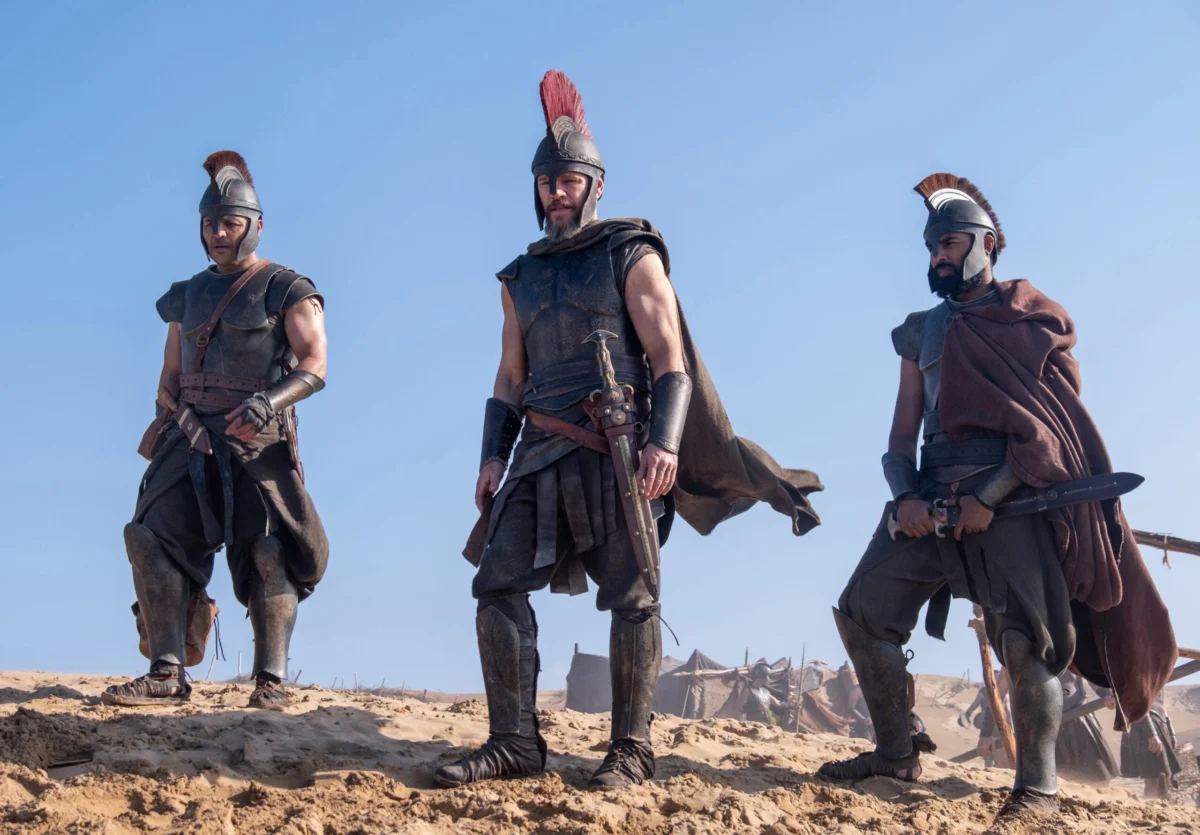
In the landscape of modern cinema, few events carry the gravity of a Christopher Nolan release. With a filmography defined by temporal manipulation, rigorous intellectual puzzles, and a penchant for the monumental, Nolan’s decision to tackle the foundational bedrock of Western literature—Homer’s The Odyssey—was met with a fervor bordering on the religious. Starring an ensemble cast that reads like a who’s who of contemporary Hollywood—including Matt Damon, Anne Hathaway, Tom Holland, Robert Pattinson, and Zendaya—the film is the centerpiece of the Summer 2026 cultural conversation.
However, as the dust settles on the initial screenings, the consensus is far from monolithic. In a recent episode of the Film Comment podcast, Editor Clinton Krute sat down with Contributing Editors Genevieve Yue and Inney Prakash to unpack the film’s austere, often polarizing vision. The discussion, which serves as a vital companion to Yue’s recent review, "There Is No Ithaca," explores why this adaptation feels less like a journey home and more like a descent into a vacuum.
The Weight of Expectation: A New Odyssey
For decades, filmmakers have grappled with the sheer scale of Odysseus’s ten-year struggle to return to Ithaca. From the serialized television epics of the 1990s to the impressionistic echoes found in the Coen Brothers’ O Brother, Where Art Thou?, the poem has proven to be a slippery subject for the camera.
Nolan’s approach, as Yue notes, is defined by his signature "dourness." Where Homer’s original text balances the brutality of war with the vibrancy of Mediterranean life—the wine-dark seas, the bawdy humor of the gods, and the sensory richness of the feast—Nolan provides a clinical, detached rendering. The film is characterized by a "bloodless" precision. It is a work that prioritizes the structural integrity of the myth over the pulse of its characters. In this iteration, the return to Ithaca is not a moment of triumphant homecoming, but a somber, inevitable conclusion to a long, grinding endurance test.
Chronology: The Production and Reception
The development of The Odyssey was shrouded in the trademark secrecy that accompanies any Nolan production.
- Pre-Production (2024–2025): Speculation reached a fever pitch when the casting list was leaked, featuring A-list talent tasked with embodying the archetypal figures of the Greek pantheon and the survivors of the Trojan War.
- Principal Photography (2025): Filming took place across multiple continents, utilizing a mix of practical maritime effects and the director’s customary refusal of excessive CGI, aiming for a tactile, grounded aesthetic.
- The Premiere (Early Summer 2026): The film debuted to sold-out IMAX screenings, triggering immediate debate among critics regarding the tone of the adaptation.
- The Critical Aftermath (Current): Publications and podcasts have scrambled to contextualize the film, with Film Comment positioning it as a pivotal, if problematic, entry in the Nolan canon.
Supporting Data: The Aesthetic of Absence
To understand why this adaptation feels so distinct, one must examine the specific choices made regarding tone and characterization. Yue points out that the film actively purges the "liveliness" of the epic.
"The film is shrouded in Nolan’s characteristic dourness," Yue explains. "Homer’s lively world of men and gods is purged of lightness and humor."
The evidence is in the performances:
- Odysseus (Matt Damon): Portrayed as a man not just physically weary, but existentially hollowed out by his experiences.
- The Suitors: Traditionally, the suitors represent the decadence that must be purged from Ithaca. In Nolan’s film, they are the only ones capable of laughter—a cynical, jagged laughter that highlights the misery of the protagonists.
- The Sirens: In the original poem, the Sirens’ song is an irresistible lure of knowledge and beauty. In Nolan’s interpretation, the encounter is framed as an auditory assault that leaves the crew in a state of mourning. When Odysseus hears the song, he does not struggle with desire; he wails in a grief so profound it borders on the nihilistic.
Official Responses and Creative Intent
While Christopher Nolan has remained characteristically reticent regarding the specific critiques of his film, his body of work suggests a clear thematic preoccupation: the struggle against time, the burden of memory, and the isolation of the heroic figure.
In discussions with the press during the press junket, the cast has spoken at length about the "meticulous" nature of the set. Anne Hathaway, who plays a reimagined iteration of Penelope, has described the production as a "study in psychological attrition." The intention, it seems, was to strip away the romanticism often associated with the Odyssey—the idea that the hero is "destined" for a glorious return—and replace it with the reality of a man who has changed so much that his home is no longer a place of comfort, but a place of confrontation.
Implications: The Future of the Epic in Cinema
The release of The Odyssey raises a broader question about the role of the blockbuster in 2026. Can a film be both a massive, star-studded spectacle and a deeply pessimistic, experimental art piece?
The "Nolanization" of Myth
By applying his signature style to the Homeric epic, Nolan has effectively "Nolanized" the story. This implies that the director is less interested in the myth as a communal, cultural touchstone and more interested in the myth as a mirror for his own intellectual anxieties. For audiences, this creates a divide:
- The Purists: Those looking for the adventure, the gods, and the triumph of the human spirit find themselves alienated by the lack of "lightness."
- The Revisionists: Those who appreciate the formal rigor and the courage to strip away the sentimentality find in this film a bold, if cold, exploration of post-traumatic endurance.
The Problem of Ithaca
As Genevieve Yue famously writes, "There is no Ithaca." The implication is profound. If the goal of the hero’s journey is to return to a place that no longer exists—or to a version of himself that can no longer inhabit that space—then the Odyssey ceases to be an adventure story and becomes a tragedy of displacement.
The Film Comment podcast discussion highlights that this is perhaps where the film succeeds most: it forces the audience to confront the reality that for the returning veteran, the war never truly ends. The homecoming is not a restoration, but a continuation of the trauma.
Conclusion: A Polarizing Legacy
Whether one views The Odyssey as a masterclass in atmospheric filmmaking or a misfire that misunderstands the source material, its cultural impact is undeniable. It forces us to reconsider what we want from our epics. Do we want the comfort of the familiar, or do we want the discomfort of the new?
Christopher Nolan has invited us to a banquet where no one eats, to a song that causes only tears, and to a homecoming that offers no peace. It is a film that demands to be wrestled with, much like the sea itself. As the summer season continues, The Odyssey will likely remain a flashpoint in film criticism, serving as a reminder that even the oldest stories can be made new—provided you are willing to strip them of their skin.
For those interested in a deeper dive into these themes, the full conversation between Clinton Krute, Genevieve Yue, and Inney Prakash is available on the Film Comment podcast. It is an essential listen for anyone trying to reconcile the spectacle of the screen with the silence of the soul.
This article is part of the Summer 2026 issue of Film Comment. To read more exclusive content and join the conversation, sign up for The Film Comment Letter today.