From Tokyo to the Inland Sea: The Six-Decade Odyssey of Japan’s Ultimate Beatles Archivist
AKO, HYOGO PREF. — In the quiet coastal city of Ako, famed for its centuries-old salt production and the legendary loyalty of the 47 Ronin, a curious cultural anomaly has taken root. Amidst the solemn stone monuments dedicated to Edo-period samurai, visitors are greeted by vibrant, psychedelic posters advertising a destination that feels worlds away from the feudal history of southwest Hyogo Prefecture: The Beatles Art & Culture Museum.
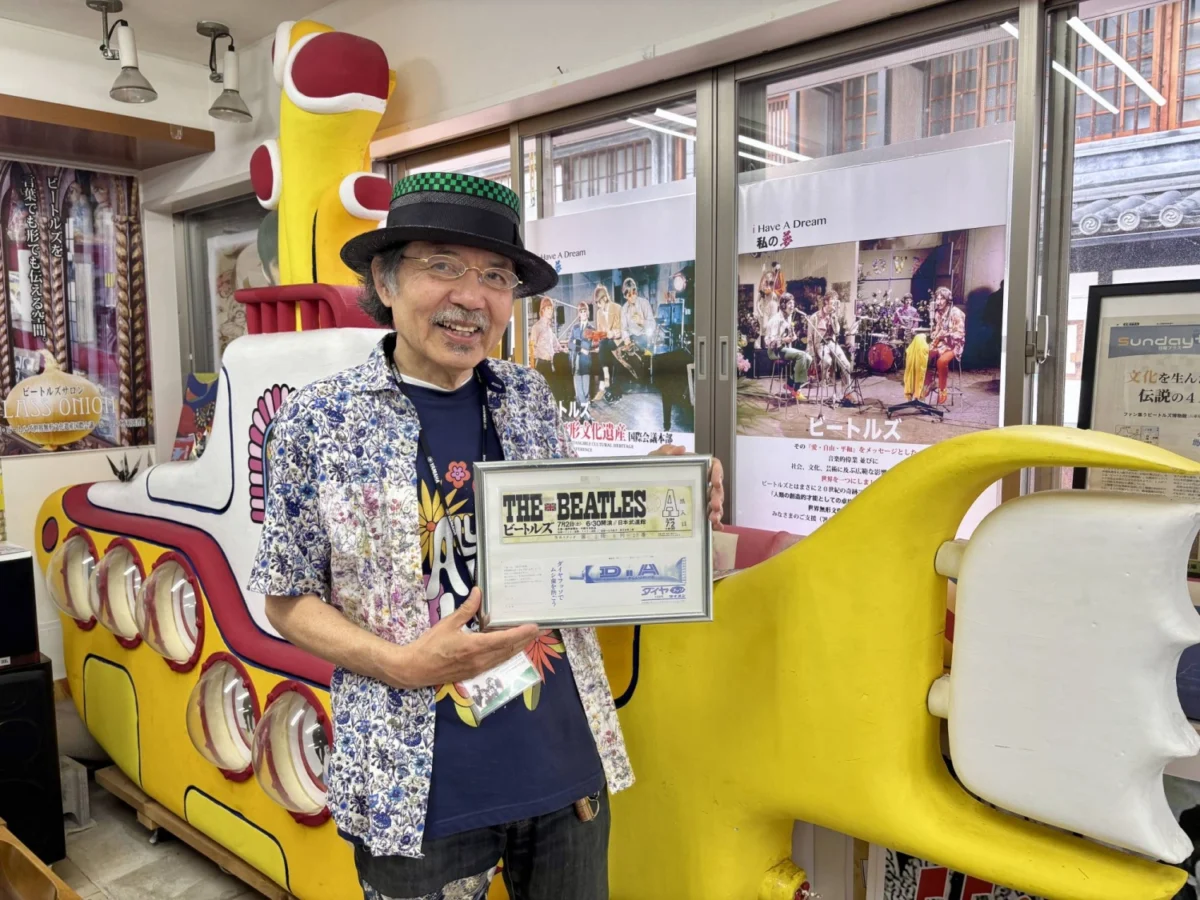
Tucked away in a charming, repurposed traditional house—a mere stone’s throw from the Kagakuji temple where the 47 Ronin are famously interred—this museum stands as a testament to the enduring, cross-cultural power of the Fab Four. At the heart of this shrine is Sonau Okamoto, a man who has spent the better part of his life curating a sprawling, kaleidoscopic collection that serves as a physical history of Beatlemania in Japan.
The Man Behind the Museum: A Life Defined by the Fab Four
For Sonau Okamoto, the Beatles are not merely a musical act; they are the soundtrack of his existence. Having spent over 60 years obsessively collecting memorabilia, Okamoto has transitioned from a passionate fan to the unofficial custodian of the band’s Japanese legacy.
His museum is a dizzying, tactile experience. Visitors are greeted by a floor-to-ceiling archive of the band’s influence: rare vinyl pressings, original concert posters, promotional cutouts, archival newspaper clippings, and international magazines that document the band’s global trajectory. The collection extends into the whimsical, featuring custom mugs, limited-edition pins, Beatles-themed banknotes, and a centerpiece "Yellow Submarine" display that captures the band’s transition from moptop pop stars to psychedelic icons.
But for Okamoto, the museum is not just a commercial venture or a curiosity for tourists. It is a labor of love, a permanent exhibition of the fervor that gripped a generation of Japanese youth in the mid-1960s.
A Chronology of Obsession: The 1966 Budokan Moment
To understand the weight of Okamoto’s collection, one must look back to the summer of 1966. It was a pivotal moment in Japanese cultural history—the year the Beatles arrived at the Nippon Budokan in Tokyo.
The Historic Arrival
In June 1966, the Beatles touched down in Tokyo, sparking a firestorm of controversy and excitement. The visit was met with both intense adulation from fans and skepticism from conservative segments of Japanese society, who viewed the band’s presence in the sacred Budokan arena as an affront to traditional values.
The Ticket to History
Among the thousands who clamored for a glimpse of John, Paul, George, and Ringo was a young Sonau Okamoto. The crown jewel of his museum, resting under reinforced glass, is a pristine, 60-year-old ticket stub from the July 2, 1966, performance.
The artifact serves as a time capsule. Printed with the date and the price—¥2,100 for a premium seat—the ticket represents a significant financial investment for the time. For context, cheaper seats were available at ¥1,800 and ¥1,500, but for Okamoto, the cost was secondary to the experience. That evening, as the band took to the stage in the center of the martial arts arena, Okamoto became a witness to a cultural watershed that would redefine his life’s trajectory.
Supporting Data: The Scale of the Collection
The Beatles Art & Culture Museum functions as a primary resource for music historians. Okamoto’s collection is not merely an accumulation of objects but a systematic archive.

- Audio-Visual Records: The collection includes rare Japanese-market pressings that feature unique sleeve designs and liner notes exclusive to the domestic market during the 1960s.
- Ephemera and Merchandise: Thousands of items, ranging from ephemeral concert handbills to high-quality manufactured goods, demonstrate the sheer commercial reach of the "Beatlemania" brand in Japan.
- Literary Archive: A comprehensive library of books, magazines, and fan-club newsletters provides a sociological map of how the band was perceived by the Japanese media in the decades following their breakup.
Okamoto’s dedication to cataloging these items has made his museum a point of interest for researchers tracking the dissemination of Western pop culture in post-war Japan.
Official Responses and Cultural Impact
While local authorities in Ako are quick to celebrate the museum as a unique cultural draw for the city, the significance of the institution goes beyond local tourism. The Beatles’ 1966 tour is frequently cited by sociologists as the moment Japan truly "opened" to Western youth culture, signaling the end of the post-war recovery phase and the beginning of a modern, globalized Japanese identity.
"The museum bridges the gap between our traditional heritage and our modern aspirations," says one local municipal official. "Mr. Okamoto has created a space where the history of the 47 Ronin and the history of global pop culture coexist. It challenges the visitor to consider how we absorb and reinterpret global influences."
Despite the band’s dissolution in 1970, the appetite for Beatles-related content in Japan has remained remarkably stable. Recent auctions for memorabilia in Japan have seen record prices, further cementing the status of early items—like those found in Okamoto’s collection—as blue-chip historical assets.
Implications: The Legacy of a Fan-Turned-Curator
The existence of the Beatles Art & Culture Museum raises broader questions about the nature of fandom and the preservation of ephemeral history. In an era where music is primarily consumed through digital streaming, the physical artifacts of the 20th century are increasingly rare.
The Shift from Consumer to Archivist
Okamoto’s journey reflects a broader shift in how fans interact with their idols. As the original generation of 1960s fans ages, the challenge of preserving these physical histories becomes paramount. Okamoto is not just hoarding memorabilia; he is acting as an independent archivist, ensuring that the tactile history of the band—the texture of a 1966 ticket, the weight of a vintage pin—is not lost to time.
Future-Proofing the Collection
The sustainability of such a niche museum remains a topic of concern. As Okamoto looks toward the future, the question of how to institutionalize his collection for the next generation of fans is at the forefront. Discussions regarding the digitization of his archives and the long-term preservation of his physical items are ongoing, reflecting a broader trend of private collections being transformed into semi-public museums to secure their longevity.
Conclusion: A Pilgrimage for the Global Fanbase
For the modern traveler, a visit to Ako is no longer just a pilgrimage to the graves of the 47 Ronin. It is a journey to a house where time stands still—where the air is thick with the nostalgia of the 1960s and the walls are adorned with the iconography of a band that changed the world.
Sonau Okamoto’s museum is a profound reminder that music is more than just melody and rhythm. It is a vessel for memory. By turning his obsession into a public archive, Okamoto has ensured that the "Fab Four" will remain a living, breathing part of the Japanese landscape for years to come. In the heart of Hyogo, the music of 1966 continues to play, sustained by one man’s unwavering devotion to the band that redefined the possibilities of popular art.
As the world navigates a landscape of shifting digital narratives, the value of physical, verified history becomes ever more critical. Supporting local institutions that preserve our shared cultural past, such as the Beatles Art & Culture Museum, remains essential to maintaining a connection to the roots of our modern global identity.