The Resurrected Sith: Inside the Ambitious New ‘Star Wars’ Series ‘Maul — Shadow Lord’
Few characters in the annals of cinema have defied death with the sheer, unrelenting tenacity of Darth Maul. First introduced as the silent, double-bladed harbinger of doom in Star Wars: Episode I – The Phantom Menace, he was sliced in half and cast into the abyss of Naboo, seemingly ending his legacy in 1999. Yet, in the decades since, Maul has transcended his status as a mere "cool-looking villain" to become one of the most tragic and complex figures in the Star Wars canon.
Now, Lucasfilm is set to explore the depths of that tragedy in a groundbreaking new animated series, Star Wars: Maul — Shadow Lord. Following in the footsteps of The Book of Boba Fett, this project marks a historic milestone: Maul is the second villain in the franchise’s history to anchor his own dedicated television series, signaling a shift toward more morally gray, character-driven storytelling within the galaxy far, far away.
The Evolution of an Icon: A Chronological Retrospective
To understand the gravity of Shadow Lord, one must look back at the character’s improbable journey. Following his "death" in The Phantom Menace, Maul was resurrected in the fan-favorite animated series The Clone Wars. This revival stripped away the mystery of the silent assassin, replacing it with a complex, power-hungry crime lord who commanded the Shadow Collective and sought vengeance against both the Jedi and his former master, Darth Sidious.
His path was further paved with trauma. He suffered the loss of his brother and apprentice, Savage Opress, and endured the collapse of his power base on Mandalore. His narrative arc then surged back into live-action with a surprise cameo in Solo: A Star Wars Story, revealing his survival as a leader of the Crimson Dawn syndicate. Finally, the character reached a poignant, definitive conclusion in the animated series Star Wars Rebels, where he confronted his lifelong obsession with Obi-Wan Kenobi.

Maul — Shadow Lord acts as a vital bridge in this timeline. It serves as a direct sequel to the events of The Clone Wars and a prequel to his criminal underworld exploits in Solo. Set during the nascent, terrifying days of the Galactic Empire, the show follows a fractured Maul who has lost his seat of power, his allies, and his sense of purpose. He is no longer the unstoppable force of the prequel era; he is a man discarded, seeking to strike back at the Sith Lord who replaced him with Anakin Skywalker while navigating an increasingly hostile galaxy.
A New Aesthetic: The Art of Darkness
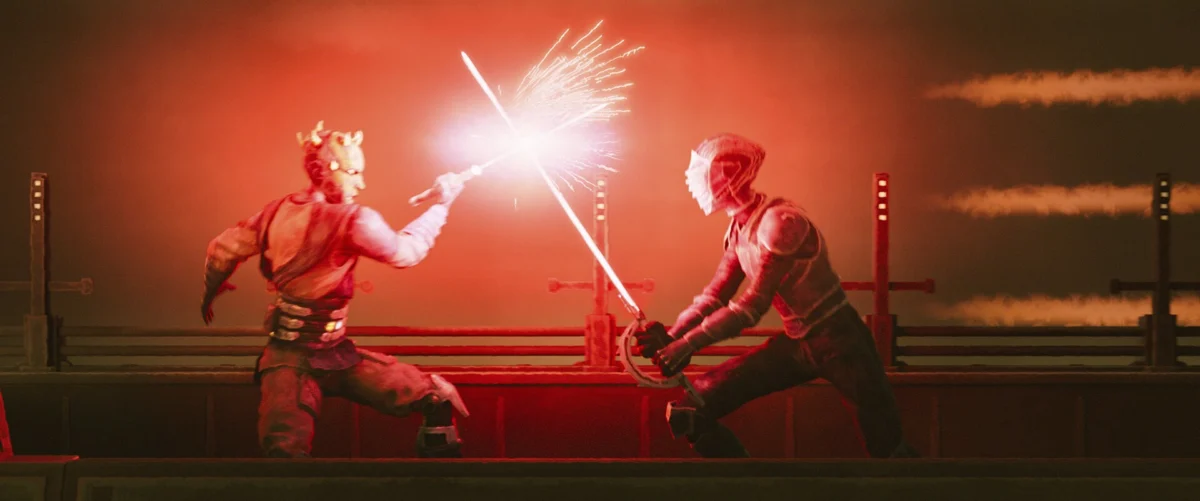
Beyond the narrative stakes, Maul — Shadow Lord is poised to redefine the visual language of Star Wars animation. Led by Director of Photography Joel Aron, who previously pushed the boundaries of the medium with The Bad Batch, the series adopts a unique, textured, and "painterly" aesthetic.
The production team moved away from purely digital rendering, incorporating oil-on-canvas matte paintings, manual brushwork on glass panes, and even practical, hand-built models for various starships. This deliberate, tactile approach gives the show a grittier, more visceral quality. "We wanted a look that felt grounded," explained Executive Producer Athena Yvette Portillo. "By using these traditional techniques, we were able to create a world that feels less like a sterile simulation and more like a living, breathing canvas."
This aesthetic extends to the lightsaber combat, which has been reimagined as a raw, dangerous affair. The lightsaber blades are animated with visible, aggressive brushstrokes, making them appear less like elegant tools and more like raging fires tearing through the atmosphere. Sound designer David W. Collins further elevated this intensity by weaving actor Sam Witwer’s actual, guttural screams into the audio signature of the lightsaber swings, ensuring that every clash of blades carries the emotional weight of Maul’s hatred.

Production Philosophy: A Serialized Challenge
Unlike the episodic, "mission-of-the-week" structure that defined much of The Clone Wars or The Bad Batch, Maul — Shadow Lord is a fully serialized drama. Every episode is tethered to the next, creating a continuous narrative flow that necessitated a complete overhaul of the Lucasfilm production pipeline.
"Serialization brings a level of complexity that we hadn’t navigated to this extent before," Portillo noted. "We couldn’t have episodes feeling disparate in quality. We implemented a new post-production ‘taste-testing’ process, where we would constantly revisit earlier episodes, refining them based on the lessons we learned as the season progressed. It was essentially like cooking—constantly adjusting the spices to ensure the flavor profile was consistent from start to finish."
This dedication to consistency allowed the team to explore themes that are far darker and more mature than previous animated efforts. By removing the clear-cut divide between traditional heroes and villains, the writers have created a world where characters—including a rigid detective and his droid partner, and a conflicted Jedi Padawan named Devon—must navigate a galaxy where the light is fading, and the Empire is the only absolute evil.
Voices of the Force: Sam Witwer on Maul’s Psyche
Sam Witwer, who has been the voice of Maul since 2010, remains the soul of the character. For Witwer, Shadow Lord is the culmination of years of internalizing Maul’s pain.

"It’s been a real surprise that the character continues to evolve and to grow," Witwer told IndieWire. "The fun of it is reinventing him every time we bring him out and learning new things about him. I’ve always had a lot of questions about Maul, and now I feel like I finally have the full vision of his arc for the first time in my life."
Witwer describes the Maul of Shadow Lord as a figure in the midst of an identity crisis. No longer merely a vessel for vengeance, he is a character grappling with the void left by the loss of his family and home. The show positions him as a dark mirror to Ahsoka Tano—both were cast out by the institutions they served, and both are survivors of galactic upheaval. However, while Ahsoka seeks to mend the wounds of the galaxy, Maul’s path is one of tragic, inevitable decay.
The Looming Shadow: The Empire’s Role
A crucial creative decision was how to position the Galactic Empire. Following the gritty, street-level depiction of Imperial oppression in Andor, the creators of Shadow Lord sought a different approach. They chose to keep the Empire at "arm’s length"—a menacing, omnipresent threat that looms over the characters like a thunderstorm on the horizon.
"We wanted to make it a menacing, strong, external force that would come in at the right time to push the story forward," said showrunner Matt Michnovetz. By keeping the Empire as a background force, the show explores how ordinary citizens and outcasts like Maul perceive the "order" brought by the Emperor. Some characters believe the propaganda, while others are terrified of the encroaching silence that follows an Imperial arrival.

Implications for the Future
Maul — Shadow Lord represents a pivot point for the Star Wars franchise. By focusing on a character defined by his failures and his relentless search for meaning, Lucasfilm is demonstrating that the "villains" of the galaxy possess just as much, if not more, dramatic potential as the heroes.
The series promises to be an intense, psychological exploration of what happens when a character who has lost everything tries to rebuild his life in a world that wants him erased. Whether or not Maul finds a shred of redemption is secondary to the journey itself—a testament to the enduring power of the character. As long as there is Star Wars, it seems that the galaxy’s most tragic figure will continue to find ways to return, to struggle, and to leave his mark on the shadows of the Force.
With its innovative visual style, deep-dive into canonical lore, and a commitment to serialized storytelling, Maul — Shadow Lord is not just a show about a Sith; it is a profound meditation on the nature of loss, the weight of the past, and the terrifying, beautiful complexity of a man who refuses to stay dead.