
The Global Phenomenon: How ‘KPop Demon Hunters’ Conquered Both the Streamer and the Charts
In the rapidly evolving landscape of streaming entertainment, few projects have managed to bridge the gap between niche musical subculture and mainstream global dominance quite like Netflix’s animated sensation, KPop Demon Hunters. Directed by Maggie Kang and Chris Appelhans, the film has defied the traditional boundaries of the “animated musical” genre, transforming from a quirky concept into a legitimate pop-culture powerhouse that currently dictates the pulse of the Billboard charts.
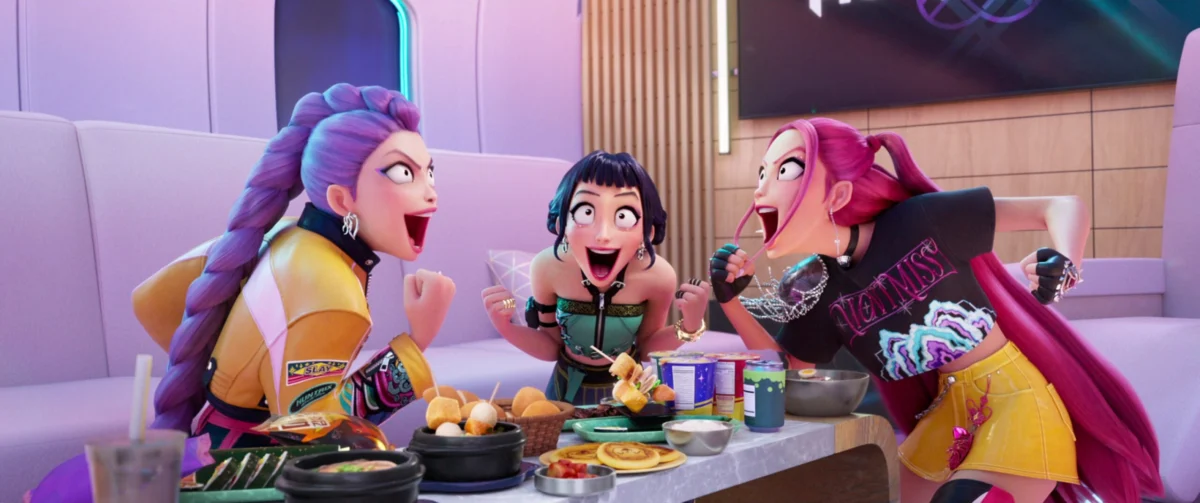
At its core, the film follows the high-stakes lives of Rumi (voiced by Arden Cho), Mira (May Hong), and Zoey (Ji-young Yoo)—three members of the rising K-pop sensation Huntr/x. By day, they navigate the grueling demands of idol life; by night, they moonlight as elite demon hunters. The stakes escalate when the Saja Boys, a rival boy band, emerge as the primary antagonists—revealed to be literal demons. The result is a narrative that balances the meticulous choreography of stage performance with the kinetic, high-octane energy of supernatural action.
A Meteoric Rise: From Premiere to Global Dominance
Since its debut on June 20, KPop Demon Hunters has demonstrated a rare level of sustained audience engagement. According to Netflix’s internal data for the week ending July 13, the film has spent four consecutive weeks in the Netflix Global Top 10 (English), racking up an impressive 40,400,000 hours viewed.

The film’s trajectory has been nothing short of surgical in its efficiency. After briefly ceding the #1 spot to the high-profile action sequel The Old Guard 2 last week, KPop Demon Hunters reclaimed the top position, signaling a rare “long tail” of success typically reserved for major live-action blockbusters. This performance is particularly noteworthy given the current saturation of the streaming market, proving that the blend of K-pop aesthetics and animation has hit a cultural nerve that resonates far beyond the traditional animation demographic.
The Sonic Strategy: Building an Authentic K-Pop Universe
While the animation quality and character design are central to the film’s success, the true engine driving its longevity is its soundtrack. Under the guidance of executive music producer Ian Eisendrath, the production team made a conscious, risky decision: they did not want to create “soundalike” music. They wanted to create a bona fide K-pop album that could stand on its own merits.
“The directive was very much, ‘We want to create a soundtrack of real K-pop hits,’” Eisendrath told IndieWire. “This is not one of those films where it’s like, ‘Let’s hire some people to write in the style of it.’ This soundtrack needed to land and exist as a K-pop album.”

This ambition necessitated a unique production workflow. Instead of composing songs specifically to fit pre-existing scenes, Eisendrath and his team, in collaboration with Spring at Sony and the legendary South Korean label The Black Label, treated the music as an independent entity. They assembled an "army" of industry experts—including Stephen Kirk, Jenna Andrews, Lindgren, Ejae, and Mark Sonnenblick—to engage in the kind of collaborative "song camps" that are standard in real-world K-pop production but nearly unheard of in the animation industry.
Chronology of a Hit: The "Golden" Touch
The success of the single “Golden” serves as a masterclass in modern music marketing. Currently sitting at #1 on both the Billboard Global 200 and Billboard Global Excluding U.S. charts, the song has become the definitive anthem of the summer. However, its path to the top was arduous.
Eisendrath reveals that “Golden” underwent seven distinct iterations and involved five different writers before reaching its final form. “It had to fulfill the function of an ‘I want’ song—establishing the characters’ mission—while also needing to be a chart-topping pop track,” he explained. The complexity of the song lies in its narrative duality; it serves as a triumphant pop anthem on the surface, but lyrically, it hides the subtext of Rumi’s internal struggle as a demon hunter.

The track was the final piece of the puzzle, recorded as late as December of the previous year—a high-pressure timeline for an animated project that typically requires long lead times for lip-syncing and animation timing. The gamble paid off, as Netflix is now preparing to submit “Golden” for various awards consideration, a testament to the song’s genuine musical impact.
The Rivalry: "Your Idol" and the Spotify Records
The film’s success is further bolstered by the Saja Boys, the antagonists of the piece. Their signature track, “Your Idol,” has achieved a milestone that has left industry analysts stunned: it recently topped the US Spotify chart, surpassing the streaming numbers of global heavyweights like BTS.
This accomplishment speaks to the "double-meaning" strategy employed by the production team. For the song “Soda Pop,” the goal was to craft a track that felt sweet and saccharine enough to lure fans in, while hiding darker, more sinister intent in the lyrics. “It’s like meeting the demons as innocent, naive seductors,” Eisendrath notes. This level of meta-textual depth—where the music informs the narrative and the narrative informs the music—has turned the KPop Demon Hunters soundtrack into an interactive experience for fans, who have taken to social media to decode the lyrics and recreate the choreography.

Industry Implications and Cultural Resonance
The influence of the film has migrated from the screen to the real world with startling speed. The emergence of YouTube covers and the viral spread of the film’s dance routines on TikTok indicate that KPop Demon Hunters has successfully tapped into the participatory nature of K-pop fandom.
When asked about the validation of seeing real-world idols, including members of BTS, referencing the film’s music on live streams, Eisendrath expressed both humility and pride. “We were trying to create something that the Korean culture would feel like was created by them, and also that they loved,” he said. The fact that the film’s creative heart was driven by director Maggie Kang, who has been a lifelong devotee of the genre, provided the project with a level of cultural authenticity that prevented it from feeling like a hollow corporate appropriation of K-pop.
Looking Forward: The Sequel Question
As the film continues to dominate global metrics, the conversation has naturally shifted toward a potential sequel. While Netflix has yet to make a formal announcement regarding a follow-up, the creative team has left the door wide open.

“I would love it. It would be a dream. I could do this forever,” Eisendrath stated.
The success of KPop Demon Hunters serves as a case study for future animated projects. It demonstrates that when a production team respects the nuances of a musical genre—rather than merely utilizing it as a backdrop—the result is an organic, self-sustaining ecosystem of content. By prioritizing the creation of a legitimate, high-quality music album alongside the visual narrative, Netflix has not just released a film; they have successfully launched a new, albeit fictional, musical juggernaut.
Whether or not we see a KPop Demon Hunters 2, the impact of this film will likely be felt for years to come. It has redefined the expectations for animated musicals and provided a blueprint for how cross-media synergy can turn a simple streaming release into a global cultural moment. For now, the Huntr/x trio remains at the top of the charts, and audiences appear to be in no rush for them to vacate their spot.