
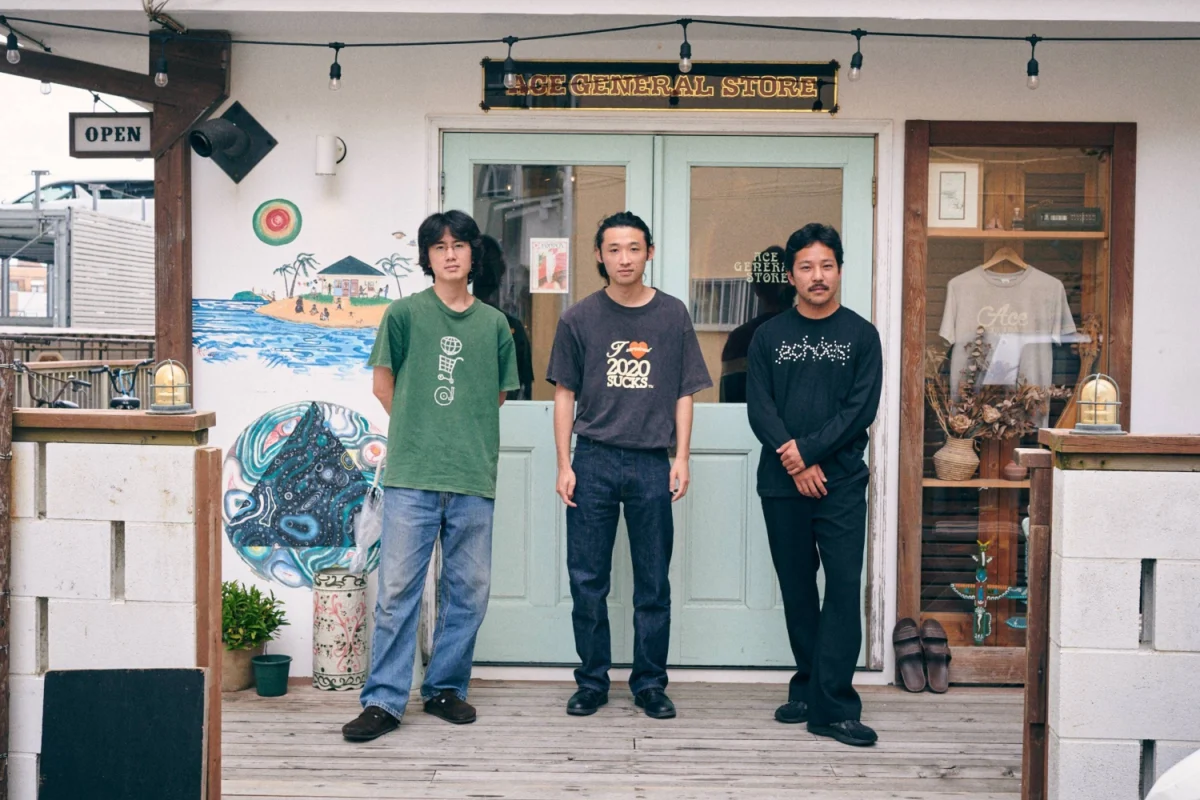
The Sound of Solitude: How Maya Ongaku is Redefining Japan’s Independent Music Scene
In an industry often characterized by hyper-curated idol groups and the suffocating bureaucracy of major record labels, a quiet revolution is emerging from the sun-drenched shores of the Shonan Coast. Maya Ongaku—a trio comprising Tsutomu Sonoda, Shoei Ikeda, and Ryota Takano—is proving that in the digital age, resonance is more powerful than volume. Their brand of hypnotic, mellow psychedelic rock has transcended the borders of Japan, garnering international acclaim while operating entirely outside the "rigid system" that has long dictated the rhythm of the Japanese music industry.
The Main Facts: A Paradigm Shift in Independence
Maya Ongaku is not your typical breakout success story. There are no high-budget music videos, no aggressive marketing campaigns, and no corporate backing. Instead, the group relies on a philosophy of organic growth and creative autonomy. The trio, all in their late 20s, have spent the last few years meticulously crafting an aesthetic that feels both timeless and distinctly modern.
The band’s sound—a seamless blend of experimental folk, ambient textures, and psychedelic rock—has found an audience that spans from Tokyo’s intimate basement venues to the stages of the United States. At the heart of their philosophy is the "DIY" (Do-It-Yourself) ethos, a concept that is frequently touted in music but rarely practiced with such total commitment in the Japanese market. By self-recording their music, managing their own bookings, and orchestrating their international tours, Maya Ongaku has become a case study in modern artistic sovereignty.
Chronology: From Shonan Childhood to Global Stages
The roots of Maya Ongaku are planted firmly in the geography of their upbringing. Having grown up together on the Shonan Coast—a region south of Tokyo famous for its surf culture and relaxed pace—Sonoda, Ikeda, and Takano share a non-verbal understanding that permeates their compositions.
- Formative Years: The trio’s friendship dates back to their school days, a period where they began exploring music not as a career path, but as a shared language.
- The "Rigid System" Realization: As they entered their early 20s, the members observed the limitations of the traditional Japanese music industry. They noted that many independent bands were, in fact, "recycled" products of major labels. They realized that to maintain their creative integrity, they would need to sidestep the label infrastructure entirely.
- The Launch of Maya Ongaku: The group officially coalesced, focusing on a sound that prioritized atmosphere over technical aggression. They spent their early years refining their recording process in home studios, shunning the pressure of major-label studio cycles.
- The International Breakthrough: Last year, the band took their most ambitious step yet: organizing their first tour of the United States. Without the infrastructure of a global agency, the tour served as a testament to their dedication, proving that a band from Japan could navigate international markets through grassroots networking and digital community-building.
Supporting Data: The Independent Landscape in Japan
To understand the significance of Maya Ongaku’s trajectory, one must look at the data surrounding the Japanese music market. Traditionally, the Japanese industry is dominated by a few massive talent agencies and major labels that control distribution, promotion, and venue access.
According to industry trends, while digital streaming has lowered the barrier to entry for many artists, the "incumbency advantage" remains high. Most successful Japanese acts follow a path of local discovery followed by a major label signing. However, recent data from streaming platforms suggests a growing appetite for "genre-fluid" and "bedroom-produced" music, which aligns perfectly with Maya Ongaku’s output.
In 2023, independent music consumption in Japan saw a 14% year-on-year increase. Maya Ongaku’s success is a microcosm of this trend, proving that audiences are increasingly looking for authenticity over polish. By bypassing the traditional gatekeepers, the band has successfully retained 100% of their creative rights and a significant majority of their streaming revenue—a rarity in a country where "360-degree" deals are the standard.
Official Perspectives: The Philosophy of Autonomy
In a rare interview, guitarist and vocalist Tsutomu Sonoda provided insight into the band’s motivation. "There are bands doing things DIY-style who we think are cool," Sonoda notes, "but most of them used to be signed to bigger labels, which is how they made their name. There aren’t so many people who are taking the DIY route right from the start."
This distinction is crucial. By starting from a point of total independence, Maya Ongaku avoids the "identity crisis" that often plagues bands who try to pivot from corporate-mandated sounds to personal ones. Their approach is not merely a business strategy; it is an existential choice.

"We don’t need to turn up the volume to make a statement," the band has stated in previous press briefings. Their music, which often features long, meditative instrumental passages, is designed to exist in the spaces between the noise of modern life. They argue that the pressure to constantly produce content for social media is the "new rigid system," and they actively resist it by prioritizing the quality of the song over the frequency of the release.
Implications: A Blueprint for the Future
The success of Maya Ongaku carries significant implications for the future of the Japanese music industry. Their path suggests that the "major label or bust" mentality is becoming obsolete.
1. The Decentralization of Talent
Maya Ongaku represents a shift toward decentralization. As technology continues to democratize recording and distribution, the reliance on label-owned studios and PR departments is diminishing. For younger artists, the trio serves as a beacon, showing that it is possible to maintain a career without sacrificing one’s vision to a corporate board.
2. The Global-Local Hybrid
The band’s success also challenges the notion that Japanese music must be "Westernized" to succeed globally. By staying true to their Shonan roots and their specific, mellow sound, they have actually become more attractive to international listeners who are fatigued by the hyper-produced, homogenous sound often exported by major labels.
3. The Sustainability of the Artist
Perhaps most importantly, Maya Ongaku highlights the issue of sustainability. By keeping their operation small and self-contained, they have avoided the burnout that often accompanies the "idol" production model. They are in control of their schedule, their sound, and their future.
Conclusion: The Quiet Revolution
Maya Ongaku is more than a band; they are a proof-of-concept for a new way of existing within the arts. In a world where the volume of information—and misinformation—is deafening, they have chosen the path of the whisper.
Their story is a vital reminder that quality journalism and artistic integrity require the same thing: a commitment to the truth of one’s experience, even when it isn’t the most profitable or convenient path. As they continue to tour and record, the members of Maya Ongaku remain, as they have always been, in control of their own horizon. They are not just making music; they are carving out a space for the next generation of independent artists to thrive in the shadows of the giants.
For those who listen closely, the message is clear: the most important waves are the ones you make yourself.