Festival Dispatches: Inside the 60th Karlovy Vary International Film Festival’s Final Act
Main Facts: A Landmark Anniversary and Global Cinema Showcase
The picturesque, historic spa town of Karlovy Vary in the Czech Republic has once again transformed into the beating heart of European cinema. The occasion is the momentous 60th edition of the Karlovy Vary International Film Festival (KVIFF), an event that continues to cement its reputation as a crucial bridge between Eastern European cinematic traditions and the broader international festival circuit.
Reporting from the ground for Film Comment, Editor Clinton Krute has spent the past week immersed in the milestone anniversary edition. Known historically for unearthing hidden gems within its fiercely competitive sections while serving as a strategic mid-summer stopover for major international circuit titles, this year’s KVIFF has proved no exception. Blending fresh talent with retrospective reverence, the 60th edition features a special sidebar celebrating historical highlights from the festival’s illustrious past—stretching all the way back to the era when the event rotated its home with Moscow every alternate year.
For the third and final installment of the Film Comment Podcast coming out of the festival, Krute sat down with prominent film critics and regular podcast contributors Robert Daniels of RogerEbert.com and Guy Lodge of Variety. Together, the trio unpacked the closing days of the festival, zeroing in on a wave of buzzed-about regional features, boundary-pushing debuts, and powerhouse international collaborations that dominated festival conversations.
At the forefront of the discussion were two distinct Eastern European works: Kristina Grozeva and Petar Valchanov’s darkly comedic Black Money for White Nights, and Martina Buchelová’s award-winning debut feature, Lover, Not a Fighter, which captured the festival’s prestigious Proxima Competition Grand Prix. Beyond these regional highlights, the panel expanded their critical lens to global discoveries, including Shuntaro Uchida’s gripping Japanese drama Incinerator and Hijamat, a politically charged Iranian-backed feature written and directed by Nader Saeivar and edited by the legendary Jafar Panahi.
Chronology: A Week of Discovery at the 60th KVIFF
To understand the trajectory of the 60th Karlovy Vary International Film Festival, one must trace the deliberate pacing of its programming, which balances high-profile galas with meticulous underground discoveries.
Early-Week Foundations and Retrospective Context
As the festival opened its doors for its diamond jubilee, attendees were immediately greeted by a robust retrospective sidebar. This carefully curated program offered a window into KVIFF’s complex geopolitical history. Older cinephiles and young critics alike were reminded of the festival’s dual identity: a glamorous post-war social hub nestled among thermal springs, and a crucial Cold War arena for Eastern Bloc cultural exchange.
As the week progressed, the Main Competition and the experimental Proxima sections began to yield their standout titles. While major international festival players dropped by to test the waters ahead of the late-summer and autumn Venice-Toronto pipeline, the true cultural currency of KVIFF remained its penchant for championing under-represented regional cinema.
The Final Days: Critics Converge on Bulgarian Cinema
In the closing days of the festival, the critical consensus began to coalesce around a specific national wave—namely, a resurgence in compelling, idiosyncratic Bulgarian filmmaking.
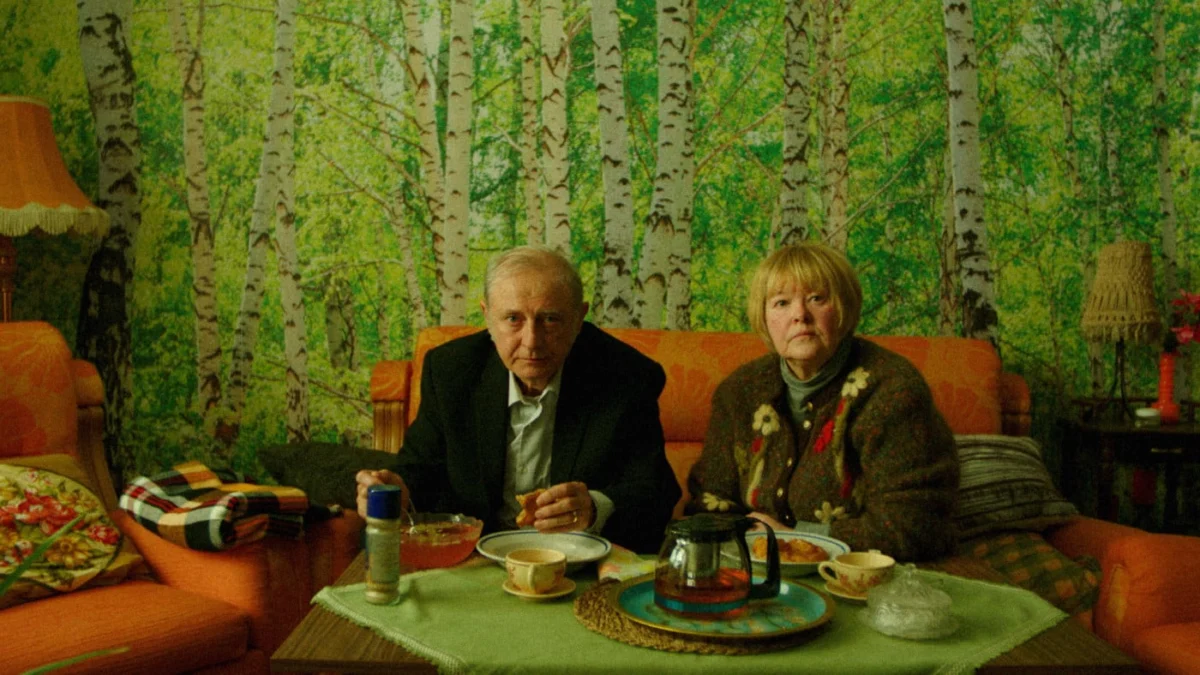
On the podcast, Robert Daniels and Guy Lodge focused heavily on Kristina Grozeva and Petar Valchanov’s Black Money for White Nights. Known for their sharp societal observations and tragicomic sensibilities, the directing duo delivered another masterclass in navigating contemporary economic anxieties through a darkly humorous lens.
Simultaneously, attention shifted toward the Proxima Competition, where Martina Buchelová’s feature debut, Lover, Not a Fighter, emerged as a critical darling before ultimately taking home the Proxima Grand Prix. Buchelová’s film injected a fresh, youthful, and uncompromisingly observant energy into the festival’s second-tier competition, signaling the arrival of a major new voice in European independent cinema.
Closing-Day Discoveries from Asia and the Middle East
As the festival drew to its inevitable close, the scope widened far beyond Eastern Europe. Robert Daniels introduced festival-goers and podcast listeners to Shuntaro Uchida’s Incinerator, a Japanese drama that examines systemic decay and moral collapse with stark visual patience.
Finally, the festival’s international dialogue culminated in a deep-dive conversation between Lodge and Daniels regarding Hijamat. Written and directed by Nader Saeivar and shaped by the visionary editorial hand of Jafar Panahi, Hijamat stood as one of the most politically urgent and formally rigorous viewing experiences of the final days, blending regional specificity with universal themes of surveillance, dissent, and survival.
Supporting Data: Highlights from the Film Comment Podcast Panel
To contextualize the critical reception of these key titles, the following breakdown maps the focal points of the final Film Comment podcast episode, complete in-depth thematic highlights, and festival placement.
| Film Title | Director(s) / Key Collaborators | Festival Section / Award | Critical Focus & Podcast Timestamp |
|---|---|---|---|
| Black Money for White Nights | Kristina Grozeva, Petar Valchanov | Official Selection / Showcase | Explored via a dark comedic lens, highlighting systemic ironies and societal pressures (Timestamp: 04:24). |
| Lover, Not a Fighter | Martina Buchelová | Proxima Competition | Winner of the Proxima Competition Grand Prix. Praised as a standout debut feature (Timestamp: 13:28). |
| Incinerator | Shuntaro Uchida | International Competition / Showcase | Analyzed by Robert Daniels as a profound, quietly devastating Japanese drama (Timestamp: 20:49). |
| Hijamat | Nader Saeivar (Writer/Director), Jafar Panahi (Editor) | International Showcase | Deeply examined by Guy Lodge and Robert Daniels for its political urgency and masterful editing (Timestamp: 26:30). |
The data points illustrate KVIFF’s ongoing dual mandate: honoring established arthouse auteurs who continue to find innovative ways to bypass censorship and economic hardship, while aggressively scouting raw, debut talent through platforms like the Proxima section.
Official Responses and Critical Consensus
While KVIFF is fundamentally a celebration of cinema rather than a corporate trade summit, the official responses from juries, filmmakers, and the critical establishment shed light on the cultural health of the industry in 2026.
The Proxima Triumph: Martina Buchelová’s Ascent
The awarding of the Proxima Grand Prix to Martina Buchelová for Lover, Not a Fighter was met with widespread critical enthusiasm. The Proxima section has long served as KVIFF’s incubator for daring, boundary-pushing visions that challenge traditional narrative structures. In official statements following her win, festival programmers emphasized that Buchelová’s ability to balance raw emotional vulnerability with structural precision made her film an undeniable unanimous choice for the jury.
Critics like Guy Lodge noted on the Film Comment podcast that Lover, Not a Fighter avoids the common pitfalls of first-time features—namely, over-indulgence and structural wandering. Instead, the film presents a taut, finely observed narrative that marks Buchelová as a talent to watch far beyond the borders of Central Europe.
The Grozeva and Valchanov Brand of Dark Comedy
Kristina Grozeva and Petar Valchanov have cultivated a fiercely loyal following on the international festival circuit for their deadpan explorations of bureaucratic absurdity and moral compromise in modern Bulgaria. Official reactions to Black Money for White Nights confirmed that the directing duo has lost none of their satirical edge.
Robert Daniels observed on the podcast that the filmmakers possess a rare gift for making systemic corruption feel simultaneously intimate and absurdly hilarious. Their work acts as an unofficial barometer for public anxieties in Eastern Europe, grounding high-concept moral dilemmas in recognizable, everyday human behaviors.
The Geopolitical Weight of Hijamat
Perhaps the most politically resonant discussion of the podcast centered on Hijamat, directed by Nader Saeivar and edited by Jafar Panahi. In the wake of ongoing creative suppression and political turmoil in Iran, the film serves as a testament to the resilience of underground cinema.
While official Iranian state channels routinely attempt to silence independent creators, the global film community—catalyzed by festivals like Karlovy Vary—continues to offer a vital megaphone. Guy Lodge and Robert Daniels emphasized that Panahi’s involvement as an editor goes beyond a mere honorary title; his structural sensibilities are deeply stamped into the film’s tense, claustrophobic pacing. Hijamat was praised not merely as a political artifact, but as a triumph of narrative tension that operates effectively regardless of the viewer’s familiarity with its geopolitical backdrop.
Implications: What the 60th KVIFF Means for the Future of Global Cinema
As the 60th edition of the Karlovy Vary International Film Festival draws to a close, its broader implications for the global film industry are becoming increasingly clear.
1. The Decentralization of Art-House Cinema
For decades, major European festivals were hyper-concentrated around the "Big Three" (Cannes, Venice, Berlin). However, anniversaries like KVIFF’s diamond jubilee underscore the vital role played by tier-one regional festivals in sustaining the international arthouse ecosystem. By providing a platform for works like Black Money for White Nights, Lover, Not a Fighter, and Incinerator, Karlovy Vary acts as a vital filtering mechanism. It ensures that films which might otherwise get lost in the shuffle of larger markets receive the critical oxygen necessary to secure global distribution.
2. The Resilience of Border-Crossing Collaborations
The inclusion and critical acclaim of Hijamat highlight an encouraging industry trend: the strengthening of cross-border artistic alliances in the face of state-sponsored censorship. When artists like Jafar Panahi lend their talents to younger or marginalized voices like Nader Saeivar, it creates a generational safety net for cinema. These collaborations ensure that regional stories with universal implications continue to cross borders, bypassing physical and political blockades to find eager audiences in spa towns in the Czech Republic and beyond.
3. A Vibrant Future for Regional Eastern European Voices
The prominent showing of Bulgarian and Central European cinema at this year’s KVIFF debunks the persistent myth that regional European cinemas are creatively stagnant. Through the clever satire of Grozeva and Valchanov and the fresh, uncompromising perspective of Martina Buchelová, the region is experiencing a generational handoff. Younger filmmakers are proving adept at subverting traditional genres—turning dark comedy and social realism into incisive tools for cultural critique.
As Film Comment concludes its on-the-ground reporting from the Czech Republic, the 60th Karlovy Vary International Film Festival leaves behind a clear message: despite shifting economic landscapes and global political turbulence, the appetite for adventurous, daring, and deeply human storytelling remains entirely undiminished. Cinephiles looking to stay ahead of the curve for the remainder of the 2026 festival calendar would do well to mark down the titles championed in the spa town this summer.