Japan Eyes Historic Defense Spending Leap: Tokyo Weighs 3.5% GDP Target to Align with Global Security Realities
TOKYO — In a move that signals a profound shift in Japan’s post-war security posture, the administration of Prime Minister Sanae Takaichi is reportedly exploring a dramatic increase in the nation’s defense budget. Sources familiar with internal government deliberations suggest that Tokyo is actively considering a midterm target of 3.5% of its gross domestic product (GDP) for defense spending—a figure that would place Japan firmly in line with the ambitious benchmarks set by its closest Western allies and NATO members.
The proposal, which has been discussed in preliminary meetings between Japanese defense officials and their counterparts in the United States, represents a potential "tectonic shift" in Tokyo’s fiscal priorities. If realized, the policy would be a significant escalation from the current trajectory, which has already seen defense spending climb toward the long-standing, albeit recently adjusted, goal of 2% of GDP.
The Strategic Shift: Contextualizing the 3.5% Benchmark
For decades, Japan maintained a de facto cap on defense spending at approximately 1% of its GDP—a cornerstone of its pacifist identity and constitutional constraints. However, the rapidly evolving security environment in the Indo-Pacific, characterized by heightened tensions over the Taiwan Strait, the modernization of the Chinese military, and North Korea’s relentless pursuit of nuclear-capable ballistic missiles, has forced a recalibration of Tokyo’s strategic calculus.
Under the leadership of Prime Minister Takaichi, Japan has adopted a more assertive stance, emphasizing "integrated deterrence." The move toward a 3.5% target is viewed by proponents as a necessary step to modernize the Japan Self-Defense Forces (JSDF), enhance cyber and space capabilities, and procure long-range strike assets that were previously considered beyond the scope of Japan’s defensive doctrine.
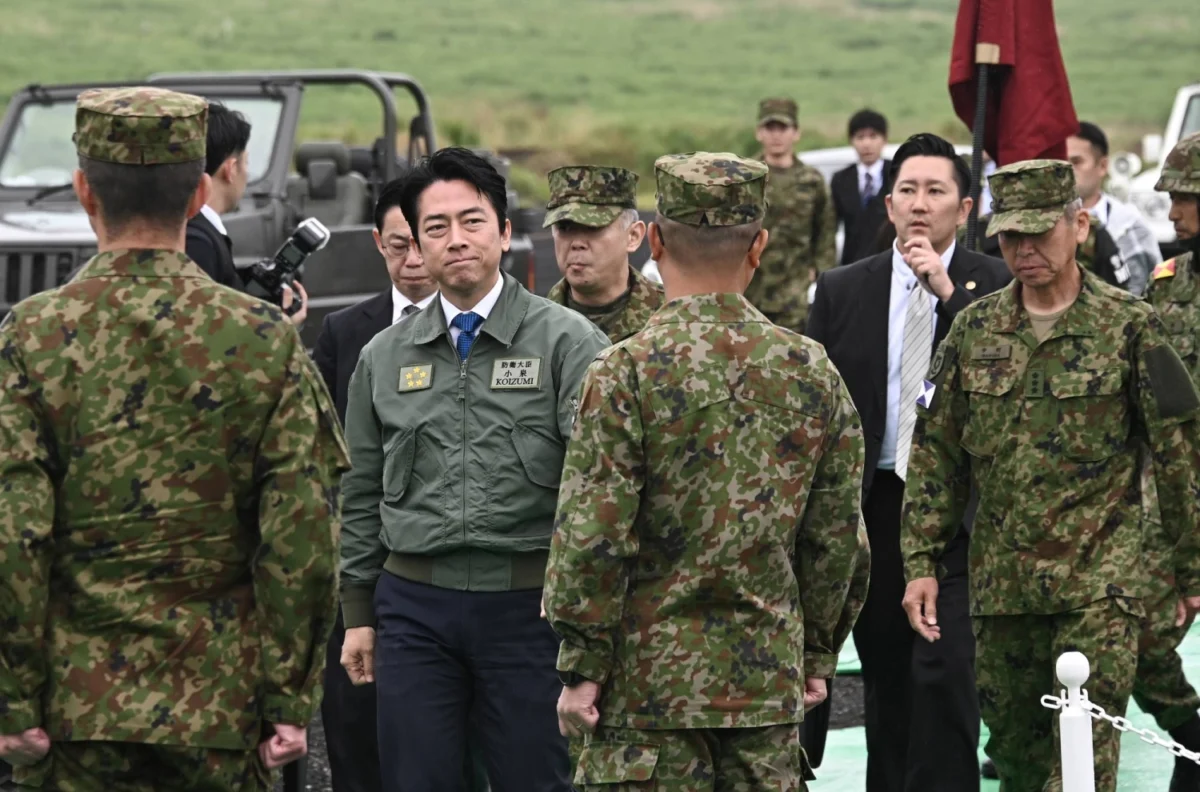
Defense Minister Shinjiro Koizumi, who has been a visible proponent of this modernized defense posture, was recently seen inspecting live-fire exercises in Gotemba, Shizuoka Prefecture. His presence at these drills underscores the government’s commitment to operational readiness and its willingness to invest heavily in hardware and training to meet the challenges of the coming decade.
Chronology: From 1% Caps to Regional Power Projection
To understand the magnitude of this potential policy, one must look at the recent evolution of Japanese defense funding:
- 1976 – 2022: The era of the "1% of GDP" ceiling. While often breached by marginal amounts, this soft limit served as the symbolic boundary for Japan’s defense budget for nearly half a century.
- December 2022: The Kishida administration issues a new National Security Strategy, aiming to reach 2% of GDP for defense by 2027. This was the first major break from the established status quo in decades.
- June 2026: Defense Minister Shinjiro Koizumi oversees large-scale live-fire exercises in Shizuoka, signaling a shift toward higher-intensity warfare training.
- September 2026: Reports emerge that the Takaichi administration is debating a new, more aggressive 3.5% midterm target, aiming for full implementation over the next ten years.
This progression demonstrates a clear, accelerating trend toward a more robust military footprint, driven by the belief that the current regional status quo is unsustainable.
Supporting Data: The Fiscal Reality of Security
The debate over the 3.5% target is not merely about security; it is a profound economic question. Japan is currently grappling with one of the highest debt-to-GDP ratios in the developed world. A leap to 3.5%—a target that would place Japan among the highest spenders in the world relative to its economy—raises significant questions about fiscal sustainability.
Comparative Defense Spending (Estimates)
| Country | 2025/26 Defense Spending (% of GDP) |
|---|---|
| United States | ~3.3% |
| South Korea | ~2.8% (Targeting 3.5% by 2036) |
| Japan (Current) | ~2.0% |
| Japan (Proposed) | 3.5% |
The choice of 3.5% is not arbitrary; it mirrors the aspirations of South Korea, which has also been pressured by the regional security climate to bolster its defense infrastructure. By aligning with the 3.5% benchmark, Tokyo is signaling to Washington that it is prepared to move from being a "regional partner" to a "tier-one security provider" in the Pacific.
Official Responses and Political Friction
The prospect of such a massive budgetary increase has sent ripples of anxiety through the Japanese financial sector. Investors, already concerned about Prime Minister Takaichi’s broader economic agenda—which focuses on aggressive growth and structural reform—are wary of how this expenditure will be funded.

"The markets are looking for fiscal discipline," says Hiroshi Tanaka, a senior economist at a Tokyo-based investment firm. "While there is broad consensus on the need for security, the question of ‘how’ this will be paid for—through taxes, bond issuance, or cuts to social welfare—is the primary driver of current volatility."
Within the Diet, the opposition has voiced skepticism. Critics argue that a 3.5% target, if not matched by a coherent diplomatic strategy, could lead to a regional arms race. "We are seeing a trend toward ‘security-first’ politics that threatens to cannibalize the funds needed for education, aging-population care, and innovation," said a spokesperson for the opposition party.
Conversely, supporters within the Liberal Democratic Party (LDP) emphasize that the cost of inaction is far higher. They argue that the global shift toward protectionism and the erosion of international norms require Japan to be self-reliant in a way it has never been before.
Implications: A New Era of Japanese Power
The implications of a 3.5% defense spending target extend far beyond the Ministry of Finance’s ledgers.
1. Geopolitical Realignment
By signaling its intent to match NATO-level spending, Japan is effectively integrating itself more deeply into the Western security architecture. This will likely lead to deeper intelligence-sharing agreements, joint procurement programs with European allies, and a more permanent and robust role for the JSDF in international maritime security.
2. Market Volatility and Sovereign Debt
The primary risk is the impact on the Yen and Japanese Government Bonds (JGBs). If the administration opts to fund this increase through debt, the Bank of Japan may face intense pressure to maintain yield curve control, potentially creating a feedback loop of inflation and currency devaluation. Investors are waiting for the mid-year budget review to see if Takaichi will propose a tax hike to offset these costs.
3. Regional Dynamics
China’s response will be the most significant variable. Beijing has consistently warned against the "remilitarization" of Japan. A 3.5% GDP target will likely be framed by Chinese state media as a violation of Japan’s pacifist constitution, potentially leading to increased "gray zone" activities in the East China Sea as a form of diplomatic leverage.
4. The U.S.-Japan Alliance
For Washington, this is a long-sought objective. Successive U.S. administrations have urged Japan to shoulder more of the burden for its own defense. A 3.5% target would essentially satisfy the most stringent requirements of the U.S. security establishment, potentially allowing the U.S. to focus more of its resources on other global hot spots while Tokyo secures the first island chain.
Conclusion: The Path Ahead
The deliberation over a 3.5% defense spending target marks a turning point in Japan’s modern history. It is a decision that forces the nation to confront the trade-offs between its economic stability and its regional security. As the Takaichi administration prepares for the upcoming fiscal cycle, the world will be watching to see if Japan can balance the fiscal requirements of a major power with the democratic demands of its citizens.
Whether this represents a return to a more aggressive nationalist policy or a pragmatic adaptation to a dangerous world remains the subject of intense debate. What is clear, however, is that the era of "defensive minimalism" in Tokyo is rapidly coming to an end. The path toward a 3.5% GDP defense budget is not just a policy proposal—it is a redefinition of what it means to be a global power in the 21st century.