Star-Studded Exhaustion and Artistic Vision: ‘Paper Tiger’ Kicks Off the 64th New York Film Festival
Main Facts: A High-Profile Opening Night at Lincoln Center
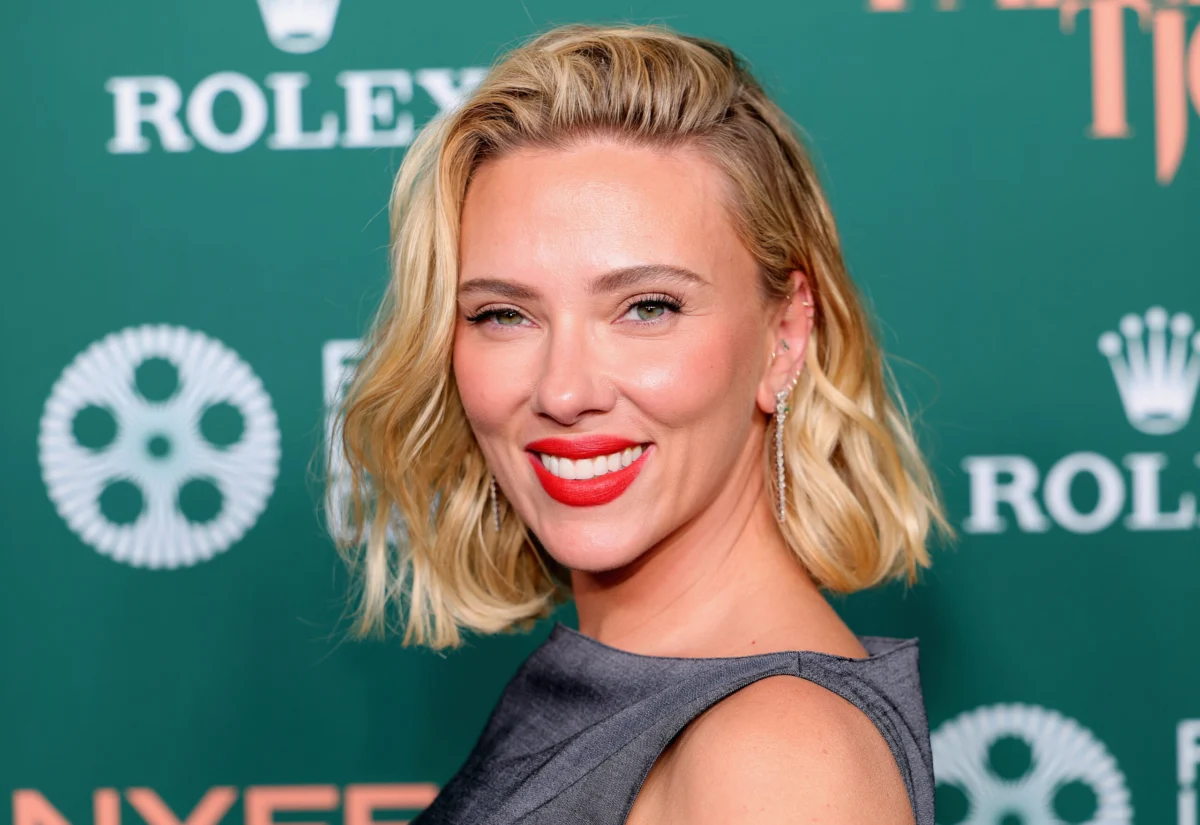
The 64th edition of the prestigious New York Film Festival (NYFF) officially commenced at Lincoln Center’s Alice Tully Hall with the high-profile premiere of James Gray’s gritty 1980s crime drama, Paper Tiger. Bringing together Hollywood heavyweights Scarlett Johansson, Adam Driver, and Miles Teller alongside director Gray, the opening night red carpet was a masterclass in star power. However, the evening’s most memorable unscripted moment belonged to a remarkably candid and jet-lagged Scarlett Johansson.
Fresh off a grueling international flight from the set of her latest project, Johansson humorously lamented her physical state to the packed festival audience during a post-screening Q&A. “I’m hallucinating,” Johansson joked from the stage. “It’s 5 in the morning — which is a great time to be doing an interview on stage.”
Despite her sleep deprivation, Johansson joined her co-stars to celebrate the regional debut of Paper Tiger, a project that had previously premiered in May at the illustrious Cannes Film Festival. For Johansson, however, the NYFF screening marked her very first time viewing the completed feature in a festival setting. Her absence in the French Riviera months prior was due to overlapping production schedules while she was locked in filming another upcoming feature, The Exorcist: Martyrs. When reminded of the picturesque French Riviera backdrop she missed, Johansson quipped with a laugh, “Don’t rub it in!”
Set against the gritty backdrop of 1986 New York City, Paper Tiger follows the volatile trajectory of two brothers, Irwin and Gary Pearl. Their ill-fated, get-rich-quick scheme—ostensibly designed to help clean up the notorious Gowanus Canal—quickly spirals out of control, landing them directly in the crosshairs of the ruthless Russian mafia. Johansson stars as Linda, the grounded yet resilient wife of Miles Teller’s character.
Chronology: From the French Riviera to the Heart of Manhattan
The journey of Paper Tiger to the New York Film Festival reflects the chaotic, overlapping schedules that define contemporary Hollywood production cycles.
- May: Paper Tiger makes its initial splash on the international stage, holding its world premiere at the Cannes Film Festival. While director James Gray and select members of the team walk the red carpet on the French Riviera, Scarlett Johansson is notably absent, bound to a soundstage overseas while shooting The Exorcist: Martyrs.
- September: As production wraps on her respective projects, Johansson boards a punishingly long international flight to return stateside.
- Opening Night of NYFF: Directly stepping off her flight and battling severe jet lag, Johansson reunites with Adam Driver, Miles Teller, and director James Gray at Lincoln Center’s Alice Tully Hall.
- The Screening and Q&A: Following a tightly edited and humorous introduction by Gray, the audience experiences the film for the regional kickoff of NYFF’s 64th year. The screening flows directly into a post-film discussion moderated on stage, where the cast opens up about the rare, harmonious atmosphere of the production.
- October 12: The 64th New York Film Festival is slated to run through this date, cementing its role as a premier launchpad for the autumn awards season.
Supporting Data: Festival Lineup and Production Realities
The selection of Paper Tiger as the opening night film sets the tone for a robust 64th edition of the New York Film Festival, which runs through October 12. NYFF artistic director Dennis Lim curated a slate that balances independent auteur visions with high-profile global projects.

Beyond Gray’s crime drama, the festival’s 2024–2026 programming cycle highlights several major world premieres:
- Artificial: Luca Guadagnino’s intensely buzzy feature exploring the life and trajectory of OpenAI founder Sam Altman.
- 14th: Ava DuVernay’s hard-hitting, deeply researched documentary.
- Behemoth!: Tony Gilroy’s ambitious music drama boasting a powerhouse ensemble cast featuring Pedro Pascal, Olivia Wilde, and Will Arnett.
- Godzilla Minus Zero: Takashi Yamazaki’s visually stunning kaiju sequel, continuing the legendary monster’s cinematic lineage.
The logistical framework of bringing Paper Tiger to life further underscores the changing financial and structural realities of modern American cinema. NYFF artistic director Dennis Lim noted during opening festivities that the film features an astonishing 24 executive producers credited on its roster—a testament to the complicated, highly collaborative financing models required today to bankroll personal, mid-budget auteur projects.
Official Responses: Mutual Admiration and the "Nauseatingly Lovely" Set
The chemistry translating on screen in Paper Tiger was not merely an act of professional performance; according to the cast and crew, it was a reflection of an exceptionally rare, tension-free production environment cultivated by director James Gray.
Adam Driver spoke candidly during the post-screening Q&A about the ease of stepping onto Gray’s set. “No work required. There’s a mutual admiration between the four of us,” Driver stated, emphasizing the egalitarian atmosphere. “A set culture comes from the top down, and James sets a culture where everyone feels free. We immediately felt comfortable with each other.”
James Gray, taking the microphone, leaned into self-deprecating humor while validating his actors’ sentiments. Reflecting on the positive energy among the cast, Gray remarked with a chuckle, “We had a nauseatingly lovely set. I love them. I’m not on the Today show. I’m telling you the truth.”
Gray also used his limited intro time to reflect on his humble beginnings in the industry, offering a poignant contrast to his current status as a festival-opening auteur. Recalling his entry into filmmaking, Gray shared, “When I was in film school many years ago, students would show their films, and the students that talked the most [before] often made the very worst movies. So I am going to speak very briefly.”

He added, “I can’t help but remember my mother and father when I said I wanted to be a movie director: ‘How are you ever going to do that?’ And here I am. I’m not sure the lesson in that.”
Dennis Lim, introducing Gray to the Alice Tully Hall audience, praised the director as “one of the great living American filmmakers,” lauding him for steadfastly protecting his artistic integrity in an industry increasingly dominated by risk-averse corporate formulas.
Implications: Navigating the Modern Landscape of Indie-Auteur Cinema
The opening night of the 64th New York Film Festival with Paper Tiger serves as a microcosm for the broader tensions and triumphs shaping contemporary American filmmaking.
First, the film highlights the survival of mid-budget, character-driven adult dramas. In an era where major studios routinely funnel hundreds of millions of dollars exclusively into intellectual property, cinematic universes, and franchise sequels, a gritty 1980s period piece about the Gowanus Canal and the Russian mafia is an increasingly endangered species. The presence of 24 executive producers on Paper Tiger illustrates the grueling, patchwork quilt of international financing and private equity required to bring non-franchise auteur projects to fruition. That James Gray was able to secure this backing—and enlist top-tier talent like Johansson, Driver, and Teller—proves that personal storytelling can still find a viable commercial and artistic pathway.
Second, the festival strategy adopted by NYFF emphasizes the shifting dynamics of global film distribution. As Dennis Lim noted to Variety regarding premiere statuses, traditional linear rollouts are evolving. While a festival premiere used to be rigidly tied to a film’s very first public screening anywhere on Earth, events like NYFF are increasingly focused on curation, context, and timing. By positioning Paper Tiger as its opening night crown jewel—even after its initial showing in Cannes months prior—NYFF provides a vital domestic launchpad that reframes the movie for North American audiences entering the critical fall awards season.
Finally, the sheer exhaustion and relentless scheduling displayed by Scarlett Johansson—jumping between high-profile shoots like The Exorcist: Martyrs and international red carpets—speaks to the hyper-compressed nature of post-pandemic Hollywood production. As actors and directors scramble to make up for time lost during historical labor strikes and shifting industry paradigms, the physical toll on top-tier talent has become starkly apparent. Yet, as Johansson’s self-deprecating humor on the Alice Tully Hall stage demonstrated, the deep-seated camaraderie among artists working with trusted directors like James Gray continues to provide the resilient human engine driving modern cinema forward.