Main Facts: The 4K Revival of a Fashion-Documentary Milestone
Thirty years after its initial release, Douglas Keeve’s landmark 1995 documentary Unzipped is returning to the big screen in a stunning new 4K restoration. Headlining a limited theatrical run from Janus Films—with a supervisory rollout overseen by the original creators—the film offers modern audiences a transportive, black-and-white (and occasionally color) portal into the high-stress, high-glamour ecosystem of early-1990s New York fashion.
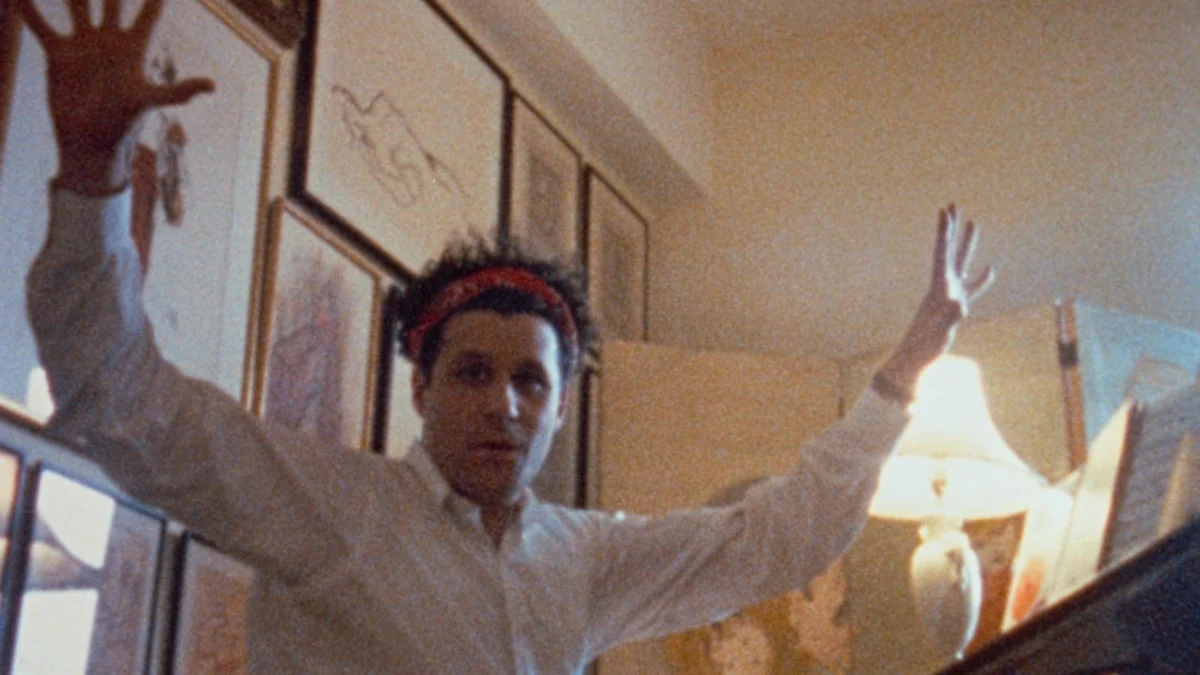
At its core, Unzipped follows a charmingly frenetic Isaac Mizrahi as he develops his 1994 Paris Fashion Week collection, which drew eccentric inspiration from Robert Flaherty’s 1922 documentary Nanook of the North. Yet, beyond the historical preservation efforts by the Sundance Institute and the UCLA Film & Television Archive, the film carries a deeply unique narrative weight: its director, Douglas Keeve, was romantically involved with his subject throughout the entire production.
This rare dynamic straddled a notoriously tricky ethical line in journalism and documentary filmmaking. Far from resulting in a sterile, promotional puff piece, however, the romance birthed a deeply intimate, unvarnished, and surprisingly vulnerable portrait of a rising fashion titan. Today, as Unzipped finds new life for a generation obsessed with ’90s nostalgia—fueled by cultural touchstones like the FX series Love Story: John F. Kennedy & Carolyn Bessette—the film remains a masterclass in vérité access.
Chronology: From Parisian Runways to the Sundance Stage and Beyond
To understand the cultural resonance of Unzipped, one must trace the timeline of its creation, its meteoric festival run, and its enduring legacy in the fashion documentary canon.
Pre-1994 (The Rise of Isaac Mizrahi): Isaac Mizrahi establishes himself as a wunderkind in the American fashion landscape. Supported financially by a majority stake from Chanel, his house delivers sensibly chic haute couture, while Mizrahi himself cultivates an outré public persona defined by his signature "Eraserhead" shock of hair.
1994 (The Production): Filmmaker and photographer Douglas Keeve begins shadowing his then-boyfriend, Mizrahi, capturing the chaotic, sleep-deprived months leading up to his Nanook-inspired collection. Keeve wields his camera ubiquitously, recording the designer in bathrobes, on the phone with his mother, and backstage with supermodels.
January 1995 (Sundance Premiere):Unzipped premieres at the Sundance Film Festival to critical acclaim, ultimately capturing the prestigious Audience Award. It catapults both Mizrahi and Keeve further into the cultural zeitgeist.
Late 1995 to Post-Premiere (The Breakup): Soon after the festival circuit, the romantic relationship between Keeve and Mizrahi curdles and ends. While external pressures and exhausting schedules mount, the documentary itself is later cleared by both men as the primary catalyst for the split.
Decades Later (The Evolution): Mizrahi pivots away from high-end couture, eventually achieving mainstream ubiquity a decade later with his ready-to-wear diffusion line at Target. Keeve and Mizrahi maintain a "frenemy" dynamic.
Present Day (The 4K Restoration): Co-supervised by Keeve and Mizrahi, the newly restored 4K version of Unzipped opens at New York’s Film Forum before expanding to Los Angeles and other major markets.
Supporting Data: The Anatomy of a Cultural Time Capsule
Unzipped functions as a miniature historical archive of a bygone era in New York culture. Understanding the quantitative and qualitative elements of the film highlights its enduring appeal:
The Supermodel Pantheon: The documentary captures the absolute apex of the "Supermodel" era. It features intimate, unfiltered backstage footage of industry titans including Naomi Campbell, Christy Turlington, Linda Evangelista, Cindy Crawford, and Kate Moss.
Financial and Corporate Landscapes: In 1994, the structural reality of independent design was starkly different. Chanel’s majority financial stake in the Isaac Mizrahi fashion house highlights the institutional pressures bearing down on creative directors long before the era of social media metrics and independent direct-to-consumer labels.
Critical Reception & Restoration Partners: The film’s 1995 Sundance Audience Award cemented its artistic viability. Its 2020s resurrection was made possible through meticulous preservation work by the Sundance Institute and the UCLA Film & Television Archive, ensuring that the grain of 16mm film stock and the stark contrast of its black-and-white cinematography are preserved for future filmmakers.
Box Office and Theatrical Rollout: Following its premiere at New York’s Film Forum, the film has mapped out a strategic national expansion, hitting theaters in Los Angeles on October 9.
Official Responses: Douglas Keeve on Ethics, Intimacy, and Breakups
Romance between a journalist or documentarian and their subject is frequently scrutinized for compromising objectivity. In intimate portraiture, however, it can yield unprecedented access. In recent interviews promoting the 4K restoration, Douglas Keeve opened up about what it was like to date his subject, why the camera kept rolling, and how their relationship ultimately weathered—and survived—the filmmaking process.
Addressing whether the documentary drove a wedge into their romance, Keeve admitted the equation was far more nuanced than a simple cause-and-effect scenario.
"Did the movie break us up? I’m not sure I know how to answer that because relationships are so complicated," Keeve told IndieWire. "Isaac is complicated, I’m complicated. So you have two complicateds, plus a complicated world. Our lives were so different, and in some ways I couldn’t quite keep up with his."
Keeve detailed the grueling social obligations of a high-fashion designer versus his own rigorous demands as an independent working filmmaker and photographer.
"Isaac goes to two cocktails at dinner and an after-hours party in one night, every night. And I just couldn’t do that. I had my own working life, and it was busy," Keeve explained. "He wanted a partner who could share those things, which I think is correct. There was so much external pressure from different things."
Despite the eventual end of their romance, Keeve insists that the grueling editing suite and late-night production deadlines were not the culprits. Instead, he views the finished product through the lens of genuine affection.
"The movie came in, and the movie had nothing to do with our breakup at all. There was pressure around finishing the movie because we had a deadline, but I was so in love with Isaac and in love with just who he is. The movie is—I hate to say it because when you make a movie like that, it just becomes utter rubbish—but it is a love letter to him, I think, because he’s just so extraordinary."
Keeve also addressed the startling intimacy of the footage—such as filming Mizrahi in the bathtub while chatting on the phone with his mother. According to the director, Mizrahi’s singular focus insulated him from feeling exploited.
"I wouldn’t show Isaac the movie when we were editing it at all, and only when I was happy with it, I brought it to him," Keeve noted. "There may be those moments in the movie that may seem like I’m shooting him in the bathtub and exploiting him, but I just always had a camera, and Isaac is somewhat oblivious to the camera in a way. He just is one of those people who is in the zone all the time."
Implications: The Legacy of Unzipped in Modern Documentary Filmmaking
The theatrical re-release of Unzipped arrives at a fascinating cultural crossroads. Today, documentary filmmaking is heavily saturated by corporate-backed, sanitized, PR-managed artist profiles—projects often co-produced by the subjects themselves to control every frame of their public narrative.
Unzipped stands as a thrilling, anachronistic reminder of what happens when access is total, unmediated, and rooted in authentic human connection—even a deeply complicated one.
By capturing Mizrahi’s benign volatility—such as his genuine panic upon discovering a rival house’s "eskimo"-inspired line mirroring his own—alongside iconic backstage moments with supermodels like Linda Evangelista turning moments of stress into high-fashion performance art, Keeve captured lightning in a bottle. Evangelista’s knowing glares into the lens ("I dare you to judge me") encapsulate the meta-awareness that defines the film’s brilliance.
Ultimately, the enduring legacy of Unzipped transcends fashion history. It proves that subjective, deeply personal documentary filmmaking—when executed with artistic integrity and emotional honesty—can outlast the romantic relationships that birthed them, transforming personal history into cinematic art that speaks across generations.