Japan’s Defense Establishment Enters the Digital Frontline: A New Era of Cognitive Defense
In a significant departure from traditional bureaucratic communication, Japan’s Ministry of Defense (MOD) and the Self-Defense Forces (SDF) have launched a high-stakes campaign to reclaim the narrative in the digital domain. Senior leadership, including the ministry’s primary spokesman and the nation’s top uniformed officer, have inaugurated official X (formerly Twitter) accounts. This shift represents a proactive, calculated effort to combat what Tokyo identifies as "cognitive warfare"—a strategic maneuver by foreign powers, most notably China, to utilize disinformation and psychological manipulation to sway public opinion and erode national cohesion.
The Genesis of a Digital Pivot: Main Facts
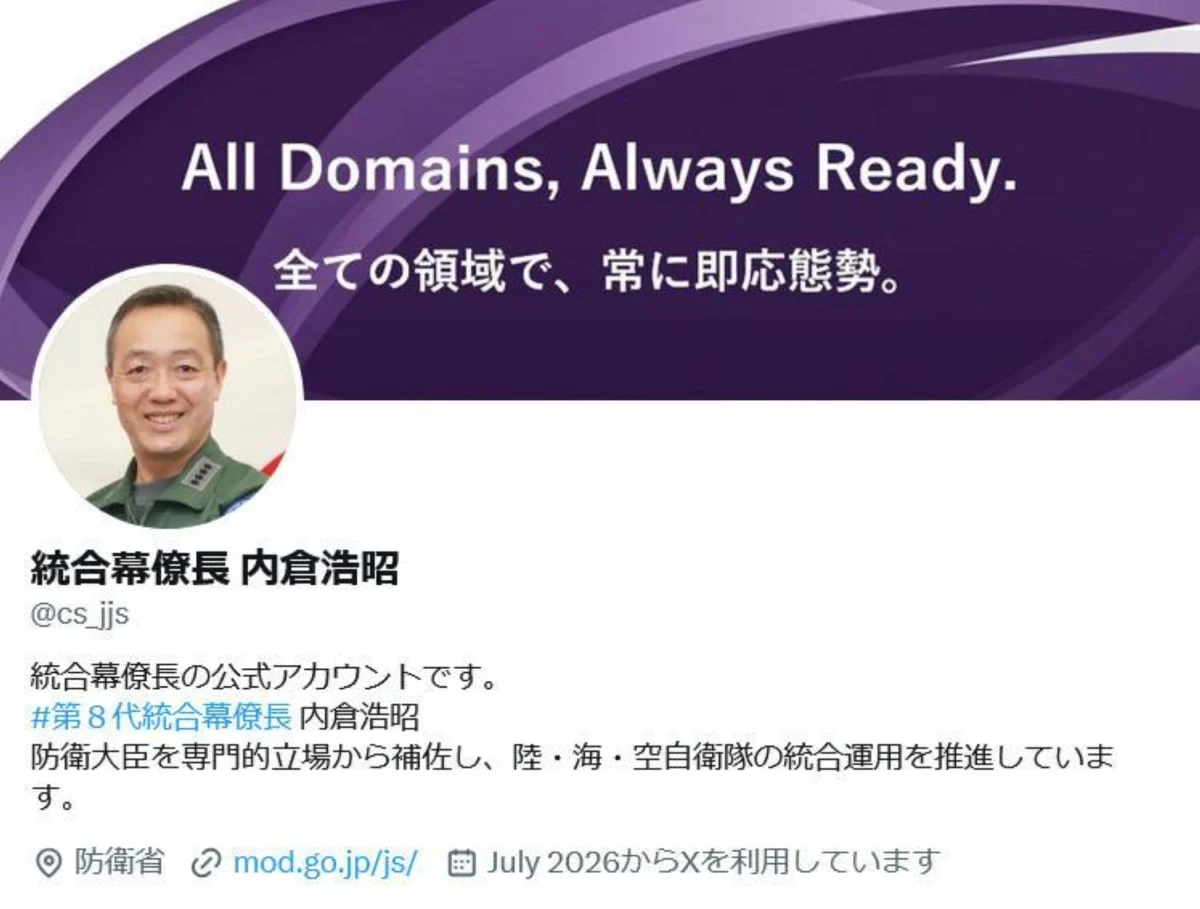
The initiative marks a tactical evolution for an organization historically known for its conservative approach to public relations. On June 26, ministry spokesman Kimihito Aguin broke the silence, establishing his presence on the platform. He was followed exactly one week later by General Hiroaki Uchikura, Chief of Staff of the Joint Staff, who oversees the operational readiness of the SDF.
The move is not merely symbolic; it is an acknowledgment that in the 21st century, information is as critical as kinetic hardware. Within days of their inception, both accounts surpassed 30,000 followers, signaling a robust public appetite for direct, authoritative updates from the architects of Japan’s national security. By bypassing traditional press releases and moving directly to social media, these figures are attempting to shorten the “reaction loop”—the time it takes for the state to address and debunk foreign narratives that threaten Japan’s geopolitical standing.
Chronology of Escalation: Why Now?
The decision to launch these channels follows a sustained period of aggressive information operations directed at Tokyo. For years, the Chinese Defense Ministry has frequently issued statements characterizing Japan’s defense modernization as a resurgence of “militarism.” These one-sided claims often circulate globally, reaching audiences that lack the context to distinguish between Japan’s defensive security posture and the historical revisionism Beijing attempts to exploit.
Aguin’s inaugural posts served as a litmus test for this new strategy. When faced with accusations of militarism from Beijing, Aguin did not wait for a formal diplomatic channel; he responded directly on X. His rebuttal, which explicitly stated that the Chinese claims were "not based on facts," was subsequently translated into English and Chinese. This multi-lingual approach is a deliberate tactical choice, designed to ensure that Japan’s perspective reaches the same international and domestic audiences targeted by Chinese state media.
Meanwhile, General Uchikura has adopted a complementary, albeit distinct, persona. His feed serves as a repository of operational transparency, providing visual evidence of the SDF’s activities—ranging from multilateral naval exercises to the day-to-day diplomatic functions of defense attachés. By showcasing the professionalism and routine nature of these activities, Uchikura aims to ground public perception in reality, effectively countering the "impression manipulation" that characterizes cognitive warfare.
The Shadow of Ukraine: Cognitive Warfare Defined
The strategic impetus for this digital pivot is heavily informed by the ongoing war in Ukraine. The SDF has been closely monitoring how Russia utilized disinformation campaigns to soften resistance, confuse international observers, and fracture domestic support in Kyiv. Japan’s defense planners recognize that the modern battlefield is no longer confined to the East China Sea or the skies above the Japanese archipelago; it exists in the minds of the citizenry.
Cognitive warfare is designed to be insidious. It does not aim to destroy physical infrastructure, but to destroy the target nation’s ability to interpret reality accurately. Through the tactical deployment of deepfakes, half-truths, and coordinated bot networks, aggressors aim to divide society and paralyze decision-making.
Addressing the Foreign Affairs and Defense Committee of the House of Councillors, Defense Minister Shinjiro Koizumi offered a stark assessment of the risk: "If we just remain silent, even lies can come to be considered the truth." This sentiment reflects a growing consensus within the Japanese government that silence is no longer a sustainable defensive strategy.
Official Responses and Strategic Rationale
The Ministry of Defense has been careful to frame this initiative as a necessary expansion of its communications infrastructure rather than a replacement for existing methods. While the ministry continues to maintain its official website and broader social media presence, officials emphasize that the “personal” accounts of senior leadership provide a necessary layer of agility.
"Increasing channels to provide correct information is significant," a ministry spokesperson noted, adding that the rapid acceleration of AI-generated disinformation makes it imperative for leaders to have the ability to respond in real-time. The concern is that if an official, verified response is delayed by hours or days—the typical timeline for a government press release—the "fake" or distorted narrative will have already permeated the social media ecosystem, becoming "fact" in the minds of the public.
By putting a face and a verified handle to the information, the MOD is betting that the public will prioritize the credibility of its senior leaders over the anonymous or state-sponsored accounts that frequently populate the digital space with anti-Japanese sentiment.
Implications: A Double-Edged Sword
The move has drawn praise from academia, though experts caution that this new frontier is fraught with risks. Professor Takahiro Tsuchiya of the Kyoto University of Foreign Studies has been a vocal supporter of the strategy, noting that the only antidote to disinformation is the consistent, immediate, and reliable dissemination of the truth.
"It’s important to keep building a reputation that the information from the Defense Ministry and the SDF is reliable," Tsuchiya explained. According to Tsuchiya, the effectiveness of the initiative will depend entirely on the perceived honesty of the accounts. If the public views these accounts as mere propaganda tools, the strategy will fail. If, however, they are viewed as authentic windows into the defense establishment, they will become powerful instruments of national resilience.
However, Tsuchiya also issued a significant warning regarding operational security. The primary danger of allowing high-ranking officers to engage on an unfiltered platform is the risk of "carelessly disclosing sensitive information or internal decision-making processes." In an age where data scrapers and open-source intelligence (OSINT) analysts are constantly monitoring social media for clues about military movements, a single ill-considered post could lead to a strategic blunder. The ministry must therefore strike a delicate balance between transparency and security, ensuring that the drive for public trust does not compromise the operational secrecy essential to Japan’s national defense.
The Path Forward: Information as Defense
Japan’s foray into the digital cognitive battlefield marks a turning point in how it handles external pressure. It is a tacit admission that in the 21st century, national security is inextricably linked to the information environment. The success of General Uchikura and spokesman Aguin will likely serve as a blueprint for other government agencies.
If this experiment succeeds, we may see a broader shift in the Japanese government, moving away from the "silent professional" model and toward a more communicative, engagement-heavy posture. This would represent a fundamental change in the relationship between the Japanese state and its citizens, as well as its relationship with the international community.
As AI technology continues to lower the barrier to entry for spreading disinformation, the ability to rapidly verify information will become a core competency of any modern defense force. Japan is no longer waiting for the information war to arrive at its doorstep; it is actively stepping onto the field. Whether this digital mobilization will be enough to shield the public from the rising tide of cognitive warfare remains to be seen, but one thing is clear: the era of reactive, slow-moving institutional communication is coming to an end. The defense of the nation now includes the defense of the truth, fought one post at a time.