Bangkok Submerged: City Grapples with Historic Flooding After Record-Breaking Deluge
By Global News Desk
BANGKOK — The Thai capital, a sprawling metropolis often characterized by its vibrant street life and bustling urban density, has been brought to a standstill by an unrelenting deluge. Following days of torrential rainfall, large swaths of Bangkok are currently underwater, forcing thousands of residents into emergency shelters and prompting the Bangkok Metropolitan Administration (BMA) to issue a formal disaster declaration.
As the skies finally began to clear on Sunday, the true scale of the catastrophe emerged: streets turned into rivers, public transportation networks paralyzed, and over 52,000 households grappling with the devastating aftermath of water-damaged property.
The Immediate Impact: A City Under Siege
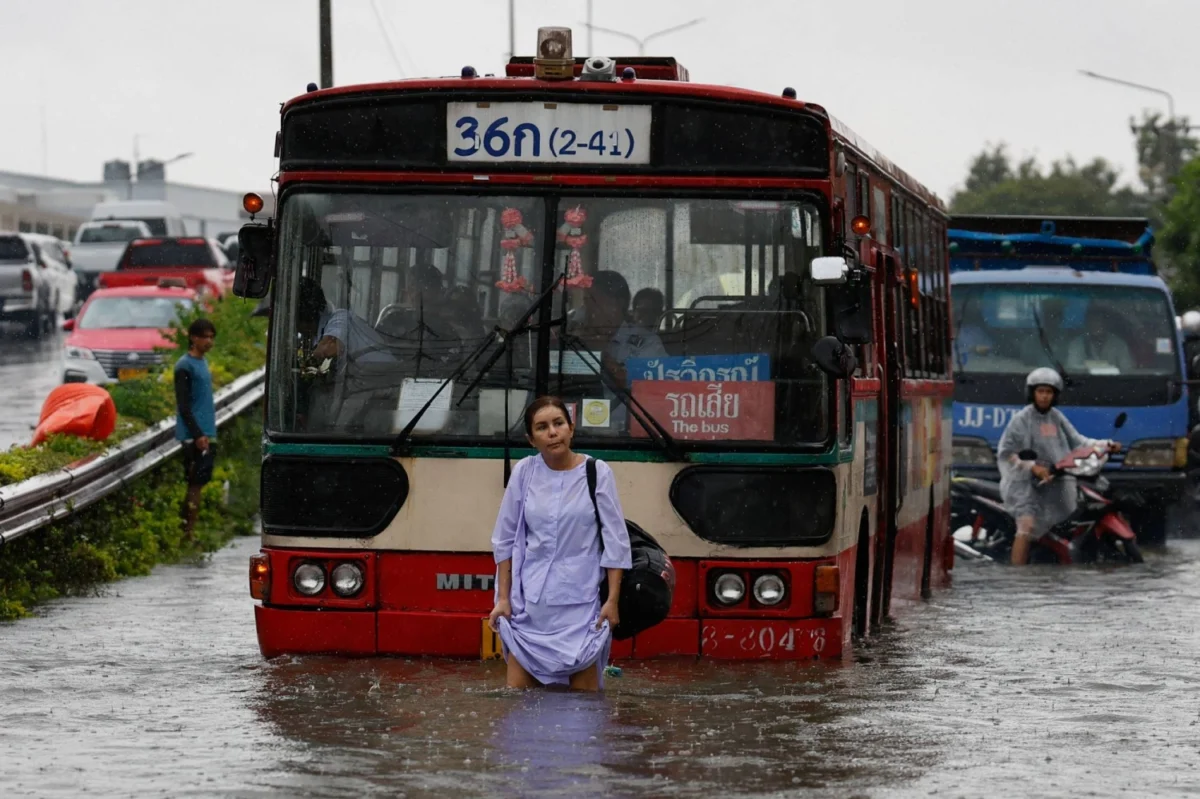
The scene on the ground remains harrowing. Across various districts, the juxtaposition of modern infrastructure and natural catastrophe is stark. Images from the weekend show commuters and residents wading through waist-deep, murky floodwaters, often alongside immobilized public buses.
According to official figures released by the BMA, nearly 4,900 people have been evacuated from their homes and are currently being housed in temporary government shelters. These facilities are now the focal points of relief efforts, providing food, clean water, and medical assistance to those who fled with little more than the clothes on their backs.
For those who remained behind or have begun the grueling task of returning to their residences, the situation is grim. The slow, methodical process of clearing mud, salvaging waterlogged furniture, and scrubbing walls has begun. For many, the damage is total, with essential electronics, appliances, and personal mementos destroyed by the rising tide.
Chronology of the Deluge: A Four-Day Crisis
The disaster did not strike in a single moment of volatility; rather, it was the result of a persistent, multi-day meteorological event that overwhelmed the city’s drainage infrastructure.
- Thursday, September 24: The first major storm systems began to settle over the Bangkok metropolitan area. While initially dismissed as seasonal monsoon weather, the intensity of the precipitation quickly exceeded historical norms. By late evening, low-lying areas in the eastern districts reported initial drainage failures.
- Friday, September 25: The situation deteriorated rapidly. Rainfall intensified throughout the morning, leading to widespread flash flooding. The BMA issued preliminary warnings, but by Friday afternoon, major thoroughfares were already impassable. Traffic in the city center ground to a halt, leaving thousands stranded in their vehicles or stuck at transit hubs.
- Saturday, September 26: This marked the peak of the crisis. Meteorological data confirmed that over 330 millimeters (roughly 13 inches) of rain had fallen in specific zones within a 72-hour window. This volume of water—far exceeding the capacity of the city’s canal systems and pumping stations—turned neighborhoods into reservoirs. It was on this day that the BMA officially declared the disaster zone, triggering emergency funding and the full mobilization of civil defense units.
- Sunday, September 27: As the rain tapered off, the city entered the recovery phase. Floodwaters began a slow, agonizing recession in some districts, but the humanitarian focus shifted toward the thousands displaced and the prevention of waterborne diseases in the damp, stagnant conditions left behind.
Supporting Data: Why Bangkok Was Overwhelmed
Meteorologists and urban planners point to a combination of unprecedented climate patterns and long-standing urban vulnerabilities. The 330-millimeter rainfall recorded between Thursday and Sunday is not merely a seasonal occurrence; it represents a significant outlier in meteorological data.
Bangkok is notoriously vulnerable to flooding due to its geographic position. Much of the city sits at or below sea level on the soft clay soil of the Chao Phraya River delta. The city’s historic network of khlongs (canals), which once served as the city’s primary drainage veins, has been steadily filled in or narrowed over decades of rapid urban development.
Furthermore, the "urban heat island" effect combined with climate-driven shifts in monsoon patterns has led to more frequent "extreme precipitation events." When this volume of water hits an urban environment characterized by high-density concrete—which prevents natural groundwater absorption—the runoff is instantaneous and overwhelming.
Official Responses and Relief Operations
The Bangkok Metropolitan Administration has faced immense pressure to respond to the crisis. Governor-led task forces were deployed across the most affected districts, utilizing high-capacity water pumps and military-grade transport vehicles to move citizens to safety.

"The priority at this stage is the preservation of life and the restoration of essential services," said a BMA spokesperson during a Sunday press conference. "We are working around the clock to clear blockages in the drainage systems and to ensure that those in shelters have the support they need. We urge residents to remain cautious of electrical hazards as they return to their homes."
The government has also pledged to provide financial assistance to those whose homes were destroyed. However, the scale of the disaster—affecting over 52,000 households—means that the administrative burden of verifying damage claims and distributing aid will be a significant challenge for the local bureaucracy in the coming weeks.
International aid organizations have also expressed their readiness to assist, though the Thai government is currently managing the crisis with its own internal civil defense and military assets.
The Long-Term Implications: A City at a Crossroads
This flood is more than a momentary inconvenience; it is a clear indicator of the existential challenges facing Bangkok. Urban planners have long warned that without radical infrastructure overhauls, the city will become increasingly uninhabitable.
1. Infrastructure Reform
The reliance on aging pumping stations and limited canal capacity is clearly insufficient for the climate of the 21st century. Experts argue that Bangkok needs to invest in "sponge city" concepts—a design philosophy that incorporates permeable pavements, rooftop gardens, and expanded wetland buffers to absorb excess water.
2. Economic Toll
The economic impact of this flood will be felt for months. Beyond the direct cost of property repair, the disruption to supply chains, the loss of productivity, and the potential impact on the tourism sector—a vital pillar of the Thai economy—are significant. Businesses in central business districts are currently counting their losses, with many facing prolonged closures as they sanitize facilities and repair electrical systems damaged by the saltwater-tinged floodwaters.
3. The Climate Reality
Perhaps the most sobering implication is the realization that these events are likely to become more frequent. As global temperatures rise, the intensity of monsoon rains is projected to increase. For Bangkok, this means that the disaster declaration of September 2026 may be a precursor to a new, more volatile era.
Conclusion
As the sun sets over a drying, albeit scarred, Bangkok, the resilience of the Thai people remains the city’s greatest asset. Neighbors are helping neighbors clear debris, and community-led relief groups have sprung up overnight to supplement government efforts.
However, the spirit of solidarity, while heartening, cannot replace the need for structural, systemic change. As the waters recede, the conversation in the halls of government will inevitably shift from immediate relief to long-term survival. The question remains: can Bangkok adapt quickly enough to the shifting climate, or is it destined to remain a city that fights a losing battle against the rising tide?
For now, the focus remains on the 4,900 in shelters and the 52,000 households beginning the arduous process of rebuilding. The story of this flood is not just one of water and rain; it is a story of a city grappling with its future in an era of environmental uncertainty.