
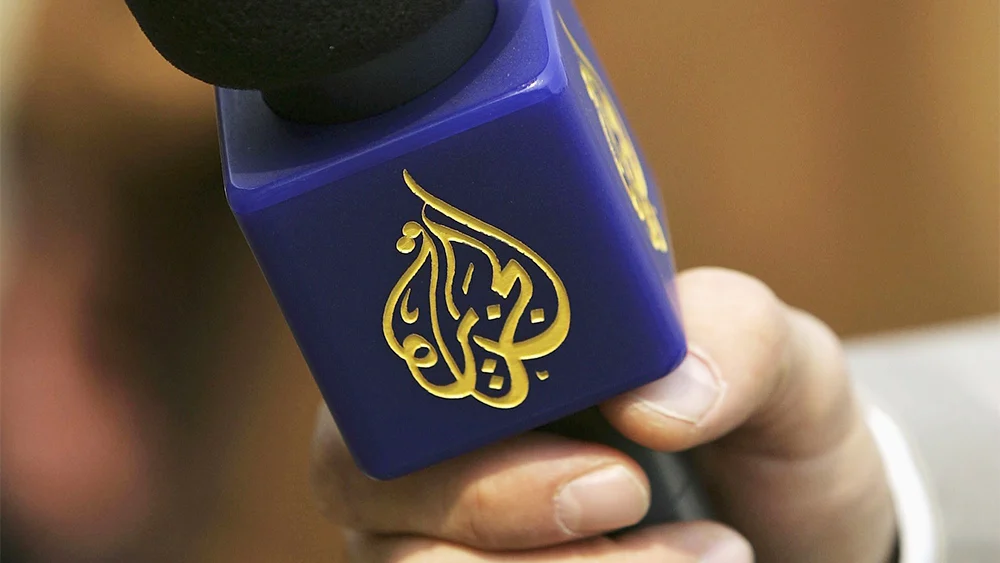
Media Under Siege: Al-Jazeera Initiates International Legal Action Against Egyptian Authorities
In a significant escalation of the ongoing friction between Middle Eastern media entities and the post-revolutionary Egyptian state, the Qatar-based news network Al-Jazeera announced on Thursday that it has formally initiated legal proceedings against Egyptian authorities. Represented by the London-based international law firm Carter-Ruck, the network is seeking redress in international courts and before the United Nations, alleging a systematic campaign of harassment, illegal detention, and technological sabotage against its journalistic staff.
This development marks a new chapter in the turbulent relationship between Cairo and Doha, which has deteriorated significantly since the ouster of President Mohammed Morsi in July. As the Egyptian military-backed interim government continues to consolidate power, Al-Jazeera has emerged as a focal point of regional geopolitical tensions, finding itself caught between its editorial mission and the shifting landscape of Egyptian domestic policy.
The Scope of the Allegations
The legal action stems from what Al-Jazeera describes as a "large number" of arbitrary arrests of its personnel. According to the network’s statement, reporters, producers, and technicians have been detained—often without formal charges—or subjected to what the network characterizes as politically motivated legal maneuvers.
Beyond the physical detention of its staff, the network has cataloged a series of aggressive actions aimed at curbing its broadcasting capabilities. These include the physical closure of regional offices, the intimidation of on-the-ground reporting teams, and the sophisticated jamming of satellite transmission signals. The network contends that these actions are not merely isolated incidents of administrative overreach, but rather a coordinated strategy to eliminate dissent and ensure that the Egyptian media landscape remains dominated by state-sanctioned narratives.
"Al-Jazeera cannot permit this situation to continue," a network spokesman stated via the legal team at Carter-Ruck. "The right of journalists to report freely in situations of this kind is protected by international law and is reaffirmed by UN Security Council Resolution 1738. Al-Jazeera has instructed its lawyers to take all steps necessary worldwide to ensure that its journalists can operate freely in the country, without fear of arbitrary arrest, jamming, or other forms of harassment and intimidation."
Chronology of a Deteriorating Relationship
The roots of this confrontation are deeply intertwined with the political upheaval that has defined Egypt since the Arab Spring. However, the current crisis can be traced to the specific events of July, when the Egyptian military, led by General Abdel Fattah el-Sisi, deposed President Mohammed Morsi following mass protests against his rule.
- July 2013: Following the military intervention, Al-Jazeera’s coverage of the ouster and the subsequent crackdowns on pro-Morsi demonstrations drew immediate ire from the Egyptian interim government.
- Late July 2013: Internal friction surfaced within the network as more than twenty Cairo-based Al-Jazeera staffers resigned in protest. They cited what they perceived as "biased coverage," with anchor Karem Mahmoud publicly stating that the network was failing to provide an objective account of the popular sentiment driving the anti-Morsi movement.
- August 2013: The Egyptian authorities intensified their rhetoric, frequently accusing the network of acting as a mouthpiece for the Muslim Brotherhood and of inciting violence through its reporting.
- September 2013: Reports of satellite jamming became frequent, with the network publicly complaining that its signals were being systematically blocked following its coverage of the violent dispersals of pro-Morsi sit-ins in Cairo.
- October 2013: The legal engagement of Carter-Ruck signaled a move from diplomatic protest to formal international litigation, marking the current standoff.
Supporting Data and International Legal Frameworks
The legal argument presented by Carter-Ruck centers on the violation of fundamental press freedoms. By invoking UN Security Council Resolution 1738, which specifically addresses the protection of journalists in conflict zones, Al-Jazeera is attempting to shift the narrative from a regional political dispute to a matter of international humanitarian law.
The network’s documentation of "jamming" also raises technical questions regarding state-level interference. Satellite jamming—the act of broadcasting a high-power signal on the same frequency as a satellite transponder—is a complex and expensive operation. Experts suggest that such interference typically requires state-level resources, lending weight to Al-Jazeera’s claims that the Egyptian government is directly involved in the suppression of its broadcasts.
However, the case is complicated by the inherent geopolitical biases of the region. Al-Jazeera, founded by the Qatari ruling family, has historically been viewed as a tool of Qatari soft power. Because Qatar was a staunch supporter of the Morsi administration and the Muslim Brotherhood, Egyptian authorities argue that Al-Jazeera’s reporting is not neutral journalism, but rather an active, foreign-funded effort to destabilize the post-Morsi Egyptian state.
Official Responses and Counter-Narratives
The Egyptian government has remained steadfast in its dismissal of the network’s claims. Local media, which has largely aligned itself with the military-backed government, frequently paints Al-Jazeera as a "hostile entity" working in the service of a foreign power.
Officials in Cairo argue that the crackdown on journalists is not an assault on the press, but a necessary security measure to prevent the spread of "false information" and "incitement to violence." The government maintains that it is engaged in a war on terror against the Muslim Brotherhood and that entities providing the organization with a global platform are complicit in the resulting instability.
Conversely, international media watchdogs, including the Committee to Protect Journalists (CPJ) and Reporters Without Borders, have expressed concern over the shrinking space for free expression in Egypt. While these organizations have occasionally been critical of Al-Jazeera’s editorial stance, they have largely supported the network’s right to operate without state interference, emphasizing that a vibrant and uninhibited press is essential for the transition to a stable, democratic Egypt.
Implications for the Future of Regional Journalism
The implications of this legal battle extend far beyond the borders of Egypt and Qatar. If the case proceeds to international forums, it may set a significant precedent for how states can—or cannot—legitimately regulate foreign media during periods of civil unrest.
1. The Erosion of Media Neutrality
The resignations of the Cairo-based staff in July underscore a profound crisis of confidence in modern journalism. When journalists themselves accuse their employers of bias, the moral authority required to challenge a government’s narrative is severely undermined. The outcome of the legal battle may determine whether the global public views Al-Jazeera as a victim of censorship or as a combatant in a regional proxy war.
2. Technological Warfare
The use of satellite jamming as a political tool represents a worrying trend in the "information war" of the 21st century. If international courts fail to hold states accountable for such technological suppression, it could encourage other governments to adopt similar tactics, effectively ending the era of truly global, borderless broadcasting.
3. Diplomatic Repercussions
The Qatar-Egypt relationship is currently at its lowest point in decades. This legal action ensures that the tension will remain a focal point of Arab League and regional diplomatic summits for the foreseeable future. Qatar, by utilizing the international legal system, is essentially signaling that it will not back down, regardless of the pressure from Cairo.
Conclusion
As the legal proceedings begin, the situation for journalists in Egypt remains precarious. The ongoing conflict between Al-Jazeera and the Egyptian authorities serves as a microcosm of the larger struggles for the soul of the post-revolutionary Middle East. At the heart of this dispute is a fundamental disagreement over the role of the press: is it a neutral observer tasked with holding power to account, or is it a participant in the political struggle, destined to be used, silenced, or co-opted by those in power?
For now, the world watches as international lawyers attempt to navigate the complex intersection of state sovereignty and the universal right to information. Regardless of the legal outcome, the damage to the media environment in Egypt is already profound, leaving a void where objective reporting once struggled to exist.