"Panji Tengkorak": A Lament for a Homegrown Anti-Hero Amidst Box Office Struggles and Industry Crossroads
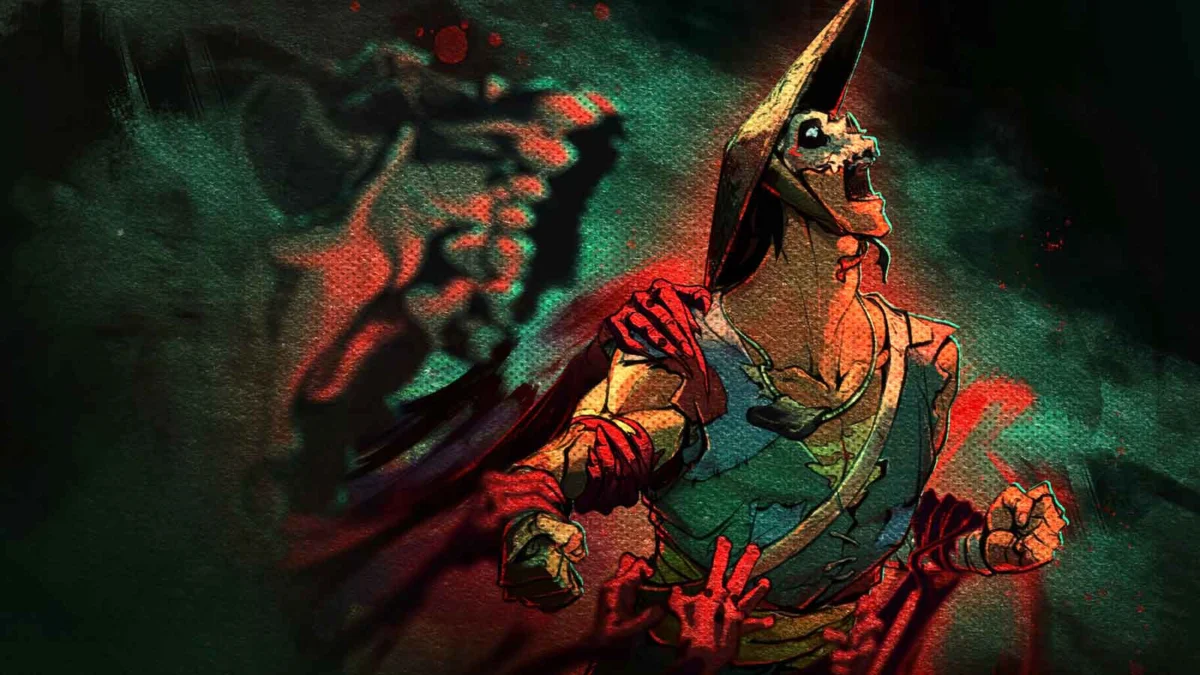
Jakarta, Indonesia – The Indonesian animated feature, Panji Tengkorak, has reportedly faced a dishearteningly cold reception since its release on August 28, 2025. Despite emerging in a burgeoning local animation scene, the film, directed by Daryl Wilson, garnered fewer than 17,000 viewers within its first three days and swiftly exited cinemas before completing a full month of screening. This premature withdrawal marks Panji Tengkorak as one of the year’s most significant box office disappointments, raising crucial questions about its timing, market competition, and the broader trajectory of Indonesian animation.
The film’s struggle for audience attention stands in stark contrast to other local animated productions, such as the critically and commercially successful Jumbo, or even the less fortunate Merah Putih: One for All, which at least provoked a strong public response, albeit a negative one. Panji Tengkorak‘s quiet failure, however, has prompted industry observers and passionate cinephiles alike to delve into the underlying factors that conspired against this adaptation of a classic Indonesian anti-hero.
A Chronology of Unfortunate Timing and Fierce Competition
The narrative of Panji Tengkorak‘s theatrical run is steeped in a confluence of challenging circumstances, beginning with its release schedule.
August 28, 2025: An Ill-Fated Debut
The film’s premiere coincided with a period of widespread civil unrest across Indonesia. Large-scale demonstrations erupted in protest against perceived abuses of power by the House of Representatives. The atmosphere was charged, culminating in tragic events, including the widely reported death of Affan Kurniawan, who was fatally struck by a Brimob tactical vehicle on the very night Panji Tengkorak opened. Such a volatile social climate inevitably deterred potential moviegoers, diverting public attention and prioritizing safety over entertainment. The shadow of these real-world events cast a pall over the cultural landscape, making any leisure activity, particularly a trip to the cinema, a secondary concern for many.
The Shadow of the Demon Slayer
Adding to its woes, Panji Tengkorak debuted concurrently with the juggernaut Japanese animated action film, Demon Slayer: Infinity Castle. The latest installment in the globally acclaimed Demon Slayer franchise proved to be an unstoppable force at the box office. Released just two weeks prior on August 15, Demon Slayer: Infinity Castle captivated an astonishing 461,000 viewers on its opening day alone, soaring to an incredible 2.2 million admissions within three days. This monumental achievement dwarfed even the successful opening numbers of local hit Jumbo and continued to draw massive crowds well into Panji Tengkorak‘s release period. The sheer dominance of Demon Slayer created an insurmountable barrier, siphoning off the vast majority of the target audience for action-oriented animation.
A Personal Witness to the Emptiness
The anticipation for Falcon Pictures’ Panji Tengkorak had been building for weeks prior to its release, particularly among those keen to observe the growth of domestic animation. For one particular viewer, the interest was not merely rooted in nationalistic solidarity or nostalgic sentimentality. Unfamiliar with Hans Jaladara’s original Panji Tengkorak comic, which first appeared in 1968 and saw subsequent re-prints and adaptations into films (1971, 1983) and television series (1995-1996), the allure stemmed from a father’s vivid recollections of the enigmatic anti-hero. This familial connection sparked a curiosity to witness the character’s modern cinematic revival.
Driven by a desire to experience the vibrancy of local animation firsthand, the viewer attended an evening screening on opening day at Summarecon Mall Kelapa Gading, North Jakarta. The bustling mall, with its snaking queues at ticket counters, initially suggested a healthy turnout. However, the anxiety about securing a preferred seat and showtime proved to be misplaced. Upon entering the cinema hall, designed to accommodate over 150 patrons, a stark reality emerged: fewer than 18 individuals occupied the seats. This anecdotal observation painted a grim picture, leading to internal questions about the film’s overall performance nationwide. A subsequent report from Cinepolis, indicating 5,700 viewers on the first day across all Indonesian cinemas, offered a slight, albeit fleeting, sense of relief, yet underscored the vast untapped potential.
Supporting Data and Critical Analysis: Deconstructing the Film’s Appeal and Flaws
While external factors undoubtedly played a significant role in Panji Tengkorak‘s underperformance, a deeper dive into the film’s content, narrative choices, and technical execution offers further insights. The viewer’s sustained engagement, despite the sparse audience and the prior viewing of the technically superior Demon Slayer, prompted an internal quest to understand the film’s intrinsic value, moving beyond mere comparisons or calls for industry improvement.
The Enduring Anti-Hero: Panji’s Complex Legacy
As an adaptation, Panji Tengkorak largely adheres to Hans Jaladara’s original narrative, chronicling Panji’s relentless quest for revenge against his lover Murni’s killer. Set in ancient Nusantara, the story unfolds against a backdrop of warring kingdoms and powerful silat academies. Panji, the sole student of the formidable black magic master Nagamas, finds himself entangled in a web of intrigue involving former allies Bramantya and Lembugiri, the latter emerging as the primary antagonist. Though cautious about fully embracing black magic, Murni’s murder and Nagamas’s demise propel Panji to master his teacher’s forbidden scriptures, granting him immortality and an unyielding, albeit emotionally dead, heart.
Given the constraints of a 94-minute runtime, screenwriters Theo Arnoldy and Agung Prasetiarso, under Daryl Wilson’s direction, faced the formidable task of distilling a sprawling saga – encompassing multiple volumes, new love interests, and extensive academic interpretations (such as Seno Gumira Ajidarma’s analyses) – into a concise, contemporary narrative. Crucially, they succeeded in preserving the essence of Hans Jaladara’s Panji: an archetypal anti-hero.
Panji’s character is defined by his apathy, aloofness, moral ambiguity, selfishness, and a self-determined existence. His primary motivation for combat is not altruism but a desire to escape his eternal existence – a prospect dangled by Bramantya – and, fundamentally, to exact vengeance. This anti-hero persona resonates with contemporary cinematic trends, aligning Panji with popular Hollywood characters like those found in Thunderbolts or Deadpool. For the superhero genre, Panji offers a refreshing character archetype and perspective.
The director’s commitment to maintaining Panji’s anti-hero integrity throughout much of the film is commendable. Scenes depicting Panji indifferently allowing villagers to be robbed, his vengeful combat motivations, and his resolute egoism paint a consistent portrait. However, a noticeable narrative deviation occurs towards the end: Panji’s inexplicable decision to spare Bramantya, despite the latter’s complicity in the attack on Panji’s village and Murni’s death. This moment feels forced, an artificial injection of conscience that undermines Panji’s established anti-heroic code, potentially compromising the character’s foundation should a sequel materialize.
The narrative structure, divided into Panji’s origin and motivations in the first half and his battles against Kalawereng, Lembugiri, and their forces in the second, is generally easy to follow. While occasional moments of tedium may arise, particularly in the mid-section, they remain within acceptable limits. A more significant detractor, however, is the film’s soundtrack, specifically the recurring use of the song "Bunga Terakhir." Its placement often feels arbitrary and jarring, working against the desired mood rather than enhancing it. This misapplication is particularly regrettable given the high-caliber vocal talents of Iwan Fals and Isyana Saraswati, whose collaboration is effectively squandered.
The Power of Gossip: A Cultural Touchstone
Perhaps the most compelling and insightful aspect of Panji Tengkorak is its subtle yet profound integration of "gossip" as a narrative device. Two distinct segments featuring intense gossiping stand out: Kuwuk’s vivid recounting to villagers at a warung (eatery) about his encounter with Kalawereng, and his later dissemination of tales about a warrior from the "kidul" (south). While seemingly ancillary, these moments are crucial in solidifying Panji’s position as a central yet enigmatic figure. Kuwuk, portrayed as a cowardly, verbose soldier prone to flight, initially appears as a non-essential character. Yet, his role as a purveyor of information is arguably vital.
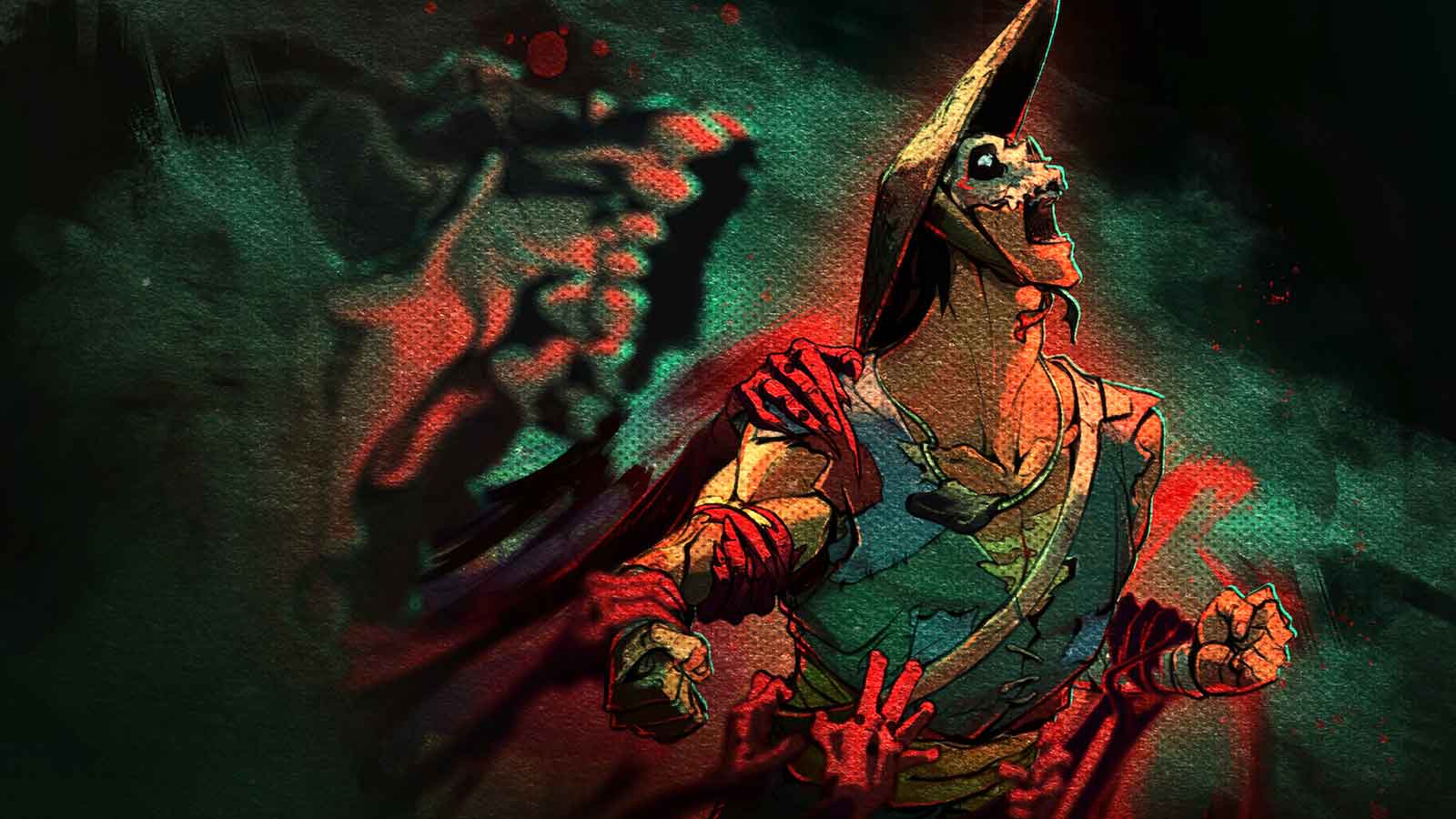
This emphasis on gossip recalls James C. Scott’s Weapons of the Weak: Everyday Forms of Peasant Resistance (1985), where gossip serves as a prominent and tactical form of everyday resistance within systems of domination. For the marginalized, gossip can undermine authority, damage reputations, and even avert direct punishment. Interestingly, this tool is not exclusive to the downtrodden; the elite also wield it to maintain their positions and delegitimize opponents.
Niko Besnier’s Gossip and The Everyday Production of Politics (2009) further elaborates on this, studying Tuvaluan society to reveal gossip’s political significance, often rivaling formal deliberations. Gossip acts as a medium for constructing and dismantling hierarchies, deepening civic engagement by bringing intimate concerns into the public sphere. Besnier also highlights the impact of an agent’s presence or absence in a gossiping context. Kuwuk, for instance, speaks freely at the warung but becomes cautious when other soldiers appear, allowing the villagers to speculate and diversify meanings while the gossip’s core intent remains.
In Panji Tengkorak, gossip is a critical, perhaps even underutilized, element. Given Panji’s phantom-like nature, oral tradition could have been the primary mode of his legend’s propagation, enriching audience perception. Beyond its narrative utility, gossip possesses a deep resonance within Indonesian society, where it is a pervasive, almost intrinsic, part of daily life. The embellishments inherent in oral traditions, as exemplified by Kuwuk’s storytelling, add a rich anthropological layer, reflecting human agency and the fluid, overlapping nature of meaning-making.
This cultural resonance of gossip was a key factor in keeping the viewer engaged, seeking reflections of everyday life within the film. Its inclusion prevents Panji Tengkorak from being merely an attempt by filmmakers to achieve global relevance without grounding in local identity. The film’s portrayal of gossip is a significant point of note, and perhaps, as the article suggests, an encouragement to continue "gossiping" about the warrior from the South, Panji Tengkorak, to help him garner the attention he deserves.
Industry Perspectives: Imagining Indonesian Action Animation
A persistent concern for Indonesian animation lies in defining its allegiance, its degree of accommodation, its negotiation of perspectives, and, crucially, the animation style chosen to articulate its stories and aesthetics. The tendency to look to foreign models—Disney in the West, Studio Ghibli in Japan, or Upin & Ipin in Malaysia—raises the question: can Indonesia truly forge its own distinct animation style? While seemingly naive in an era of globalized technology and access, historical precedents exist, such as the evolution of wayang from Indian influences into diverse, distinctly Indonesian forms. What, then, is the path for Indonesian animation?
Indonesia boasts a growing catalog of animated films, including Battle of Surabaya, Knight Kris, Si Juki The Movie: Panitia Hari Akhir, Adit Sopo Jarwo, Nussa, and Jumbo. Each has grappled with finding its unique aesthetic and narrative approach. While some criticisms have pointed to stylistic similarities—Battle of Surabaya to Studio Ghibli, Adit Sopo Jarwo and Nussa to Upin & Ipin—others, like Si Juki The Movie, show promise in developing an indigenous style, akin to India’s Amar Chitra Katha or Brazil’s O Menino e o Mundo.
Panji Tengkorak employs a 2D animation style, diverging from the 3D approach of Jumbo. This choice is not inherently superior or inferior; like the historical coexistence of 2D wayang kulit, 3D wayang golek, and live-action wayang orang, each mode of expression carries its own complexities. The decision is shaped by factors beyond mere creator preference, including contextual fit, narrative suitability, thematic focus, desired impact, and, crucially, available access, technology, and resources. Furthermore, adopting a 2D style allows Panji Tengkorak to carve its own niche, avoiding direct comparisons and stigmas associated with other 3D Indonesian animated features like Jumbo.
The visual style of Panji Tengkorak has frequently been likened to Avatar: The Last Airbender, a comparison even acknowledged by its voice actors, Nurra Datau (Murni) and Denny Sumargo (Panji). While this association might initially suggest a lack of originality, implying that innovation is an uphill battle, it also represents a strategic negotiation. The filmmakers have skillfully leveraged this familiar aesthetic, infusing it with a distinct Indonesian visual vocabulary.
The association with Avatar: The Last Airbender is particularly interesting. Beyond its success as an action animation, Avatar is notable for its diverse, non-white character designs, drawing inspiration from Chinese, Japanese, Tibetan, and Indian cultures. Even its ill-fated live-action adaptation drew sharp criticism for whitewashing its main characters. Avatar‘s approach, though originating from a Western production, offers a compelling model for depicting a world beyond a solely white-centric perspective, promoting diversity and vibrant character representation. This makes the 2D Avatar style a fitting choice for portraying Indonesia’s predominantly non-white population, offering anatomies and facial features that are more relatable and "eye-friendly" to local audiences.
Panji Tengkorak demonstrably strives for "Indonesian-ness" beyond its narrative. The film cleverly crafts characters that embody Nusantara identity, making them relatable and familiar. It meticulously incorporates local material culture and ambiance—objects, architecture, attire, and activities like the aforementioned gossip—to root the story firmly in its cultural context. In several instances, Panji Tengkorak‘s visuals even surpass Avatar: The Last Airbender in sharpness and detail, a testament to the dedication of its 250 creators who devoted a year to its production.
Yet, a deeper aspiration remains: for Indonesian animation to embrace a more fundamental "Southern perspective." This involves establishing a core philosophy, a reason for being, and a clear allegiance—simply put, choosing what to represent as Indonesia, free from the Western gaze, exoticism, or tourist clichés. Such a perspective is vital for cultivating a unique aesthetic, fostering decolonial aesthetics, developing vernacular animation, and empowering animation as a medium for self-expression and contextual discourse. Only then can the dream of a truly distinct Indonesian animation identity move from an elusive ideal to a tangible reality.
Film Information:
Panji Tengkorak | 2025
Duration: 118 minutes
Director: Daryl Wilson
Writers: Theo Arnoldy, Hans Djaladara, Agung Prasetiarso
Production: Falcon Pictures, Kumata Animation Studio
Country: Indonesia
Voice Cast: Denny Sumargo, Donny Damara, Cok Simbara, Aghniny Haque, Tanta Ginting, Aisha Nurra Datau, Donny Alamsyah, Pritt Timothy, Revaldo, Candra Mukti