Beyond the Literal: Re-evaluating Tentang Dia as a Landmark of Indonesian Queer Cinema
Two decades after its initial release, Rudy Soedjarwo’s 2005 film Tentang Dia (About Her) remains a subject of intense debate. What began as a casual TikTok post framing the film as a pioneer of Indonesian "sapphic" or WLW (Women Loving Women) cinema triggered a polarized response. While many viewers resonated with the underlying queer subtext they sensed as children, a vocal minority insisted on a rigid, literal interpretation: “The film isn’t a GL (Girl’s Love) story because the character Rudi explicitly says she isn’t a lesbian.”
This tension between the textual—what is spoken—and the subtextual—what is felt—highlights a broader issue in Indonesian media literacy. The insistence that a character’s denial serves as the final, objective truth ignores the nuances of cinematic storytelling, particularly in a socio-political climate where non-heteronormative identities are historically stifled.
The Myth of Literalism in Cinema
To interpret a film solely through its dialogue is to fundamentally misunderstand the medium. Cinema, like any art form, relies on ambiguity, hidden agendas, and the divergence between what a character says and what they actually feel. In the context of 2005 Indonesia, where the stigma against non-heteronormative identities was (and remains) potent, a character’s denial is rarely a candid admission. Instead, it is often a survival mechanism.
As noted in Maimunah’s academic study, Representasi Homoseksualitas dalam Film Indonesia Kontemporer, local filmmakers frequently employ "coding" and ambiguity to navigate strict censorship and public moral norms. When the character Rudi denies her sexuality, she is not necessarily being truthful; she is practicing self-preservation. To view this dialogue as a definitive boundary is to overlook the survival tactics of queer individuals living in a society that refuses to acknowledge their existence.
A Chronology of Subtext: 2005 and Beyond
Released in 2005—the same year as Detik Terakhir, which offered a more explicit depiction of lesbianism—Tentang Dia took a markedly different path. While Detik Terakhir chose to strip away the veils of secrecy, Tentang Dia embraced the power of the unspoken.
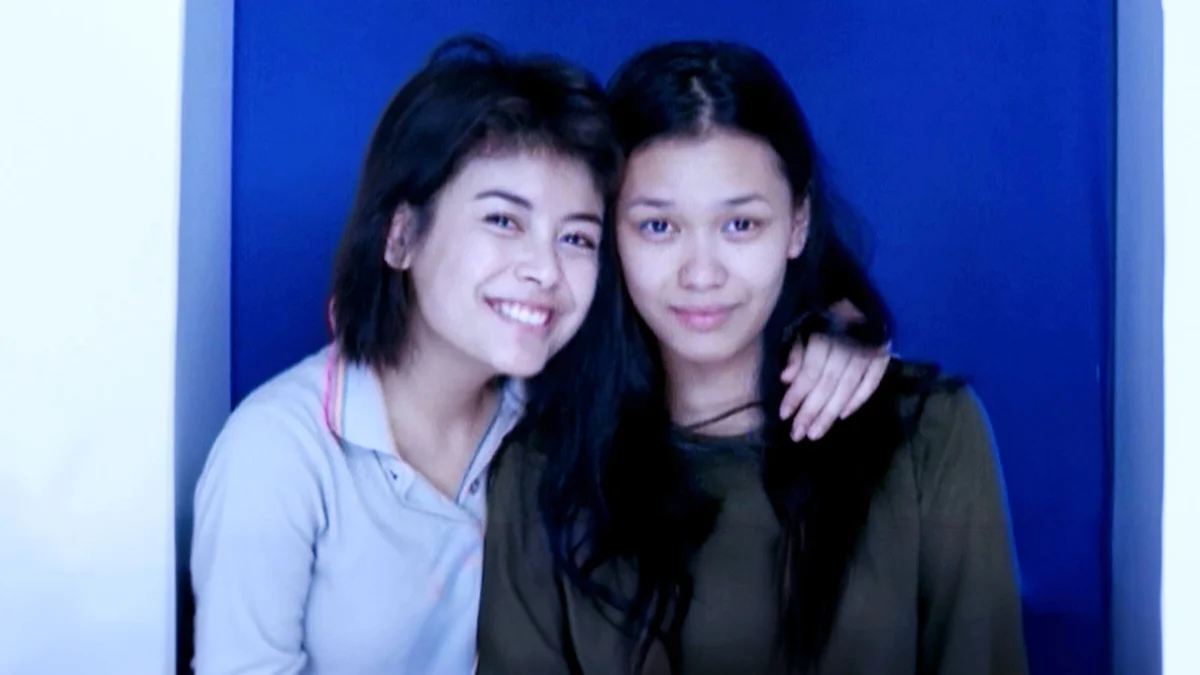
Based on a short story by the prolific Melly Goeslaw, the film follows Gadis (Sigi Wimala), a young woman traumatized by a betrayal involving her boyfriend and her best friend. Her path crosses with Rudi (Adinia Wirasti), a tomboyish figure whom she meets after a minor traffic accident. Their relationship rapidly evolves from a chance encounter into a profound, intense bond that defies easy categorization.
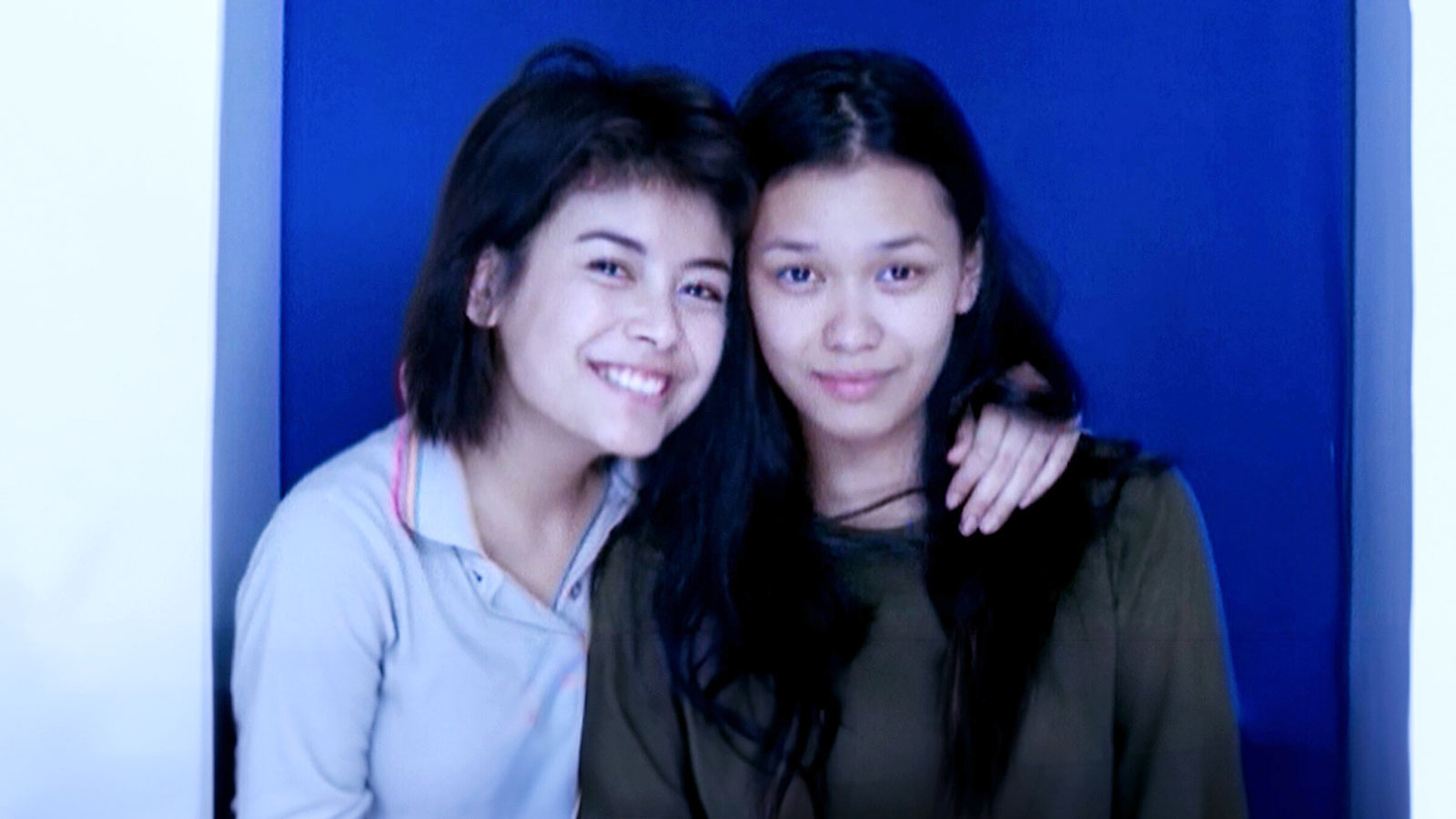
For the audiences of 2005, the lack of a queer critical framework in Indonesian film discourse meant that many viewers simply accepted the film as a story of "close friendship." However, viewed through a retrospective lens in 2025, the queer coding is undeniable. The film does not need a label to document the yearning, the confusion, and the inherent friction of a forbidden attraction.
Supporting Data: Cinematic Language and Queer Coding
The queerness of Tentang Dia is not found in the script’s labels, but in the director’s visual language.
1. The Power of Framing
Director Rudy Soedjarwo utilizes specific camera techniques to establish intimacy that the characters cannot voice. In three pivotal rooftop scenes, the camera captures Gadis and Rudi from behind, sitting side-by-side, facing the city skyline. By employing a wide shot rather than intimate close-ups, the film creates a "shared vulnerability." This distance serves as a form of respect; the intimacy is so fragile that the camera dares not interrupt it. It suggests that these moments belong only to them, shielding their bond from the prying eyes of the world.
2. The Significance of Names
The choice of name for the protagonist is a masterclass in queer coding. The character "Rudi" chose to discard her feminine birth name in favor of a masculine one. In many queer communities, renaming is an act of autonomy—a way to reclaim one’s identity from societal expectations. When contrasted with "Gadis" (which literally translates to "Girl" or "Virgin"), the film sets up a clear dichotomy. Rudi represents the departure from traditional gender norms, while Gadis represents the innocence being pulled into a new, uncharted orbit.
3. Visual Symbolism
A striking crane shot near the film’s climax captures Gadis running through the Bundaran HI roundabout—a central hub of Jakarta—yet the space is eerily vacant. This visual emptiness is not a production oversight; it is a manifestation of the characters’ alienation. They exist in a society that has effectively erased their identity, leaving them to navigate a world that is physically present but emotionally empty.
Official Responses and Contemporary Reception
The critical reception of the film at the time of its release, such as the 2005 commentary by Is Mujiarso in Kompas, often focused on the film’s "heteronormative reinforcement." Mujiarso argued that the rooftop confrontation—where Rudi aggressively denies being a lesbian—effectively closed the door on any queer interpretation.
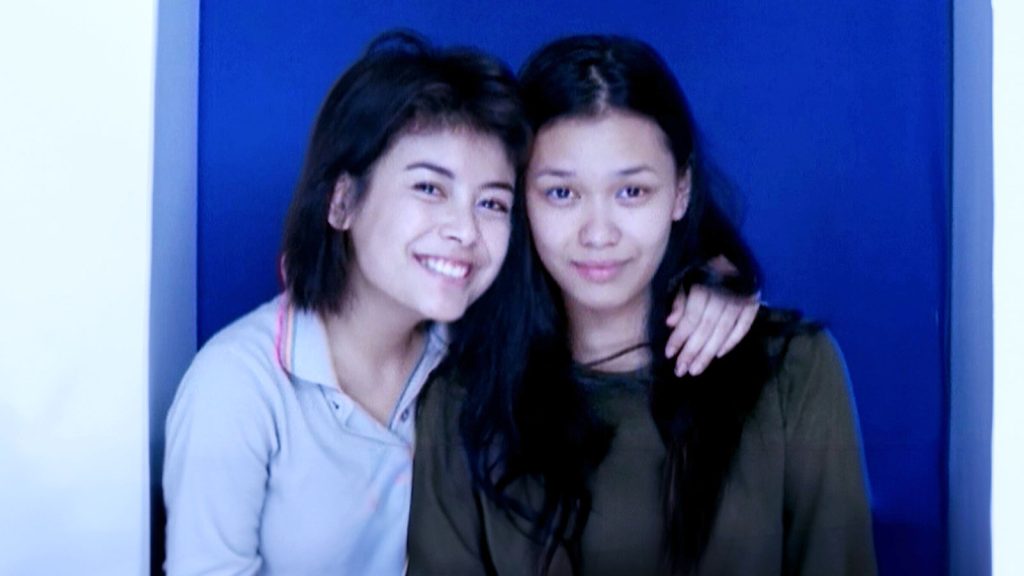
However, this critique misses the emotional weight of the scene. Rudi’s anger is not a refutation of her feelings; it is a defensive reaction to being "seen." In a society where being identified as queer can lead to social ostracization, the denial is a desperate attempt to maintain normalcy. The fact that the film remains available today on platforms like Netflix and continues to incite debate suggests that the film’s subtext has outlived the rigid, moralistic readings of the mid-2000s.
The Broader Implications: Why It Still Matters
The enduring relevance of Tentang Dia lies in its refusal to play by the rules of conventional labeling. By opting for a subtle, atmospheric, and symbolic approach, Soedjarwo created a film that allowed queer audiences to see themselves reflected in the shadows, even when the characters themselves were too afraid to step into the light.
The film’s soundtrack, featuring the song "Cinta" by Melly Goeslaw and Krisdayanti, further solidified this atmosphere. The music video, characterized by lingering gazes and an intense, restrained physical intimacy, mirrored the unspoken tension of the film. It serves as a reminder that in the Indonesian cultural landscape of the early 2000s, queer expression was a language of hints, glances, and long silences.
Conclusion: The Unspoken Truth
Ultimately, whether Tentang Dia "officially" qualifies as a lesbian film is secondary to its impact. The debate itself—fueled by a new generation of viewers—proves that the film’s queer essence has successfully transcended its era.
The film serves as a historical document of a time when "queer" was a word whispered rather than shouted. It reminds us that cinema is not just about what is explicitly declared, but about the feelings that remain in the spaces between the lines. As the audience continues to dissect these scenes two decades later, they are not just watching a movie; they are uncovering the hidden histories of identity and survival in Indonesian cinema. Not everything that is essential to the human experience needs to be spoken to be profoundly, undeniably felt.