An Icon Fades: Remembering the Artistic Legacy of Guruh Soekarnoputra (1953–2026)
By: Editorial Desk
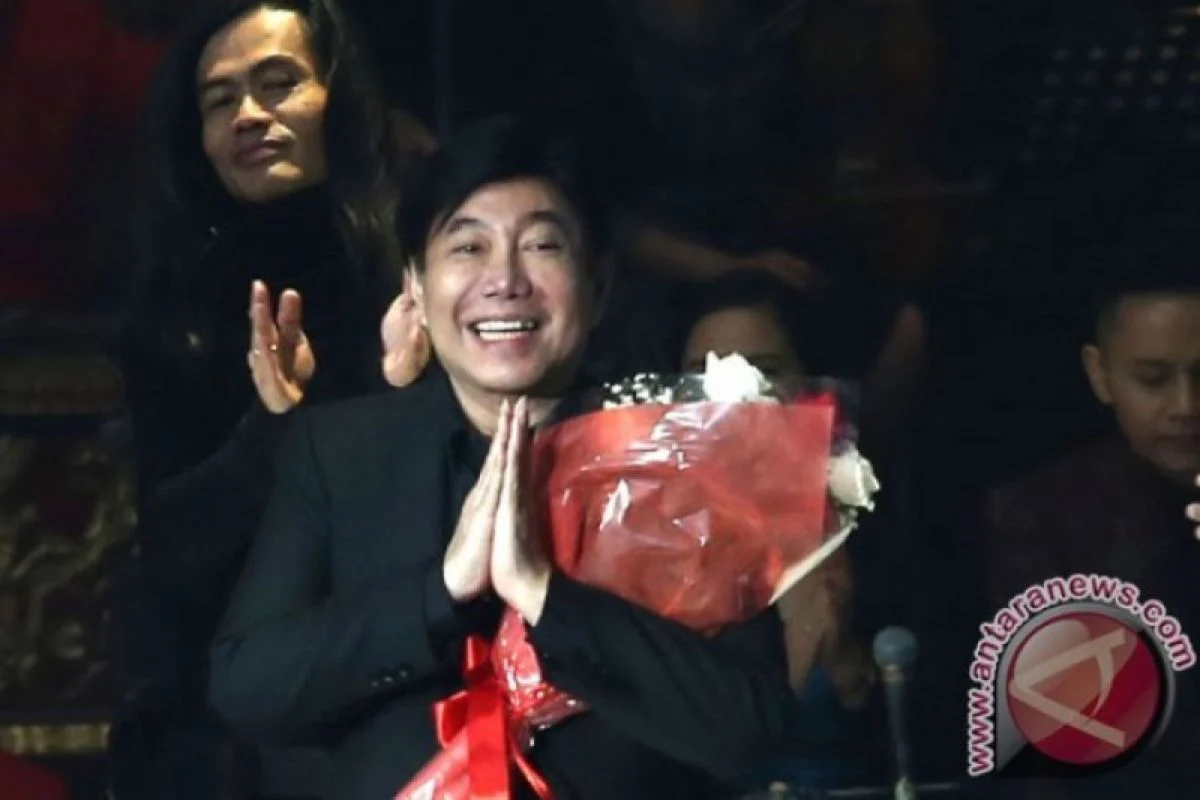
The Indonesian cultural landscape is draped in mourning following the passing of one of the nation’s most visionary artists and cultural architects, Mohammad Guruh Irianto Soekarnoputra. The maestro, widely known as Guruh Soekarnoputra, breathed his last on Saturday, September 26, 2026, at 04:16 WIB at the MRCCC Siloam Hospitals Semanggi in Jakarta. He was 73.
The news, which sent a wave of sorrow across the archipelago, was confirmed by Hasto Kristiyanto, Secretary-General of the Indonesian Democratic Party of Struggle (PDI-P), through a formal statement issued on Saturday morning. As the youngest son of Indonesia’s founding father, President Soekarno, and First Lady Fatmawati, Guruh occupied a unique space in public life—not merely as a scion of a political dynasty, but as a titan of the arts who redefined the aesthetic identity of modern Indonesia.
The Architect of Cultural Synthesis
Guruh Soekarnoputra was far more than a musician; he was a polymath whose career spanned decades, encompassing roles as a songwriter, composer, choreographer, music arranger, and the mastermind behind some of the most ambitious, large-scale stage productions in Indonesian history.
His life’s work was defined by a singular, persistent mission: to bridge the perceived chasm between modern, Western-influenced pop music and the deep, intricate wellspring of Indonesian traditional art. He did not merely "fuse" these elements; he synthesized them into a new, distinct language that felt both ancestral and avant-garde.
Early Life: A Prodigy in the Making
Guruh’s immersion in the arts began long before he became a household name. Archives from the National Archives of the Republic of Indonesia (ANRI) detail a childhood defined by rigorous artistic training. By the time he was a young boy, Guruh had already mastered an array of traditional dances spanning the cultural heartlands of Java, Sunda, Bali, and Minang.
His public debut as a performer occurred during his elementary school years, when he appeared on the national broadcaster, TVRI, with a musical group he had organized himself. As he entered his teenage years, the scope of his ambition expanded. By 1965, he had formed The Beat-G, signaling his early interest in the burgeoning rock and pop sounds of the era.
By 1970, he had formed The Flower Poetman. During this period, he was simultaneously deepening his academic and practical knowledge of traditional arts. He became a fixture in Balinese gamelan circles, engaged in formal theater training, and organized angklung and Javanese gamelan ensembles at the prestigious Perguruan Cikini.
His time at the Universiteit van Amsterdam in the early 1970s proved to be a critical turning point. Rather than abandoning his roots, he deepened them, joining gamelan troupes at the Tropen Museum in Amsterdam, where he eventually transitioned from student to instructor, teaching Balinese dance and music to European audiences. This period solidified his worldview: that modern music possessed a soul only when it was anchored in the rich, historical soil of local tradition.
The Guruh Gipsy Revolution: A Masterpiece of Experimentalism
If one must pinpoint the moment Guruh altered the trajectory of Indonesian music, it would be the birth of Guruh Gipsy. Upon returning from the Netherlands in 1975, Guruh embarked on a radical experiment: integrating the complex, cyclical rhythms of Balinese gamelan with the instrumentation of Western rock.
The resulting album, Guruh Gipsy (1976), remains a cornerstone of the Indonesian music canon. Working with legendary musicians such as Keenan Nasution (drums/vocals), Chrisye (bass/vocals), Roni Harahap (piano/keyboard), Oding Nasution (guitar), and Abadi Soesman (synthesizer), Guruh crafted a sound that was unparalleled in its complexity.
The album’s tracks—including "Geger Gelgel," "Barong Gundah," "Smaradhana," and the monumental "Indonesia Maharddhika"—were more than just songs. They were cultural manifestos. They challenged the listener to consider the role of identity in an era of rapid modernization. "Indonesia Maharddhika" became an anthem of cultural pride, while "Smaradhana" remains one of the most beloved ballads in the nation’s history, immortalized by the voice of the late Chrisye.
This legacy was vividly honored as recently as 2025, when Guruh Gipsy reunited for a historic performance at Synchronize Fest. Accompanied by a new generation of musicians, Guruh, Keenan Nasution, and Abadi Soesman paid tribute to their fallen comrades, Chrisye, Roni, and Oding, proving that these compositions were timeless—transcending the era in which they were written.
The Era of Colossal Productions: Swara Maharddhika
In 1977, Guruh established Swara Maharddhika, an organization that would serve as the incubator for his most ambitious artistic visions. It was here that his ideas regarding the fusion of dance, music, and theater coalesced into massive, world-class stage productions.
Guruh pioneered the concept of the "colossal performance" in Indonesia. He seamlessly blended traditional Indonesian dance motifs with modern Western choreography, creating spectacles that were as intellectually stimulating as they were visually stunning. His Karya Cipta (Creative Works) series, which included:
- Pergelaran Karya Cipta I (1979)
- Untukmu Indonesiaku (1980)
- Cinta Indonesia (1984)
- Gilang Indonesia Gemilang (1986)
…set a new standard for national entertainment. Guruh functioned as the total auteur: composer, choreographer, director, and curator. His influence extended to national events, including the opening ceremonies of the 10th PON (National Sports Week) in 1981 and the Jakarta Fair.
In 1988, Swara Maharddhika evolved into a formal foundation, and Guruh launched GSP Productions. His influence became a pipeline for the industry, nurturing stars such as Titi DJ, Dewi Gita, Memes, and Deni Malik. He did not just create art; he created an ecosystem that allowed future generations to flourish.
A Multifaceted Legacy: Film and Beyond
To classify Guruh solely as a musician is to overlook his contributions to Indonesian cinema and choreography. He was a sought-after film score composer, earning a Citra Award for Best Music Illustration at the 1977 Indonesian Film Festival for his work on Ali Topan Anak Jalanan and Gita Cinta dari SMA.
He was also a performer in his own right, famously portraying Sunan Muria in the 1985 film Wali Songo. His mastery of dance, gained through years of study under masters like I Nyoman Kakul and I Wayan Rindi, informed every stage movement he ever directed. His work was a living, breathing dialogue between the past and the present.
Enduring Resonance and Future Implications
The cultural footprint of Guruh Soekarnoputra is perhaps best evidenced by the continued relevance of his music. In 2014, the "Salute to Guruh Soekarno Putra" concert brought together contemporary artists to reinterpret his catalog. In 2020, Musica Studios released a comprehensive album featuring modern icons like Noah, Iwan Fals, D’MASIV, and Afgan, all putting their own spin on his classics like "Kala Cinta Menggoda" and "Zamrud Khatulistiwa."
Even in his final years, Guruh remained a passionate advocate for the arts. During a media event in January 2026 for the musical Bukan Cinta Galih/Ratna, he reiterated his life’s philosophy: that art is not mere entertainment, but the primary medium through which a nation defines its character and teaches its youth the value of identity.
A Final Farewell
The passing of Guruh Soekarnoputra marks the end of an era. He leaves behind a nation that is more aware of its own artistic potential, a generation of artists who stand on his shoulders, and a body of work that serves as a bridge between the traditional and the modern.
He leaves behind a legacy that challenges us to look inward at our own culture and outward at the possibilities of the modern world. As the nation prepares to lay him to rest, the music of Guruh Soekarnoputra—the songs of love, of the archipelago, and of the Indonesian spirit—will continue to resonate in concert halls, on radio waves, and in the hearts of millions.
His life proves that an artist’s true work is never finished; it is simply passed on to the next generation to be heard, performed, and interpreted anew. Rest in peace, Maestro. Your melody remains, forever woven into the fabric of the nation.